
Custom Orders
Your vision, my craftsmanship. Let's create an instrument that's uniquely yours.
Custom Hand-Built Guitars & Ukuleles
Looking for your dream guitar?
Want a new, one of a kind body shape?
Custom scale lengths, nut and saddle widths are included if desired.
All of my instruments are made with premium, hand selected wood from around the world. Each instrument is hand-made with solid wood, no plywood or plastic. Order your custom, one-of-a-kind guitar or ukulele today! I will personally voice each instrument to achieve its absolute best potential tone. The major manufacturers cannot do this; it is too time consuming.
All of my instruments come with a 30-day, money-back guarantee if you are not absolutely delighted. There is also a lifetime warrantee against any manufacturing defects.
- Custom ukulele prices start at $2400
- Custom acoustic guitar prices start at $3500
- Custom electric guitar prices start at $3000.
Choice of wood, electronics, body style and other visual elements can have a significant effect on price. Markups shown for particular sets of wood are in addition to the base prices above. Guitar sets can be used to make a ukulele if desired but there may be an additional charge depending on the set selected.
Current guitars and ukulele wood sets in stock are shown below. Some sets have some shellac applied to demonstrate how the wood will look under a finish. Not all sets have the shellac and only shows the raw wood. All are available for building a custom ukulele or guitar. Anything marked sold is out of stock but can be ordered. If you do not see a set you like, I may be able to find what you are looking for, just describe what you want, and I will find options.
Please contact me if you have any questions. I will be more than happy to provide more information and detailed high-res pictures on request.
Here are some documents you can check related to our customize Guitars and Ukuleles:
How Custom Build Works
Step 1
Initial Consultation
We begin with a detailed conversation about your musical needs, playing style, and aesthetic preferences. No obligation - just a friendly discussion about your dream instrument.
Step 2
Design & Selection
Together we choose tonewoods, body shape, neck profile, finish, and all the details that make your instrument unique. I send photos of wood options and keep you involved throughout.
Step 3
Craftsmanship
I build your instrument by hand with meticulous attention to every detail. You'll receive progress photos and updates along the way.
Step 4
Delivery & Setup
Your completed instrument is professionally set up, carefully packaged, and shipped to you ready to play.
Guitar Sets
(Dalbergia melanoxylon)
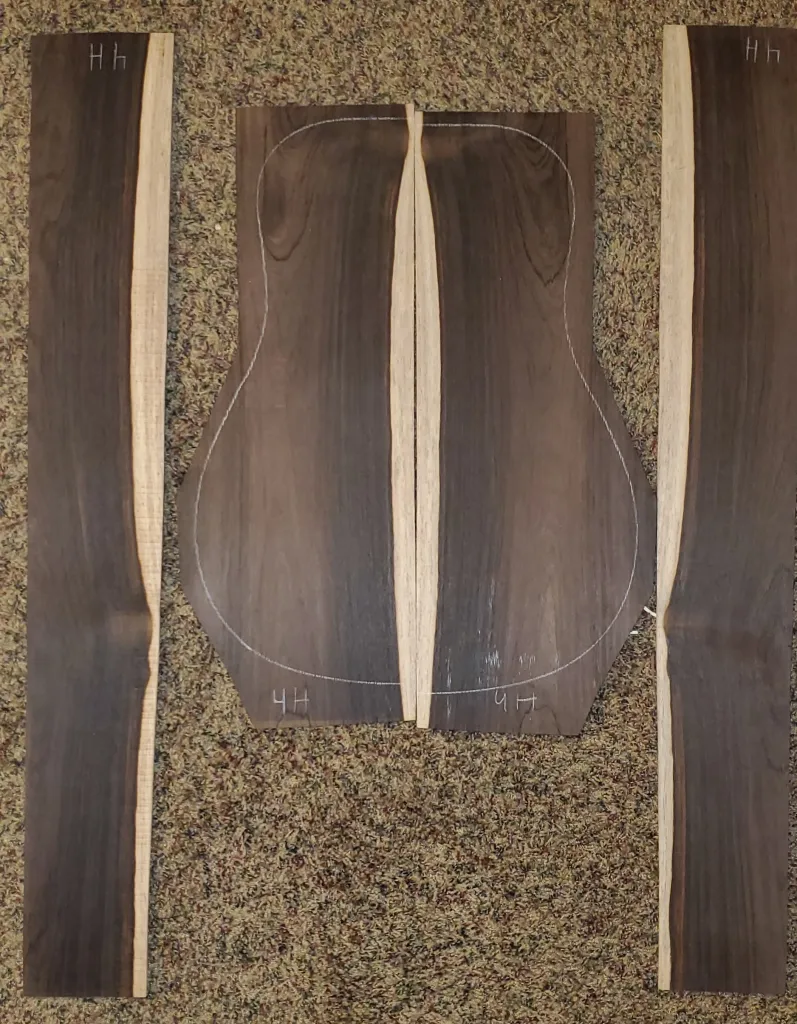
African Blackwood is a true Rosewood and comes from the dry savanna regions of central and southern Africa. Its hardness exceeds that of Ebony. In fact, African blackwood is considered to be among the hardest and densest of woods in the world.
Set #1 - Size: Jumbo +$500
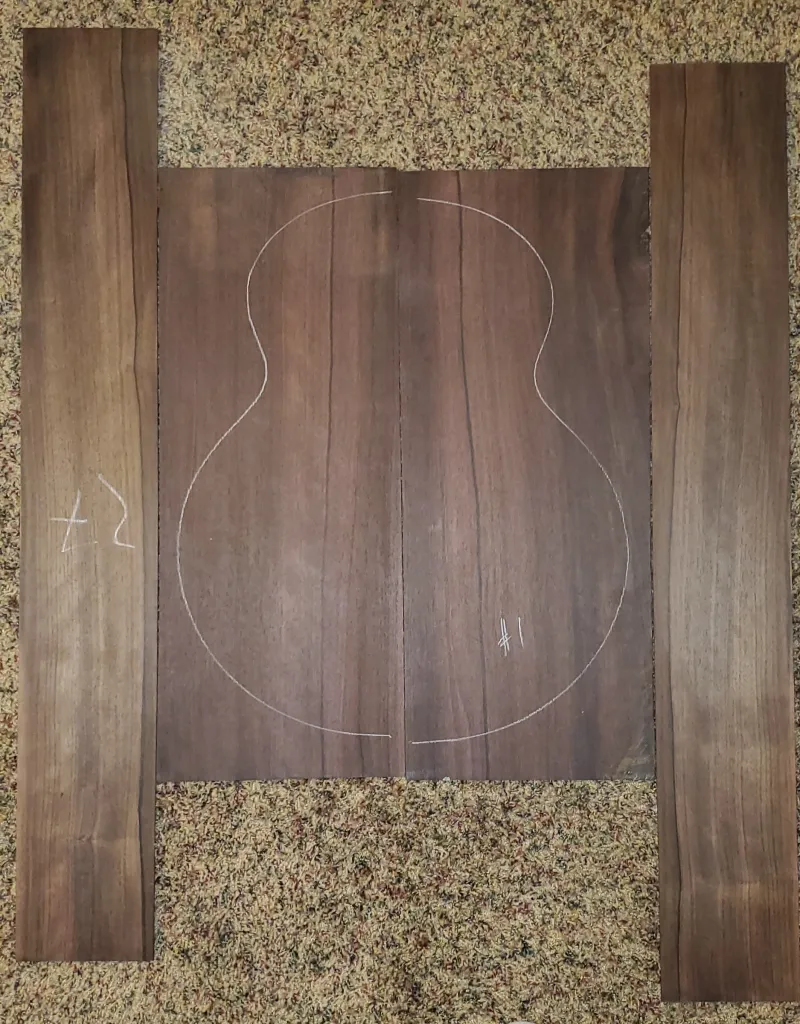
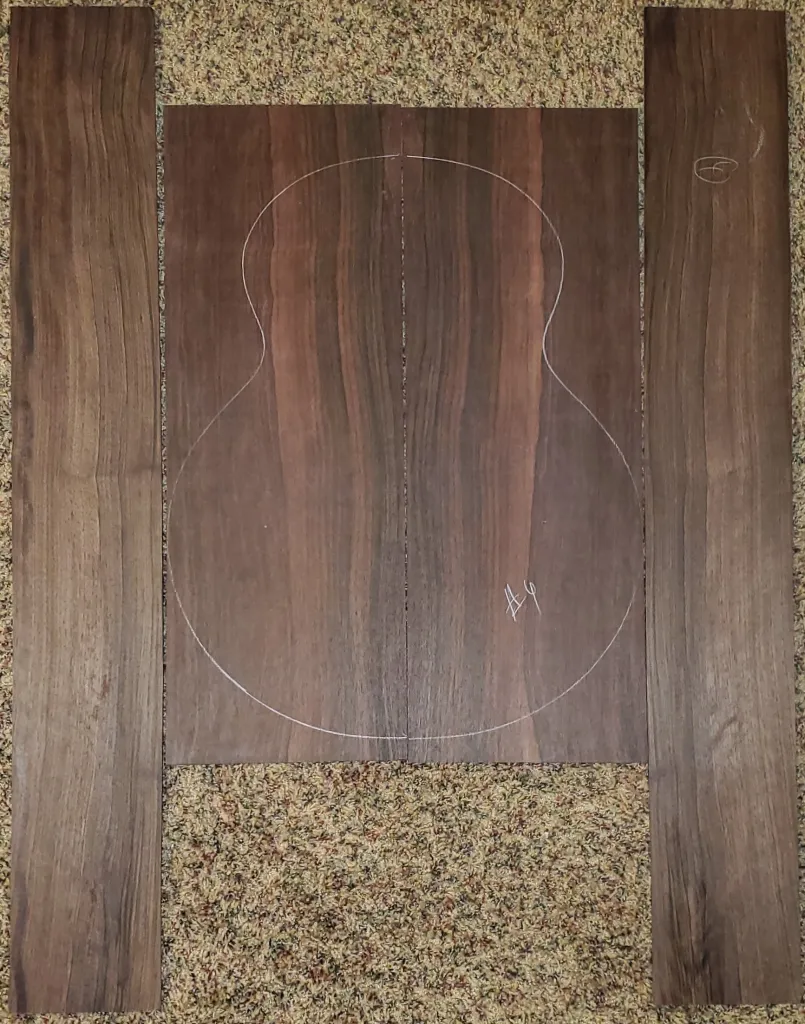
Set #6 - Size: Jumbo +$550
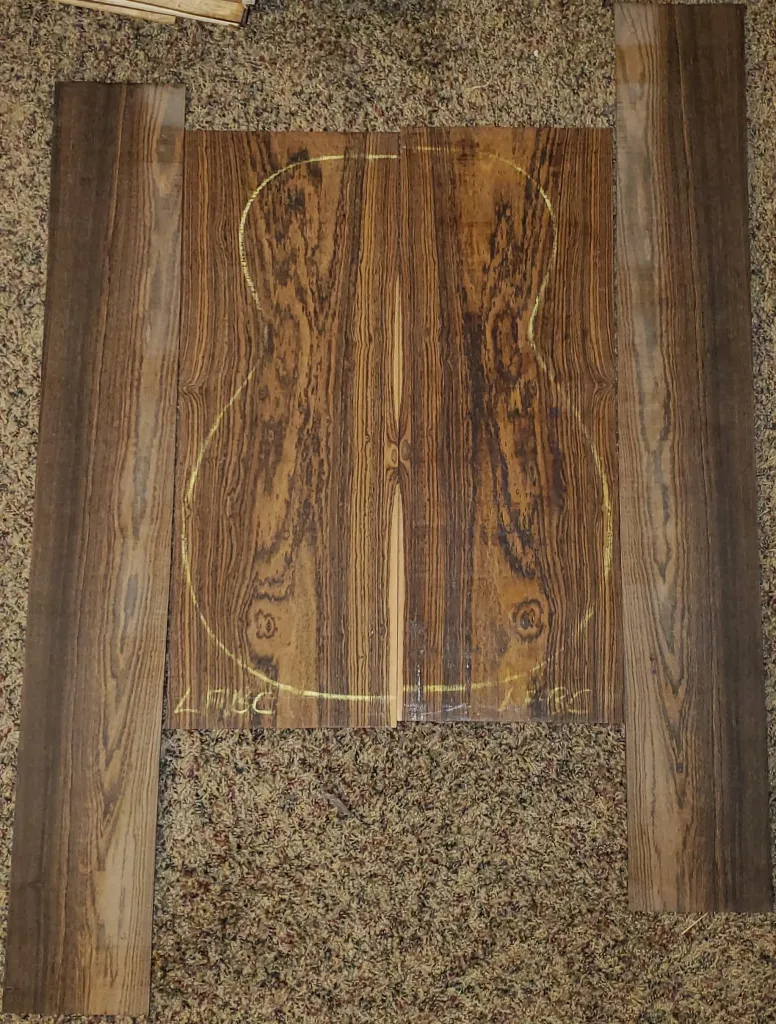
(Cordia Elaeagnoides)
A beautiful dense wood from Mexico. Has a yellowish-brown body with dramatic dark brown to almost black stripes.
Size: OM +$175
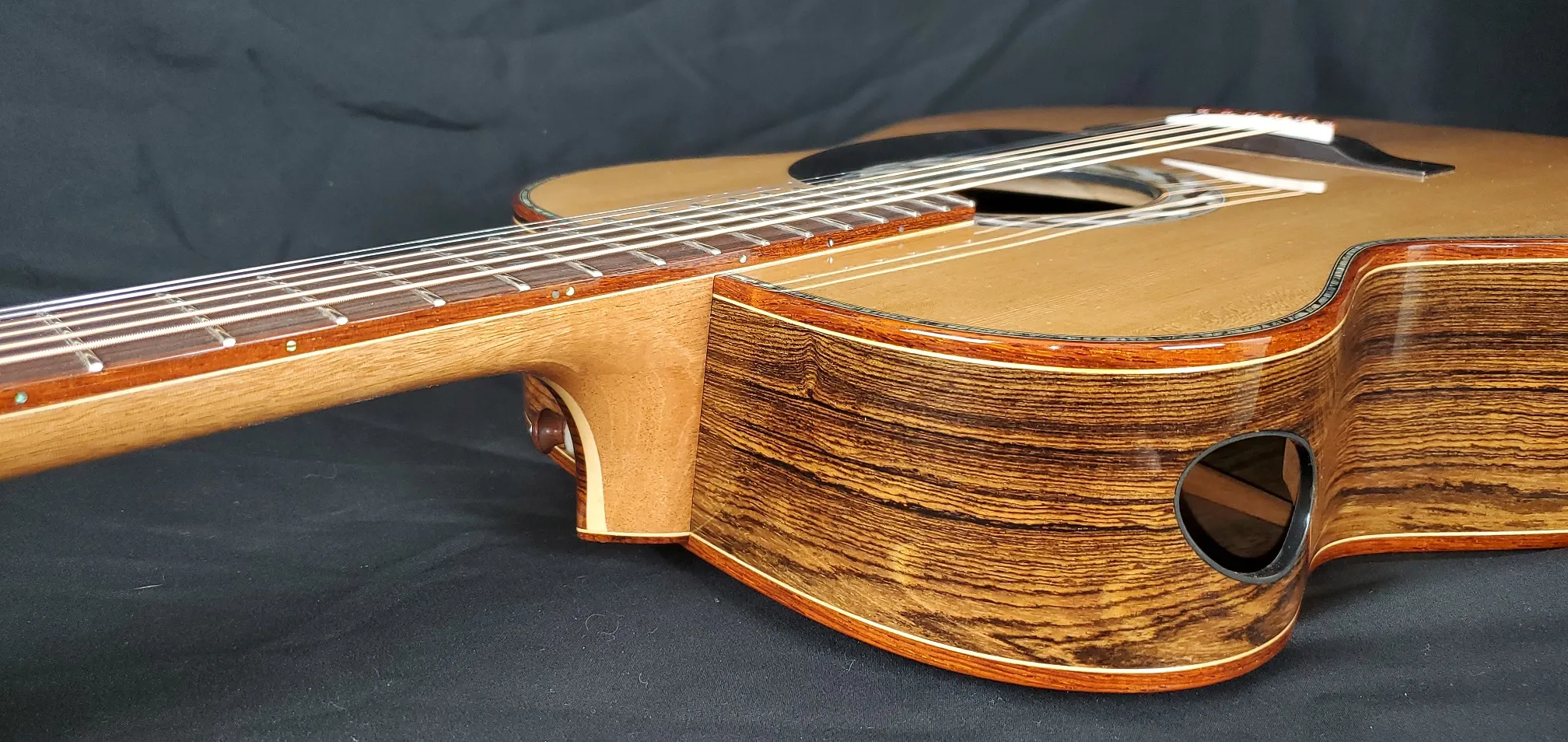
Bocote looks amazing under a finish. Here is a Bocote guitar I made in 2019
glans nigra)
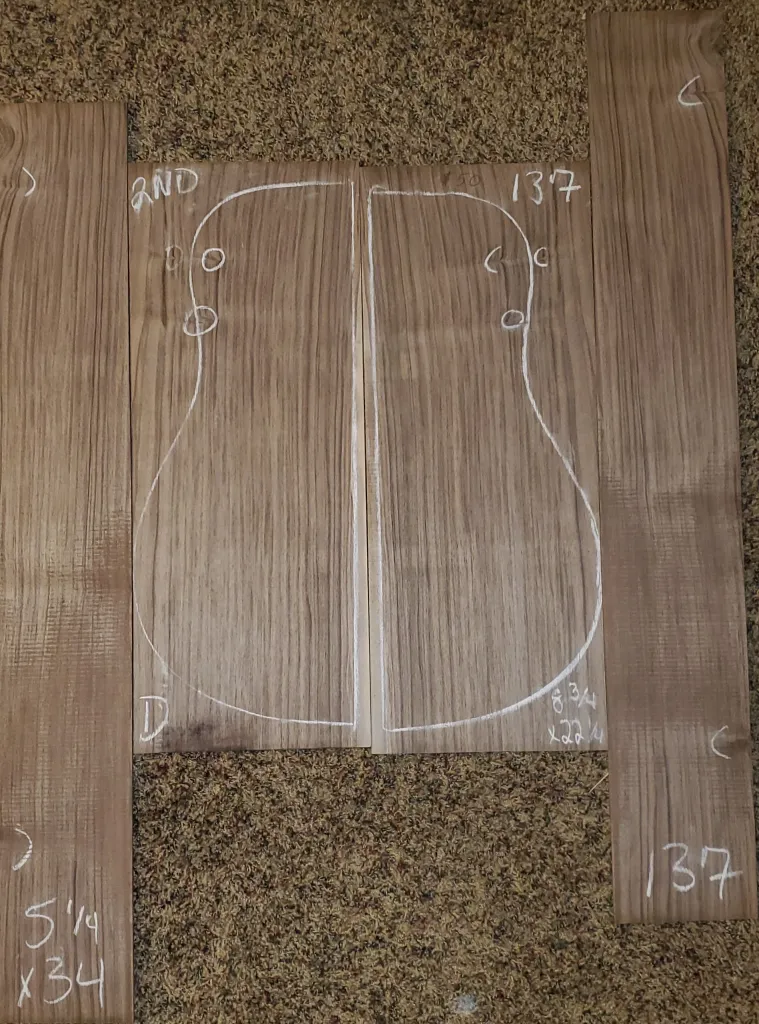
Black Walnut comes from the Eastern US.
Size: Dreadnought - Available at no additional charge
(Dalbergia nigra)
Brazilian Rosewood, the Holy Grail of guitar woods. Due to the high demand and limited supply of Brazilian rosewood, and its continued exploitation in recent decades, it has been listed in the most restrictive category of endangered species: CITES Appendix I. Not only is the lumber restricted from being imported or exported from country to country, but even finished products made of Brazilian rosewood may not cross international boundaries.
CITES approval paperwork from 2008 is available but I cannot guarantee actions taken by border agents. I suggest you not travel overseas with this guitar.
Size: Dreadnought +$1250
(Guibourtia spp.)
Bubinga is a beautify wood with wavy grain. From Equatorial Africa, an immensely popular imported African hardwood, Bubinga may be loved as much for its quirky name as it is for its strength and beauty. Also sometimes called Kevazingo, usually in reference to its decorative rotary-cut veneer.
Bubinga also features a host of stunning grain figures, such as flamed, pommele, and waterfall, which make this wood truly unique. Bubinga also has an exceptional strength-to-weight ratio.
3 Sets available. See below.
Set B1 - Size: Jumbo +$300
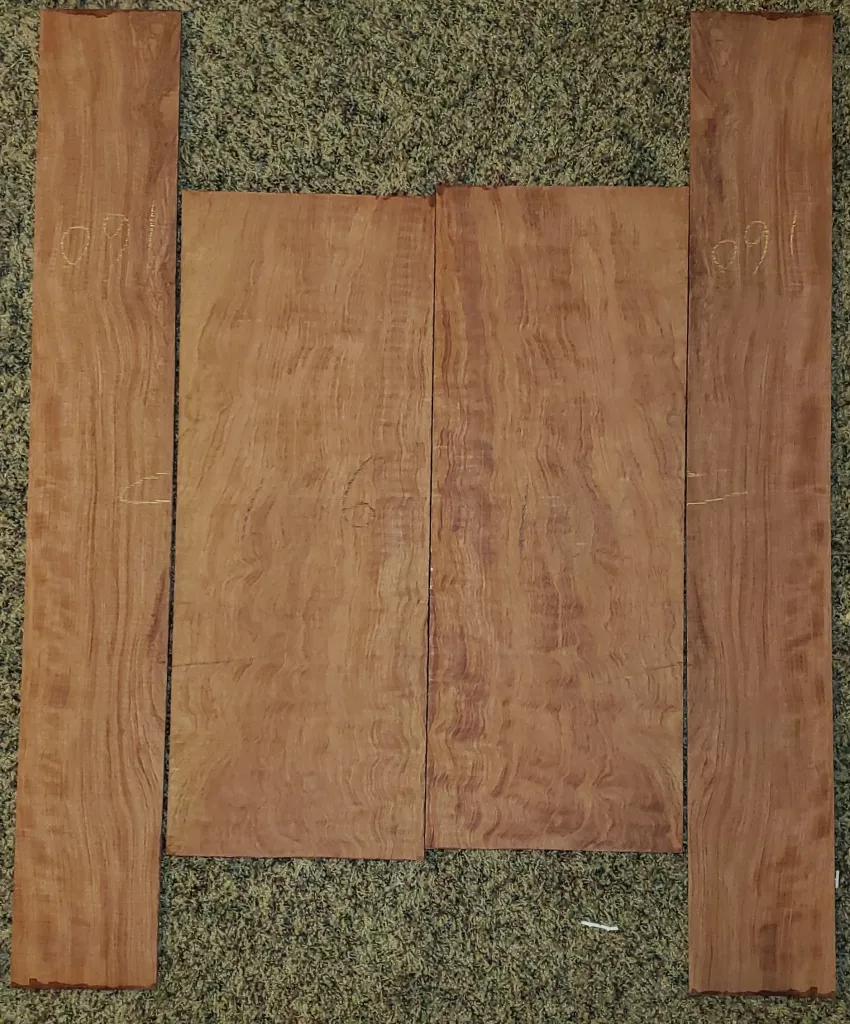
Set B2 - Waterfall Figure - Size: Dreadnought +$325
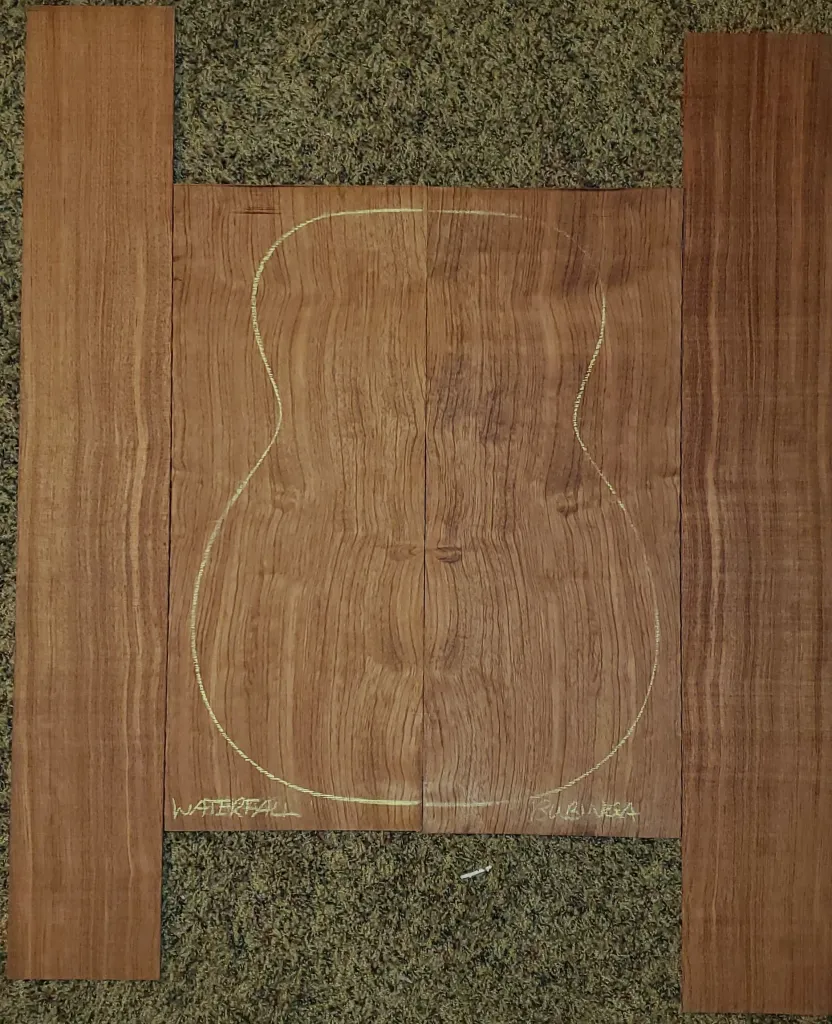
Set B3 - High Figure - Size: Dreadnought +$450
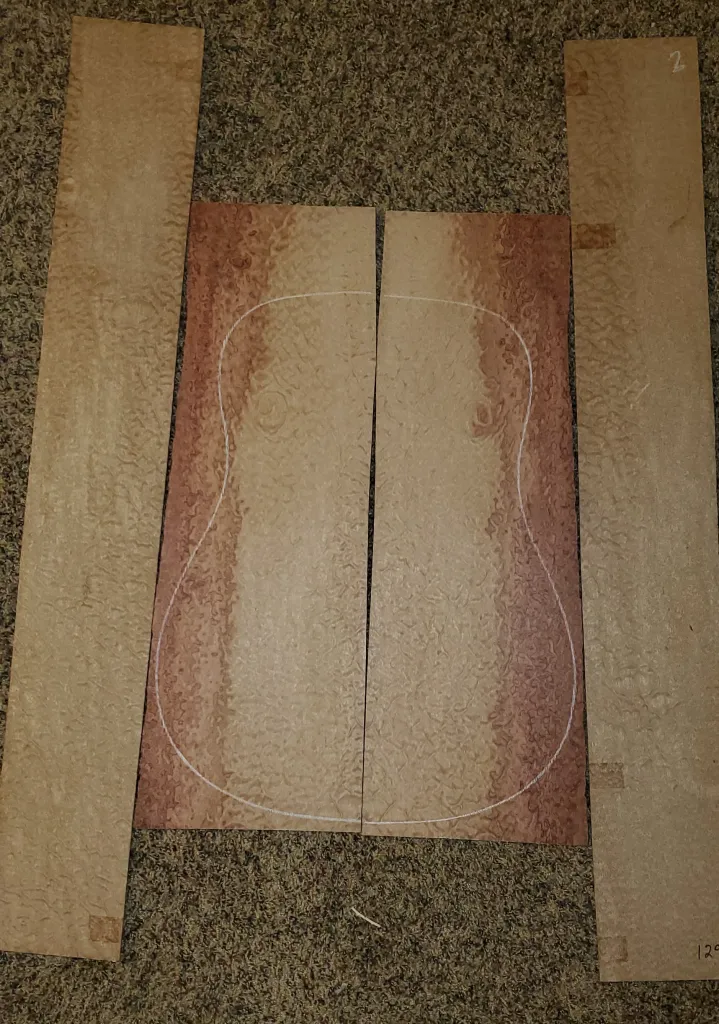
Closeup of the grain pattern

(Metopium brownei)
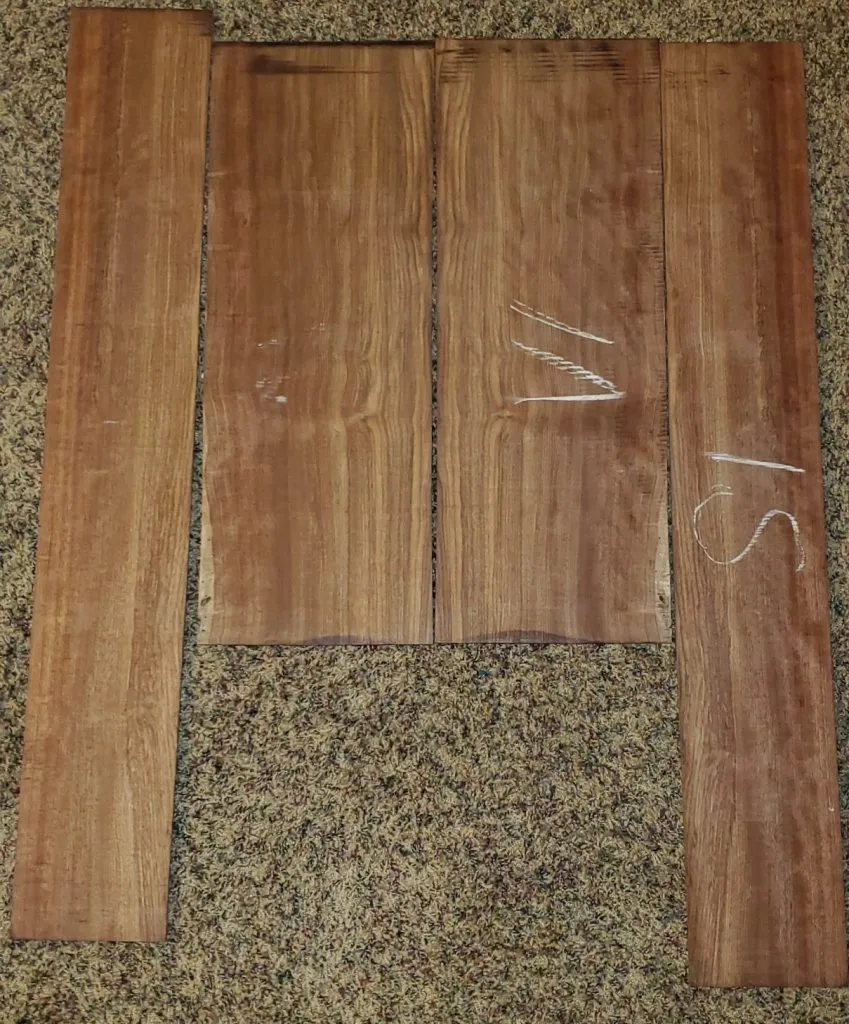
Chechen (also known as Caribbean Rosewood) has a density similar to Indian Rosewood but it is not a true rosewood (not a member of the Dalbergia genus).
Set V - Size: Dreadnought - Available at not additional charge
(Juglans hindsii)
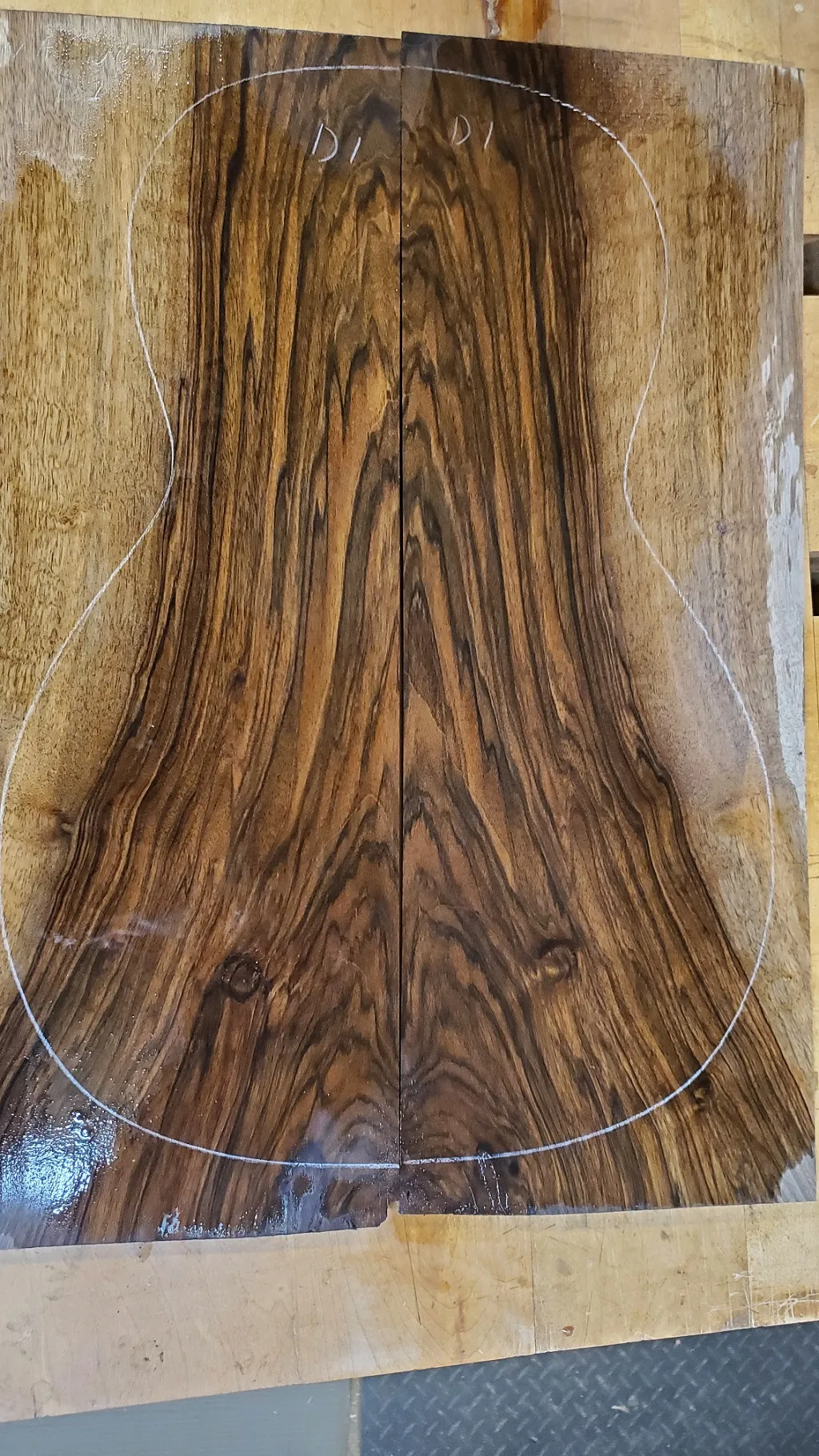
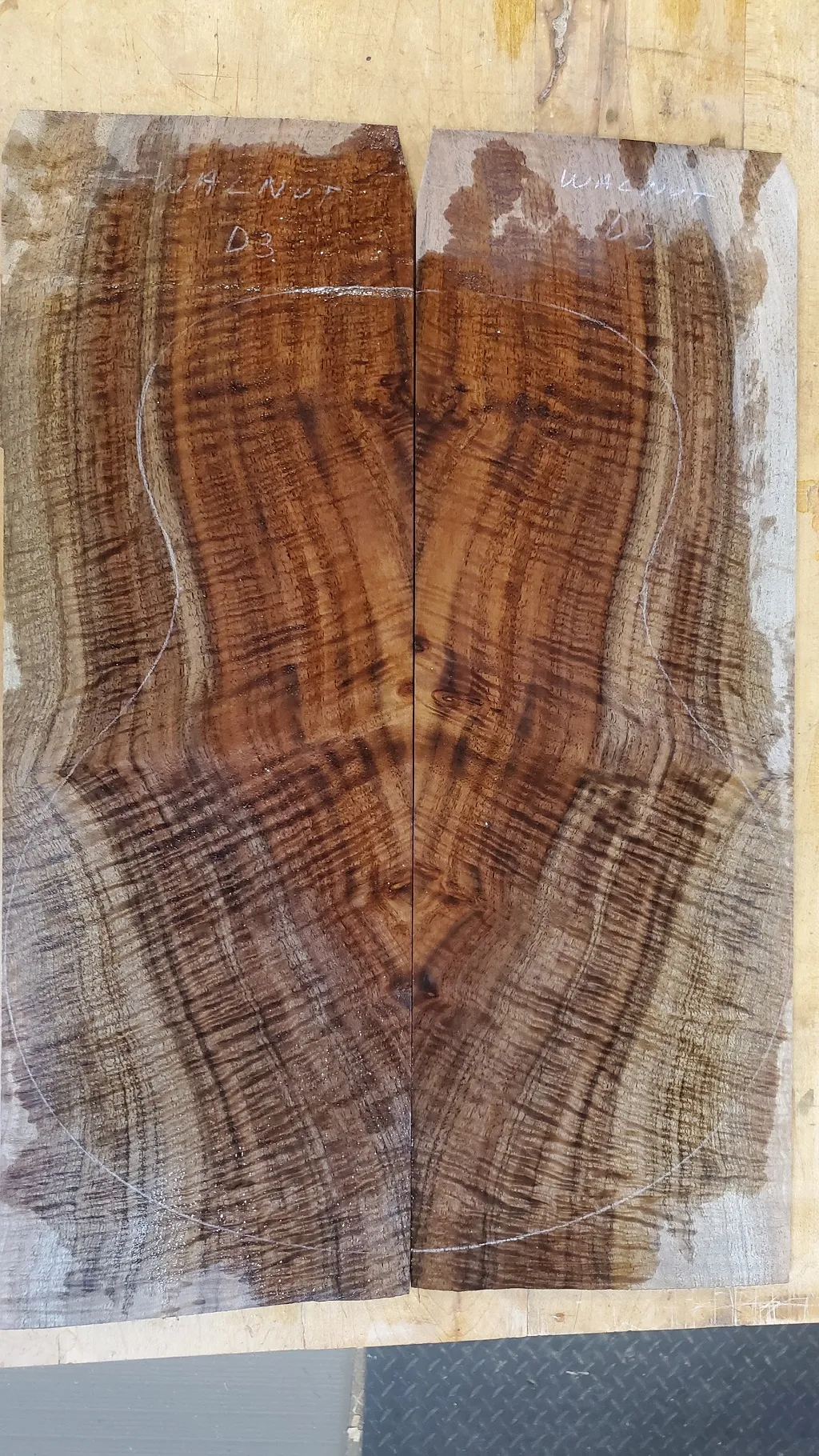
Claro Walnut comes primarily from California and Oregon. This walnut can have some beautiful grain patterns and make lovely sounding guitars.
Several sets are available for smaller body guitars.
D1 Size: Parlor - Available at no additional charge
D3 Size: OO or GS-Mini - Available at no additional charge
D4 Size: Parlor - Available at no additional charge
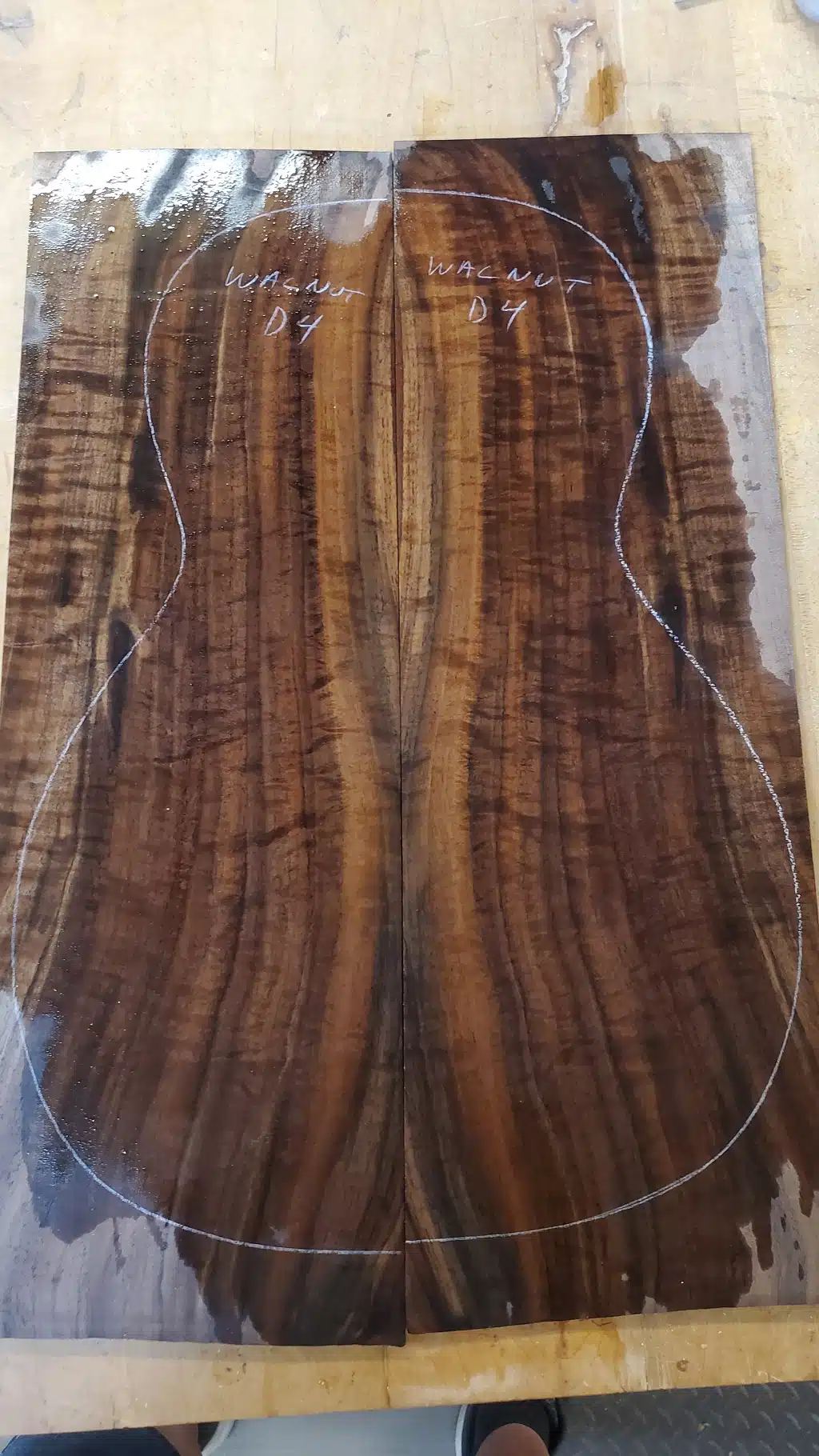
D5 Size: Parlor - Available at no additional charge
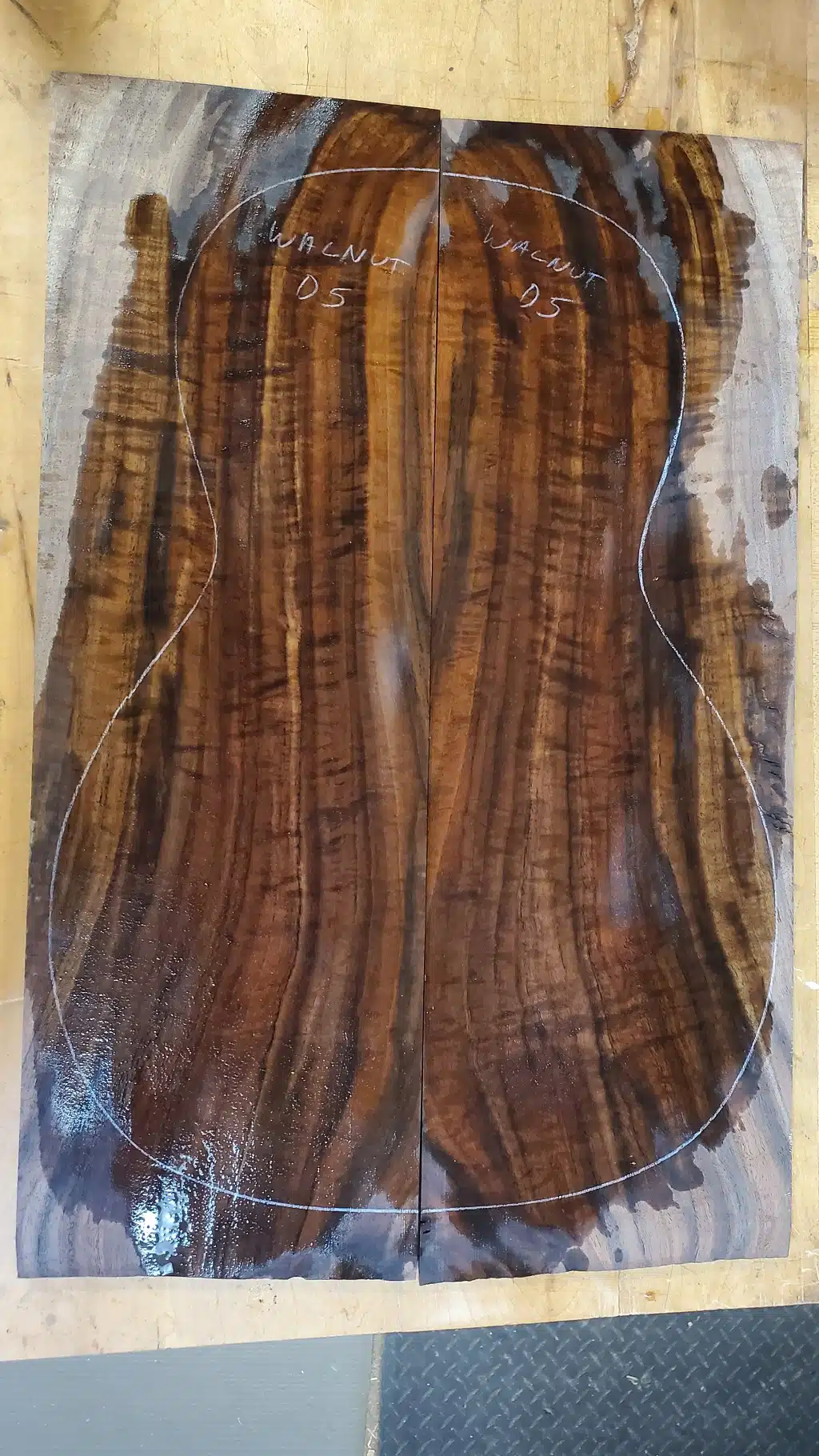
D6 Size: Parlor - Available at no additional charge
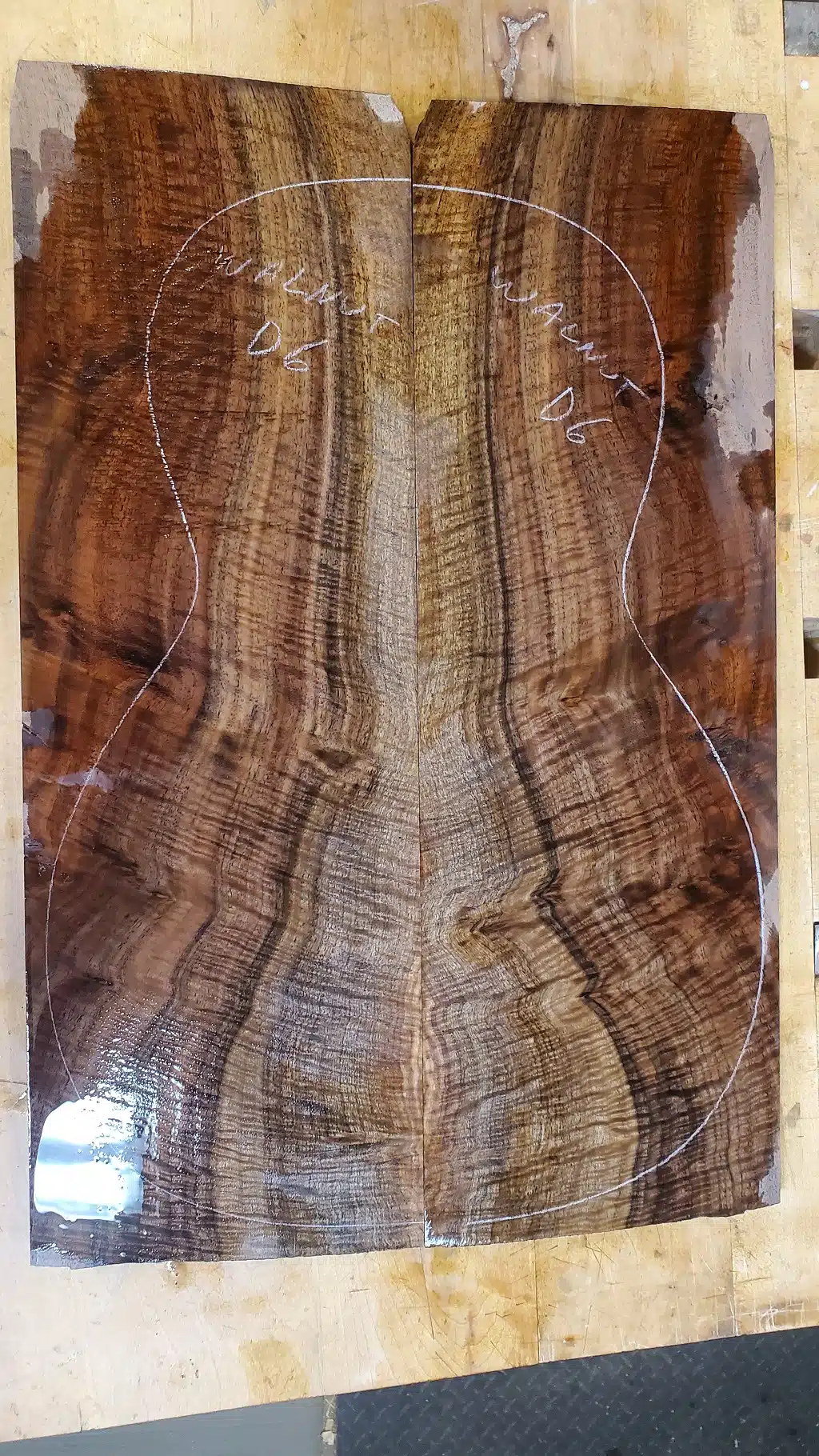
(Dalbergia latifolia)
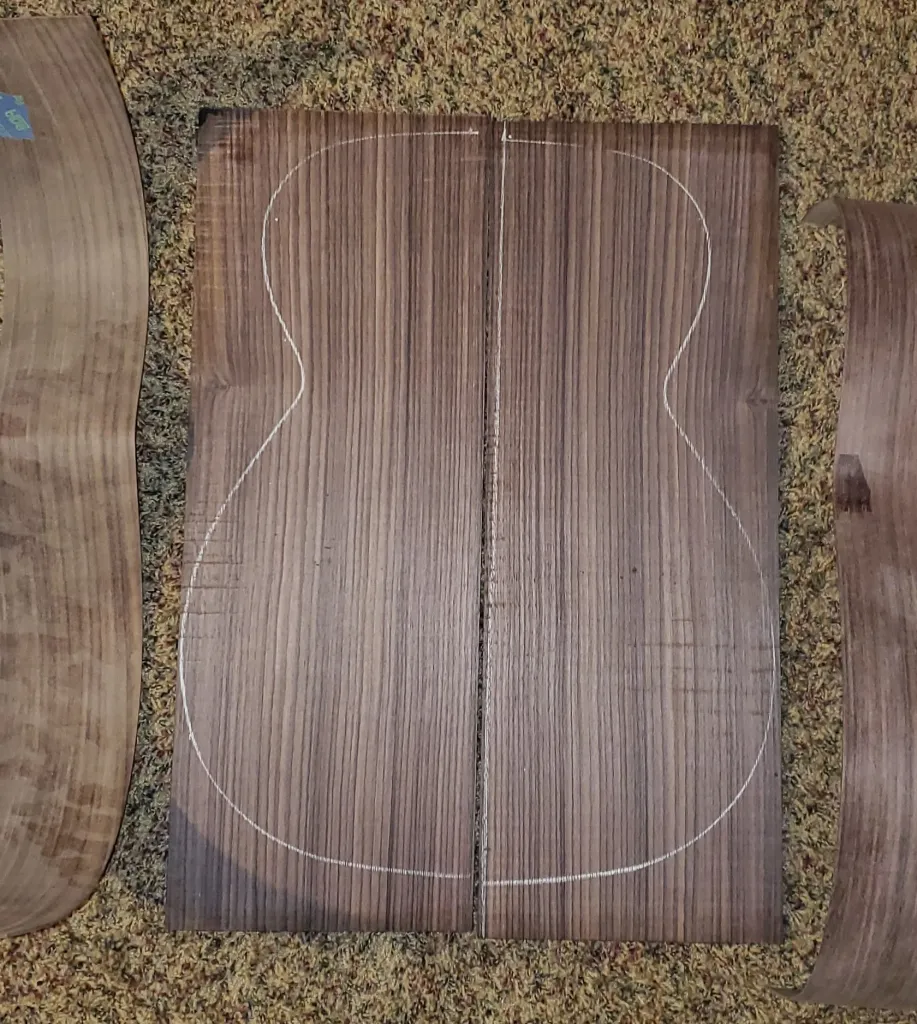
Ah Rosewood. The most commonly used wood for high end guitars and ukuleles and for good reason. The old Martin guitars were made out of rosewood. Rosewood imparts a warm and complex tone to any instrument.
8 sets available. An example piece in shown below. Available at no additional charge.
Pictures of other sets available upon request.
Sizes = Dreadnought or smaller
(Platymiscium spp.)
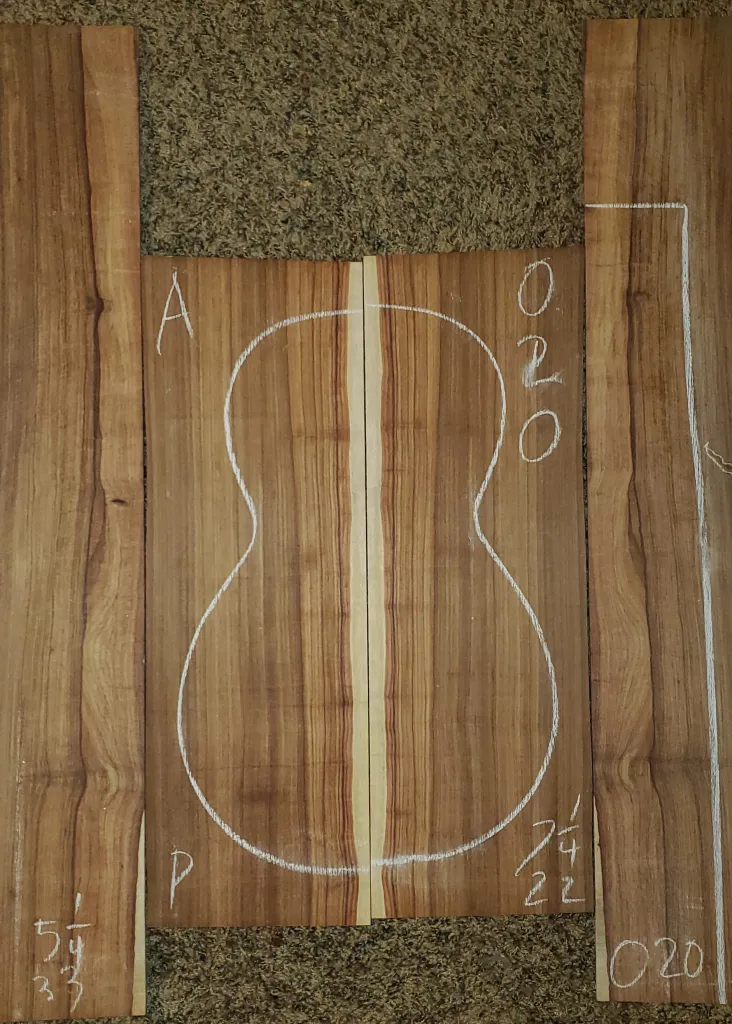
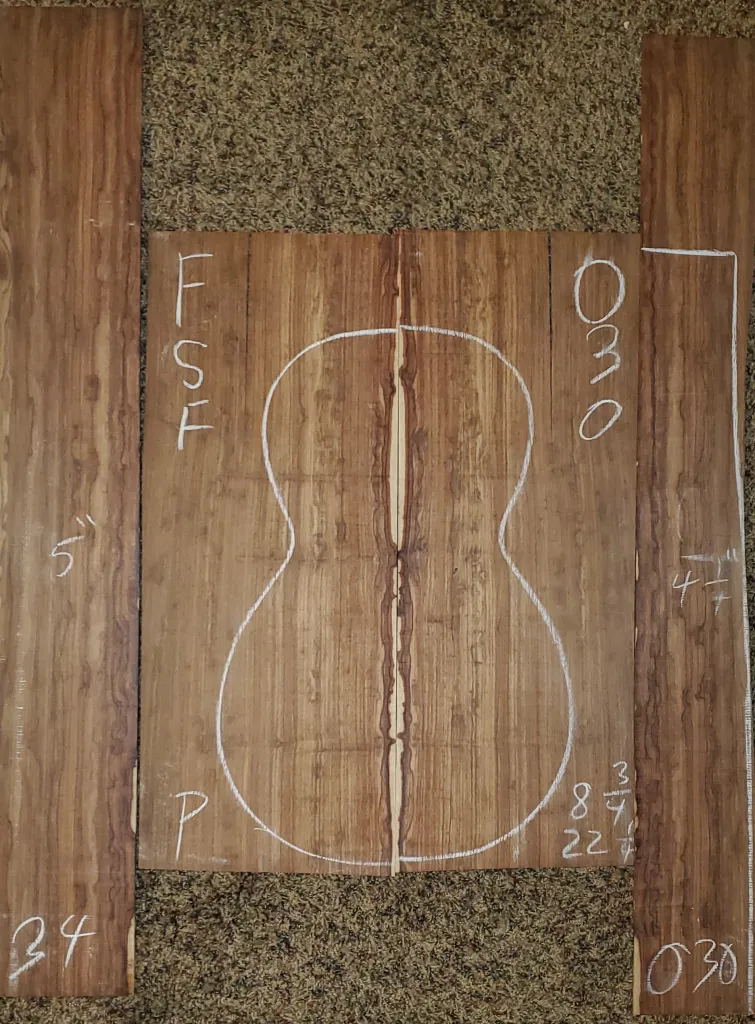
Macacauba (sometimes given the ambiguous name Granadillo) is a dense wood that comes from Central and South America. Heartwood color can be highly variable, ranging from a bright red to a darker reddish or purplish brown, frequently with darker stripes. When the wood is referred to as “Hormigo,” various suffixes are used to describe the heartwood color: “Hormigo Negro” for darker pieces or “Hormigo Rojo” for orangish red pieces.
2 sets are available, see below.
Set #20 - Size: Parlor or Ukulele - Available at no additional charge
Set #30 - Size: Parlor or Ukulele - Available at no additional charge
(Dalbergia Latifoli or Dalbergia Sissoo or ?)
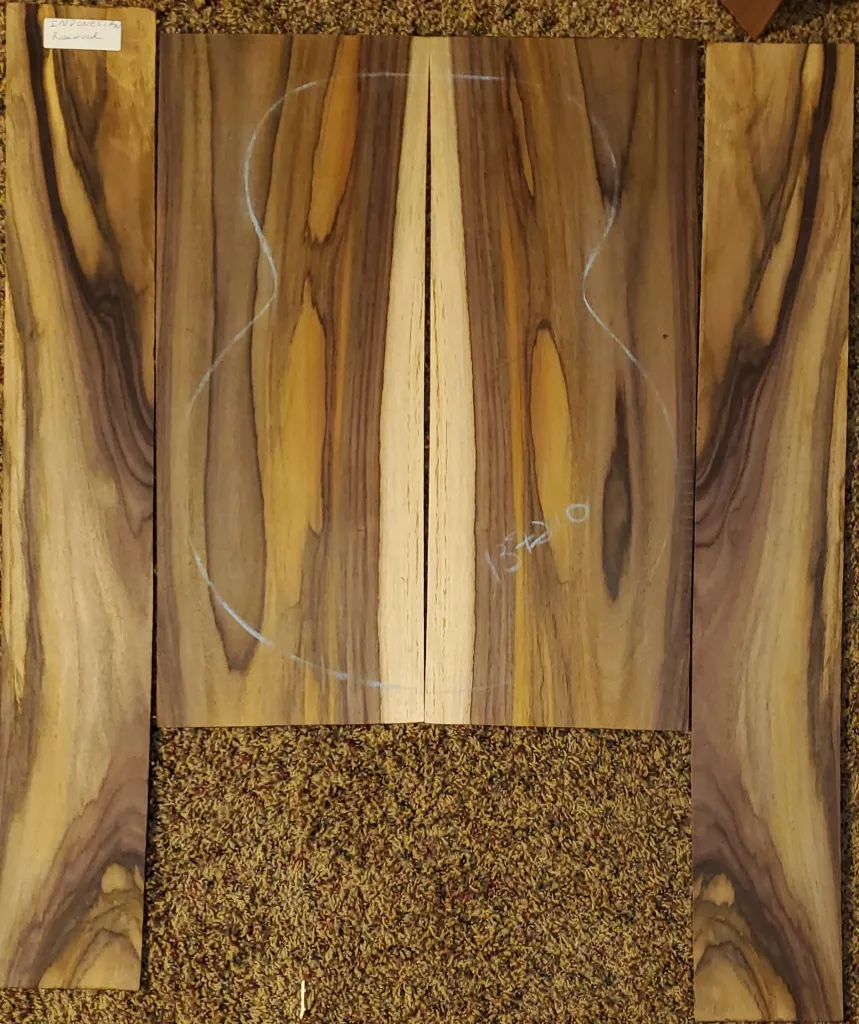
This gorgeous piece was described as being Indonesian Rosewood or is it? What ever it is called, it is still gorgeous.
2 very different sets available.
Many people refer to this wood as "Indian Rosewood", which is inaccurate; Sissoo (Dalbergia Sissoo) is also known through its natural region as "Indian Rosewood".
Also worth mentioning is Sonokeling: a true Dalbergia indigenous to Indonesia - where it is also known as "Jacaranda". Many sources consider this wood and East Indian Rosewood to be of the same species (Dalbergia Latifolia), however tree farmers in Indonesia are not in agreement with this assessment. Research into Indonesia and the cultivation of rosewood trees there revealed that back in the 1700’s, while the Indonesian islands were considered a colony of Holland, Dutch merchant colonists transplanted two major Dalbergia’s to Indonesia: Dalbergia Nigra (Brazilian Rosewood), from Brazil, and; Dalbergia Sissoo (Indian Rosewood or Sheesham), from India. So, is Indonesian Rosewood an hybrid of those 2 rosewoods brought to Indonesia?
I view Indonesian Rosewood as a completely different species of Dalbergia and see the topic as certainly worthy of further botanical investigation.
Size: Jumbo +$375
Java Palisander (another name for a rosewood from Indonesia)
Size: Dreadnought +$175
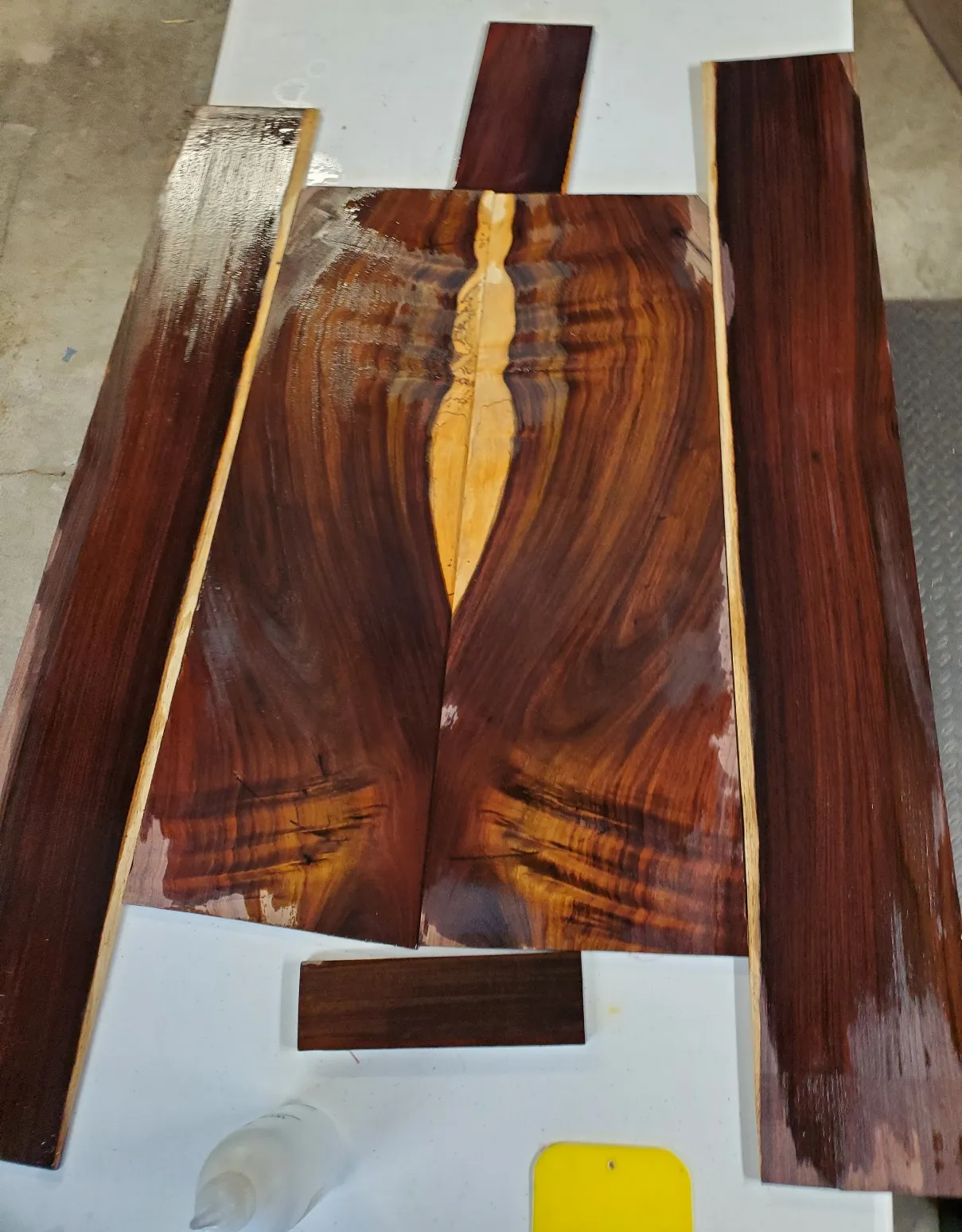
(Swartzia cubensis)
Katalox, also called Mexican Royal Ebony, comes from Southern Mexico, Central America, and northern South America. A very dense hard that is harder and stiffer than Ebony. Katalox has exceptional strength properties and is among the very stiffest and strongest woods available worldwide. Many fine guitars have been made with this wood.
Size: Jumbo +$125
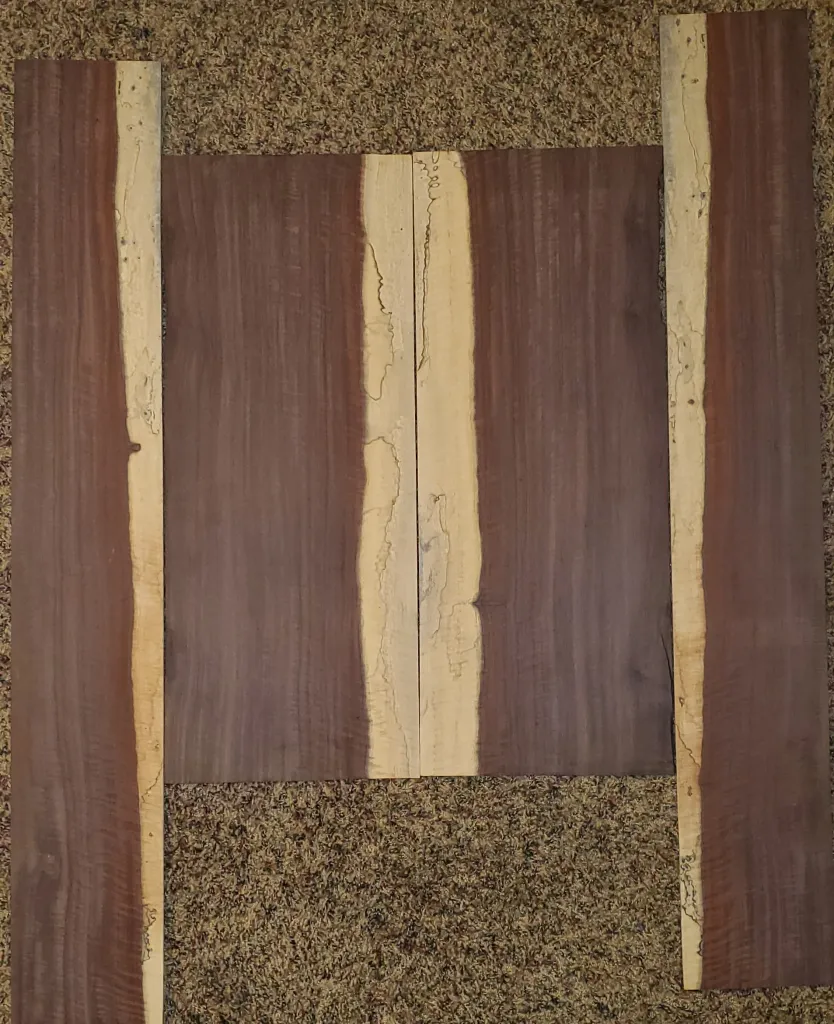
(Roupala montana (syn. R. brasiliense))
Leopardwood comes from Central and South America. The density is similar to rosewood
Size: Dreadnought - Available at no additional charge
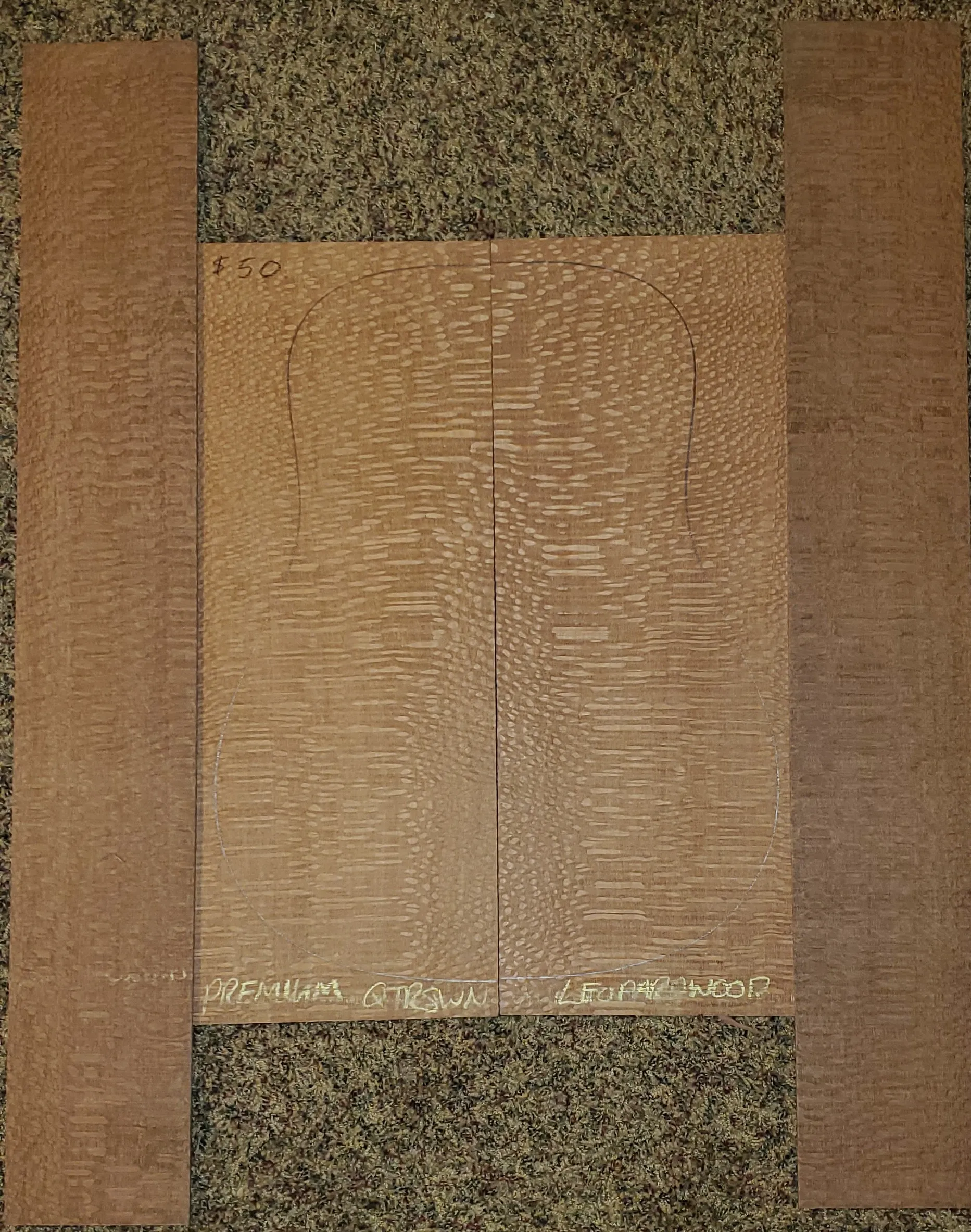
(Dalbergia madagascariensis)
Madagascar Rosewood is native to Madagascar, Duh.
Size: OM +$500
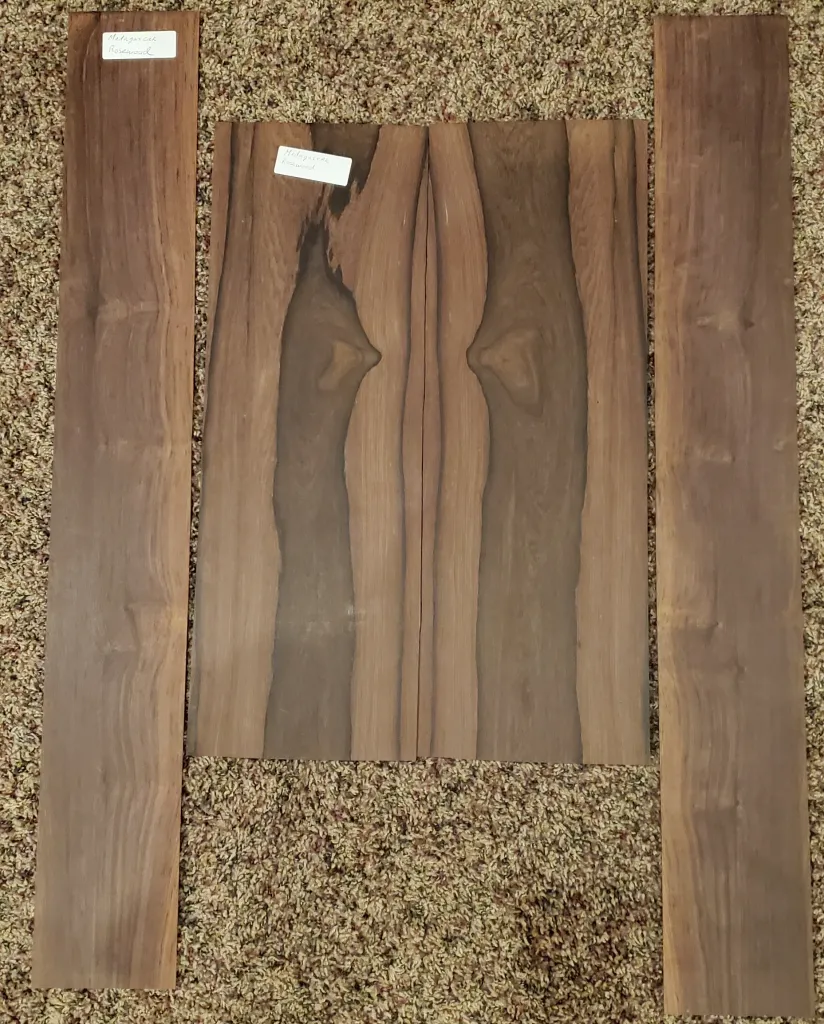
(Swietenia macrophylla)
Mahogany comes from Southern Mexico to central South America; also commonly grown on plantations. Mahogany guitars typically have a warm sound.
3 sets available below.
Set #35 - Size: Jumbo - Curly +$325
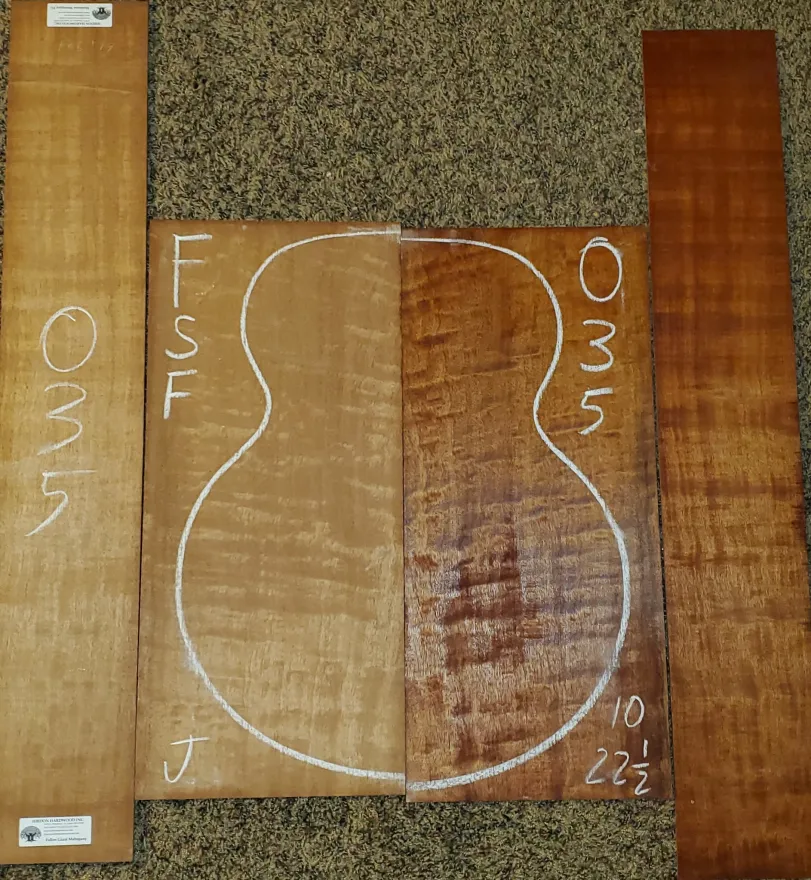
Set #540 - Size: Dreadnought - Figured +$125
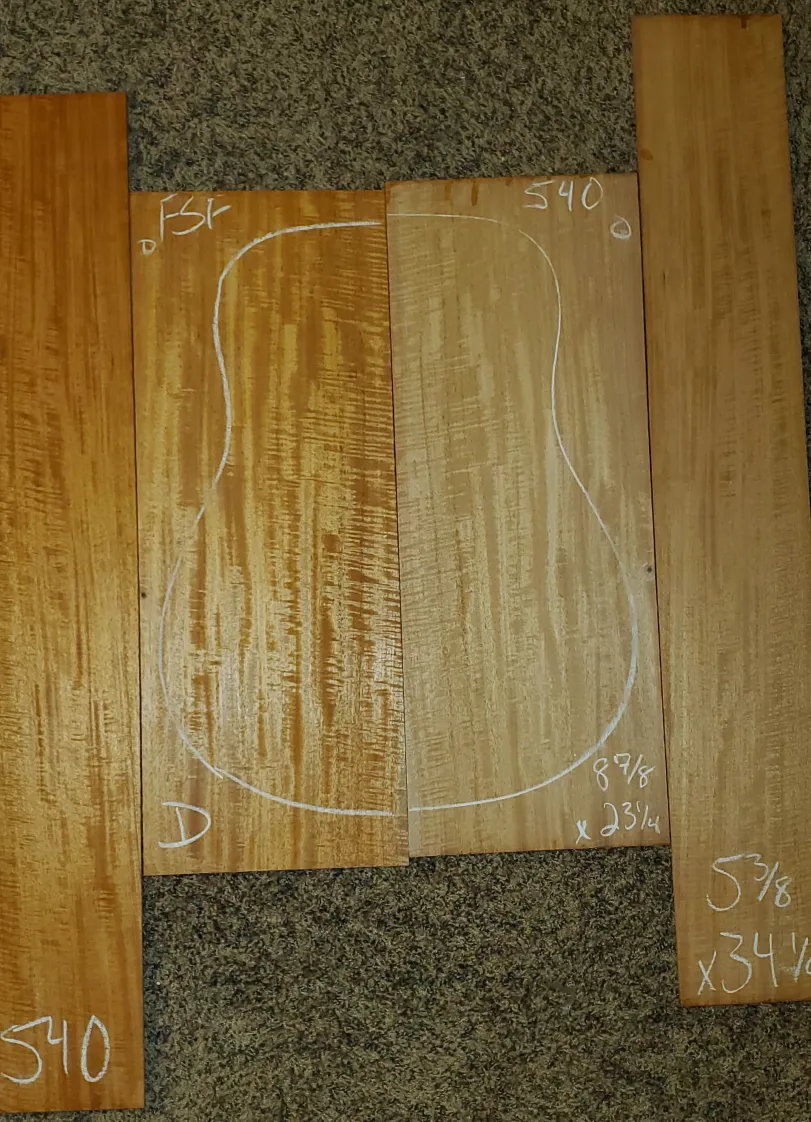
Size: Parlor - Available at no additional charge
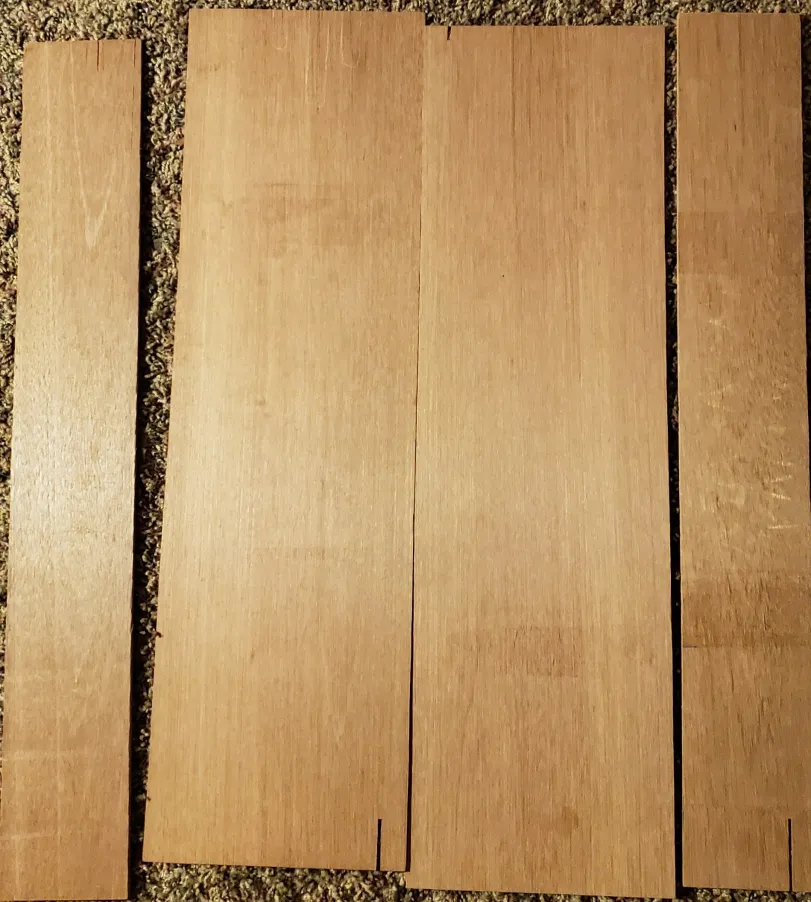
(Tieghemella heckelii)
Makore comes from Western and Middle Africa. A slightly softer wood, like Mahogany.
Size: Jumbo +$125
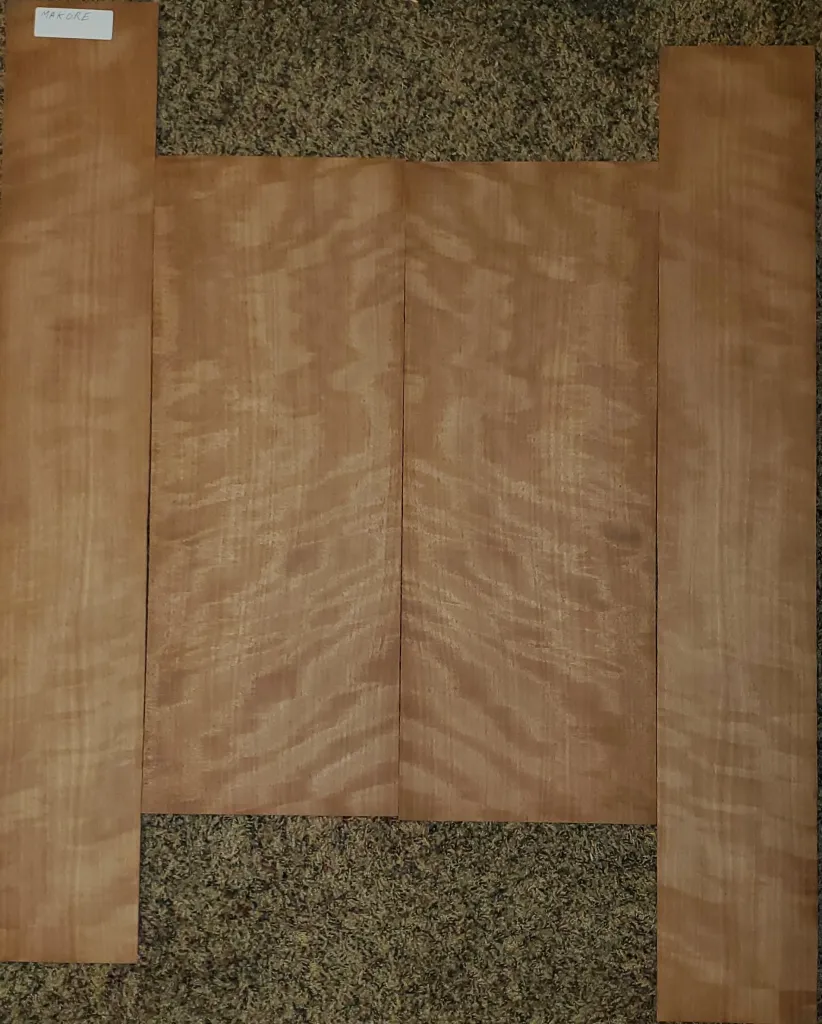
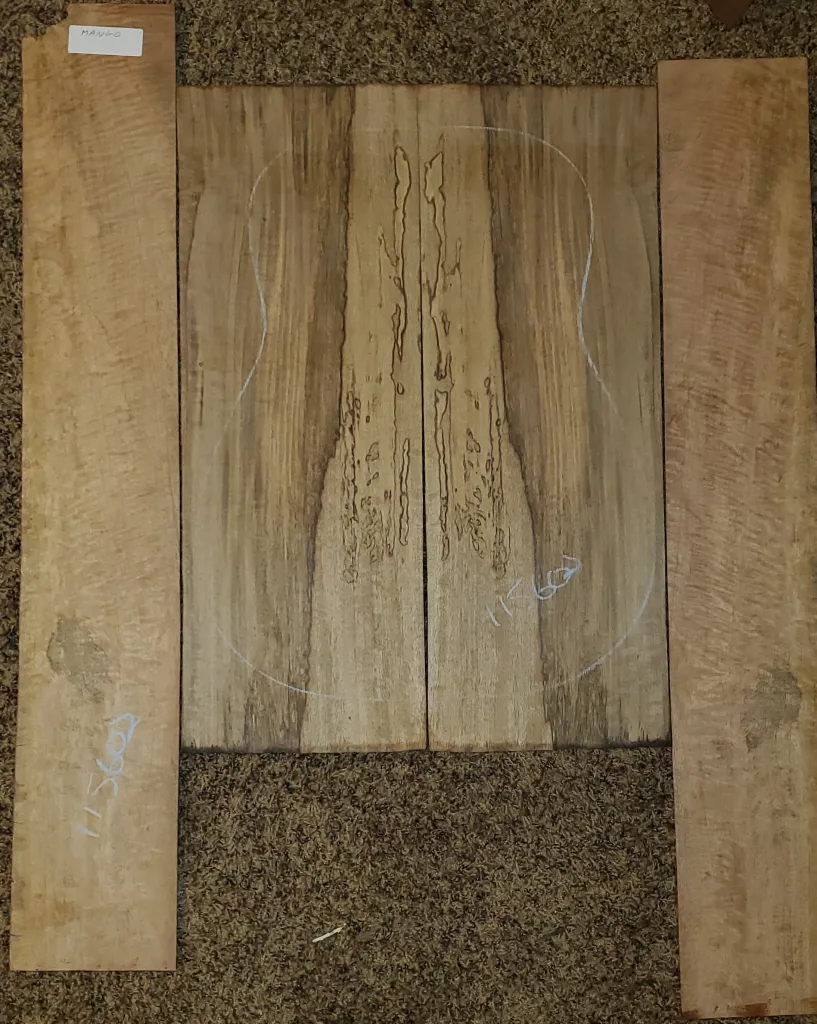
(Mangifera indica)
Mango comes from Tropical Asia and Oceania. A slightly softer wood, like Mahogany.
Size: Dreadnought +$50
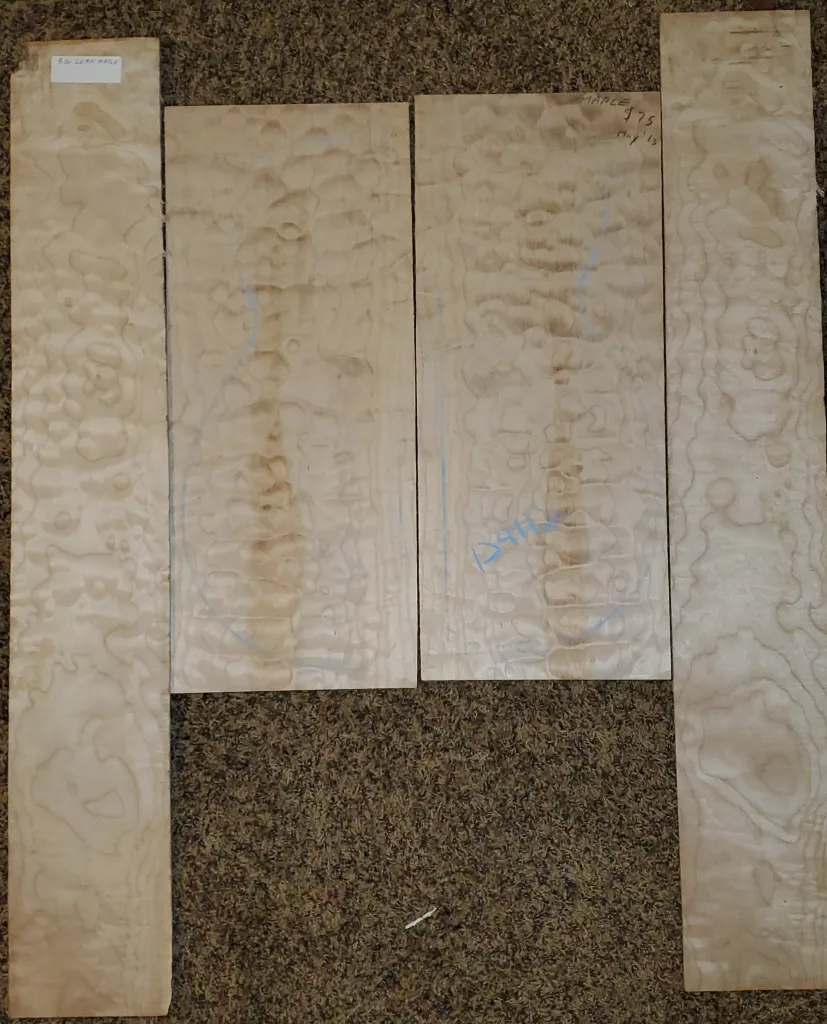
(Acer macrophyllum)
Big Leaf Maple is a local tree native to the Pacific Northwest (my home). Slightly softer than Mahogany.
Size: Dreadnought +$50
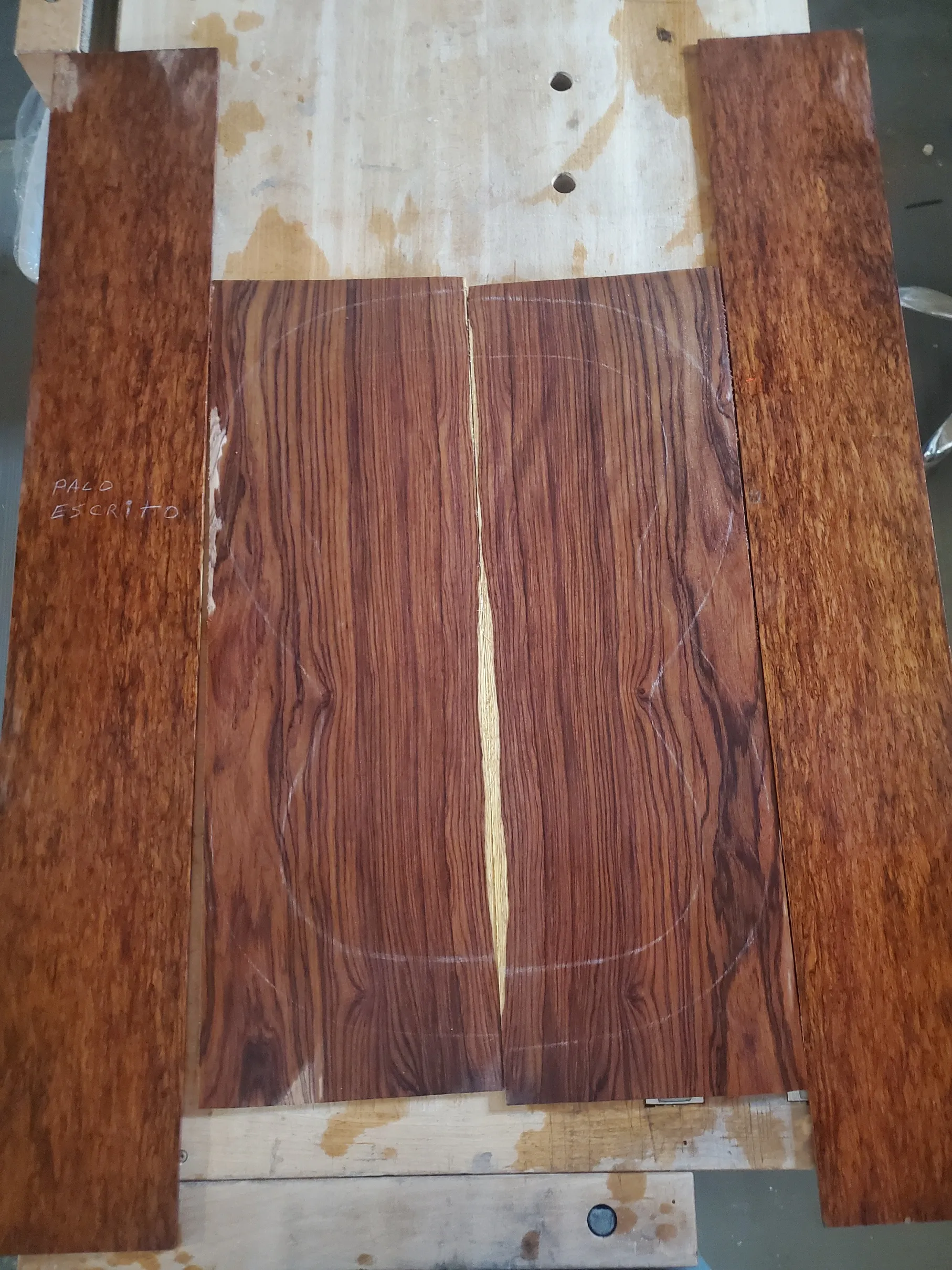
(Dalbergia Palo Escrito)
Mexican Rosewood is a true rosewood but it is not as well-known as other rosewoods.
Size: Dreadnought - +$100
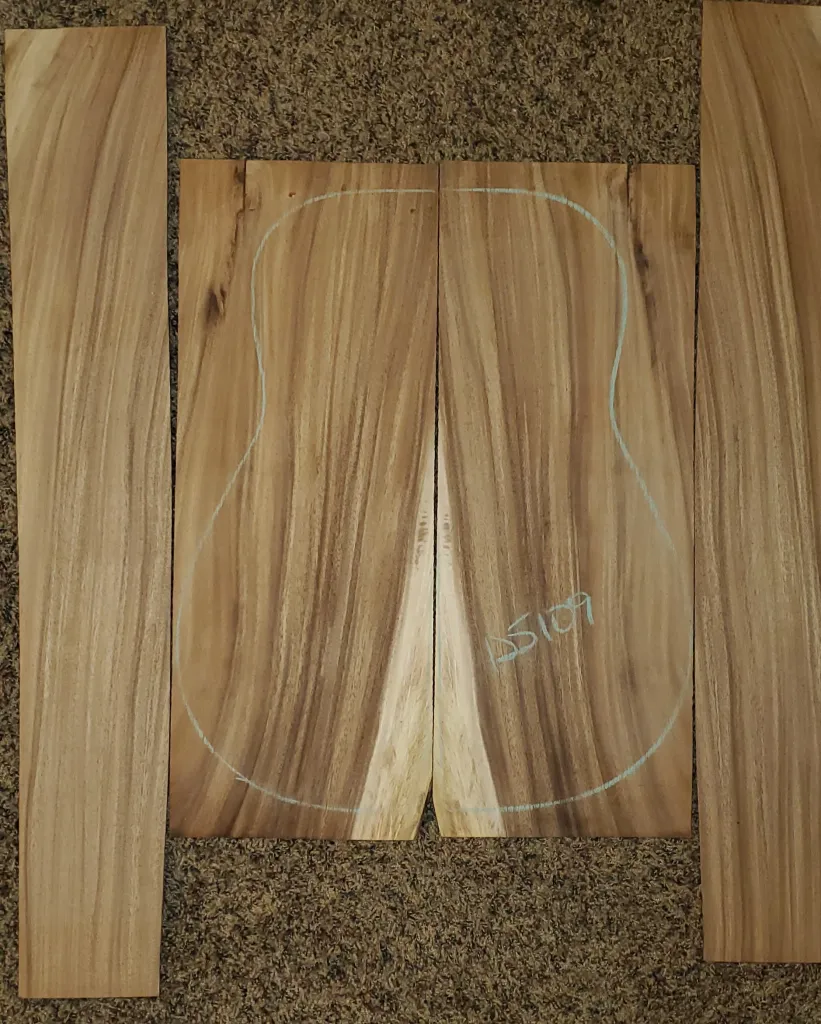
(Albizia saman)
Monkeypod is from Central and South America. It a beautiful wood that frequently has a high level of chatoyance (a glow like an inner light)
Size: Dreadnought +$50
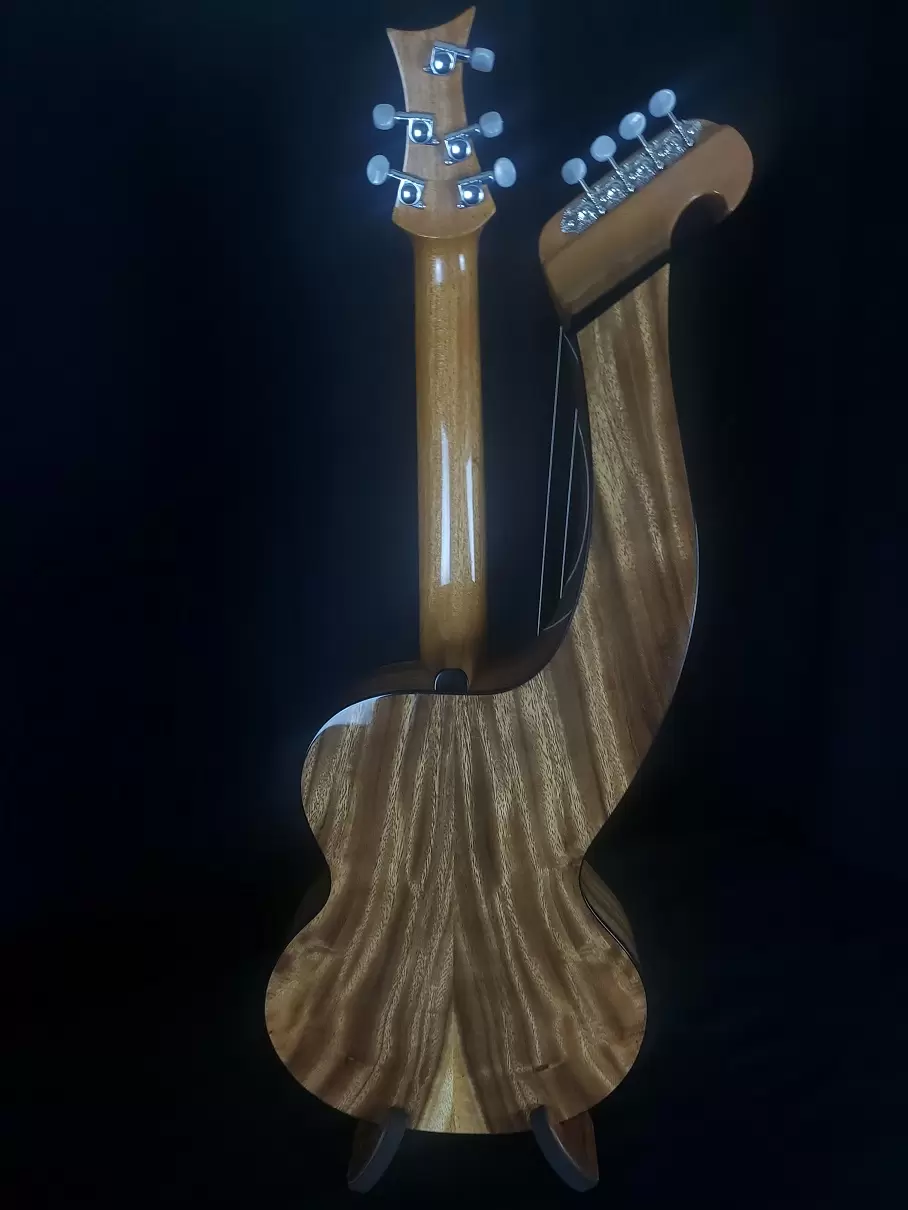
Here is a Monkeypod Harp Ukulele I made
(Pterocarpus spp.)
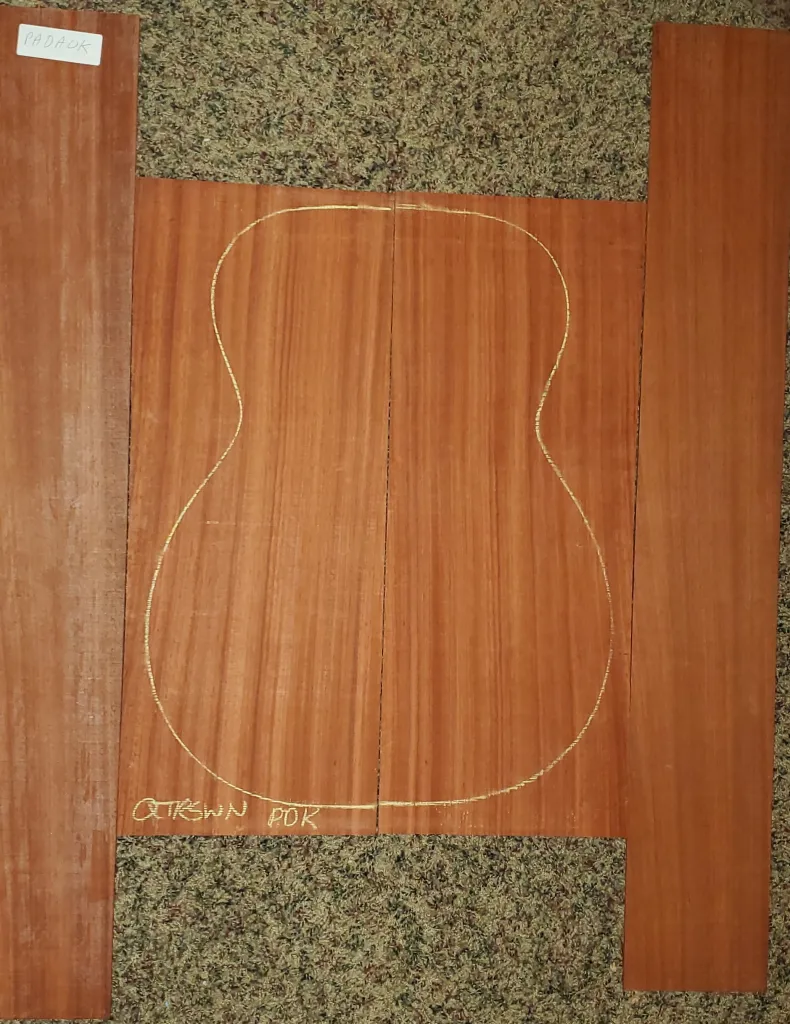
Padauk comes from Africa. A beautiful red color that can fade slightly over time to a reddish brown. Almost as hard as Rosewood.
Size: Dreadnought Available at no additional charge
(Cordia dodecandra)
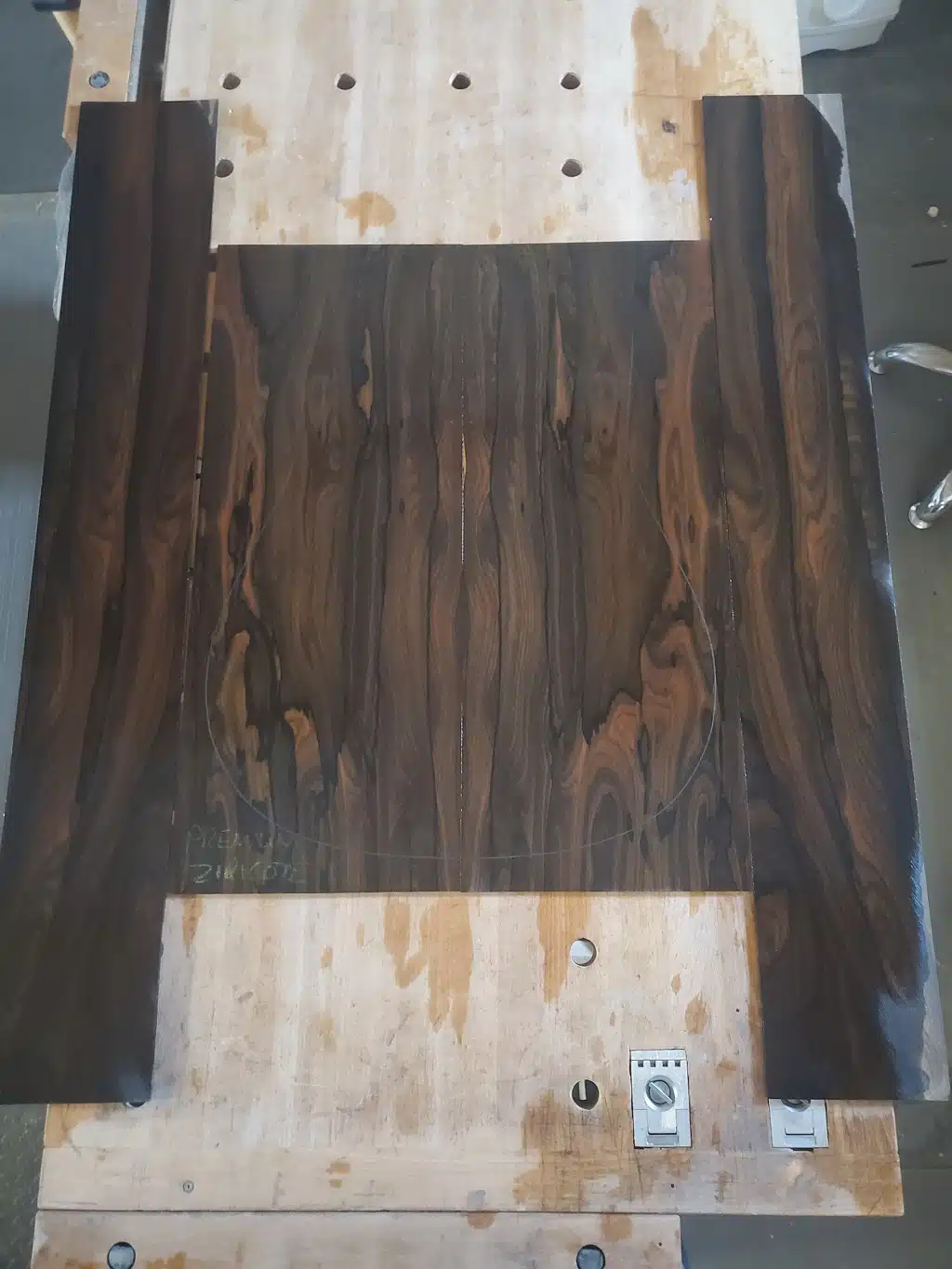
Ziricote comes from Central America and Mexico. This beautiful wood has an amazing bell-like tone which has been used to make marimbas.
Master Grade: Size: Dreadnought +$200
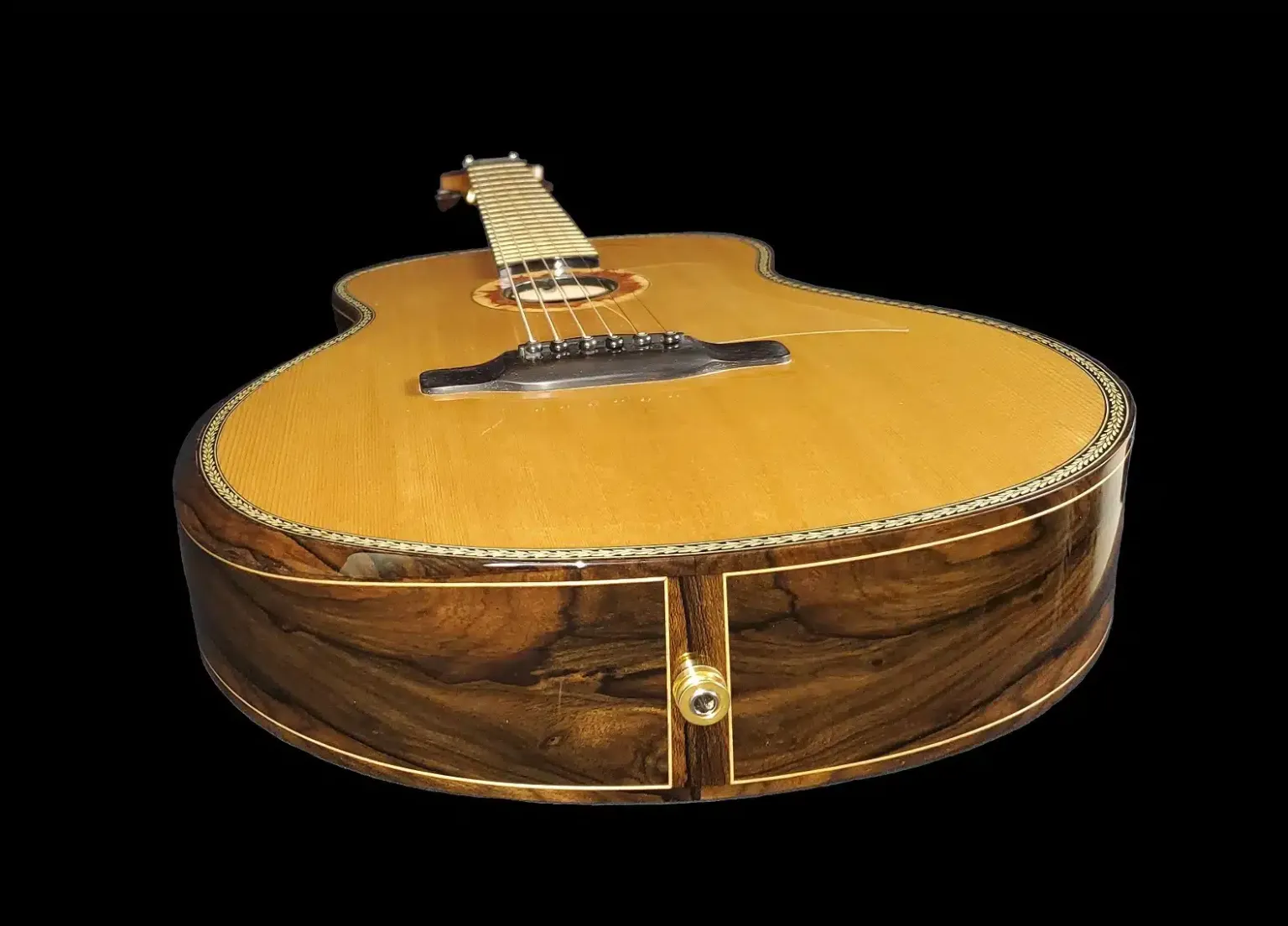
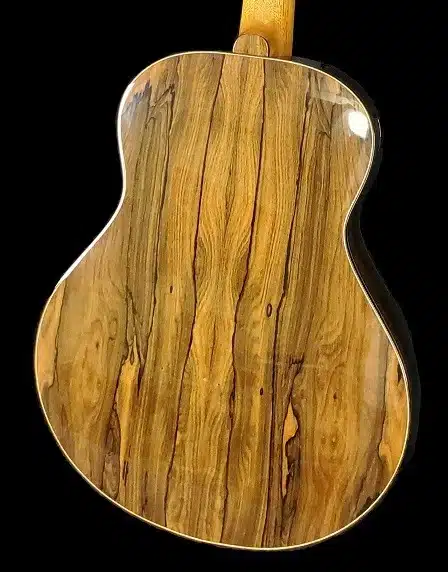
Here is the guitar created using this set
Ukulele Sets
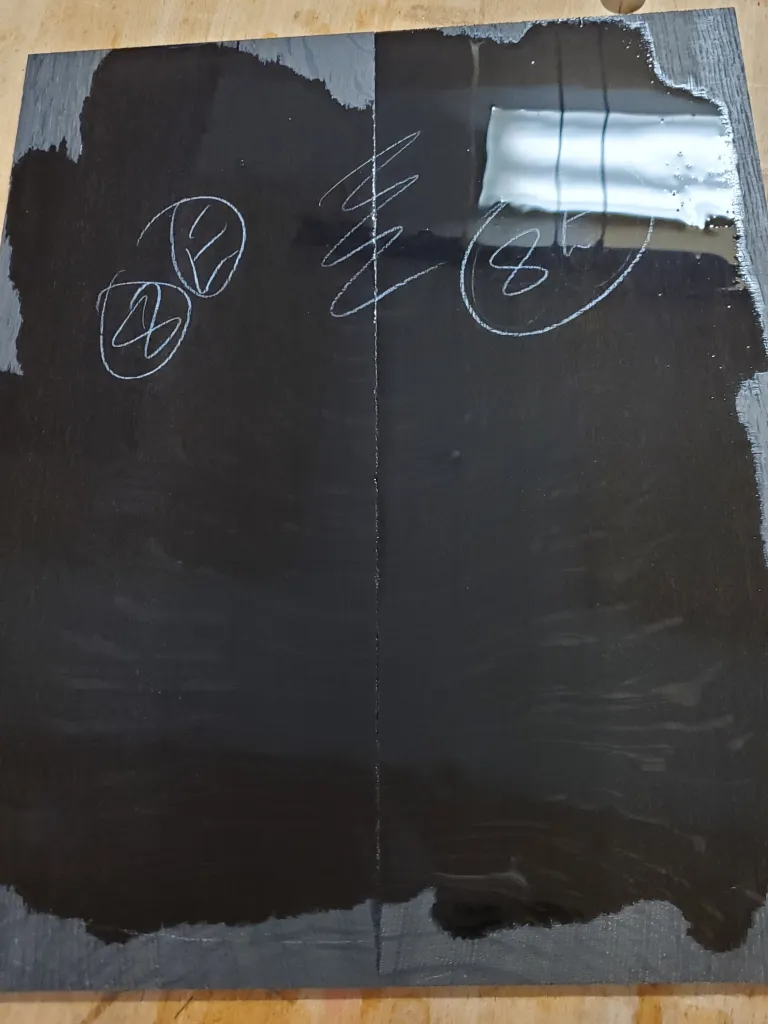
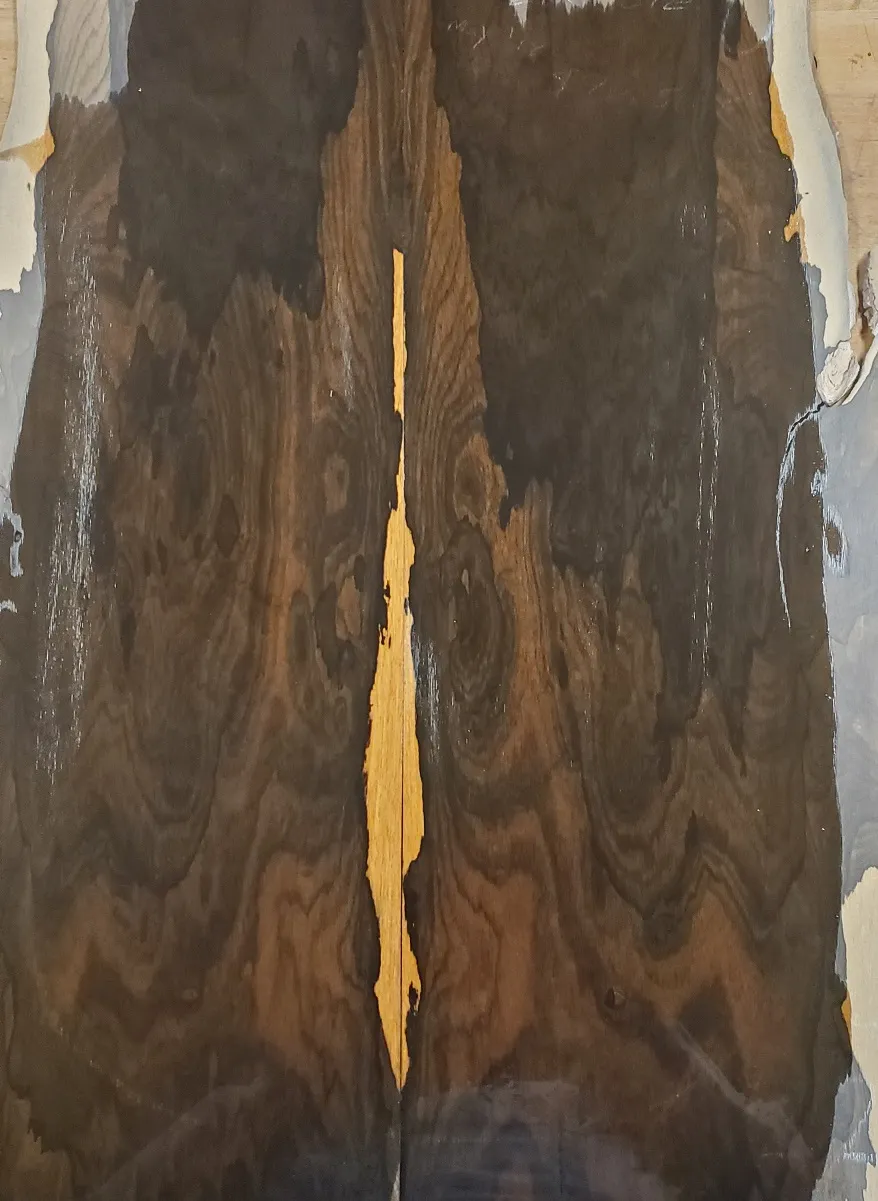
Bog Oak is not a specific species, but is rather a term that designates oak that has been buried in a peat bog for hundreds or sometimes thousands of years. The extremely low oxygen conditions of the bog protect the wood from normal decay, while the underlying peat provides acidic conditions where iron salts and other minerals react with the tannins in the wood, gradually giving it a distinct dark brown to almost black color.
Though Bog Oak does not describe a specific tree, it tends to most frequently occur in the United Kingdom, with English Oak being the most commonly salvaged species taken from bogs.
Bog Oak is in the early stages of fossilization. This wood rings like a bell!!!
Tenor ukulele +$250
(Agathis australis)
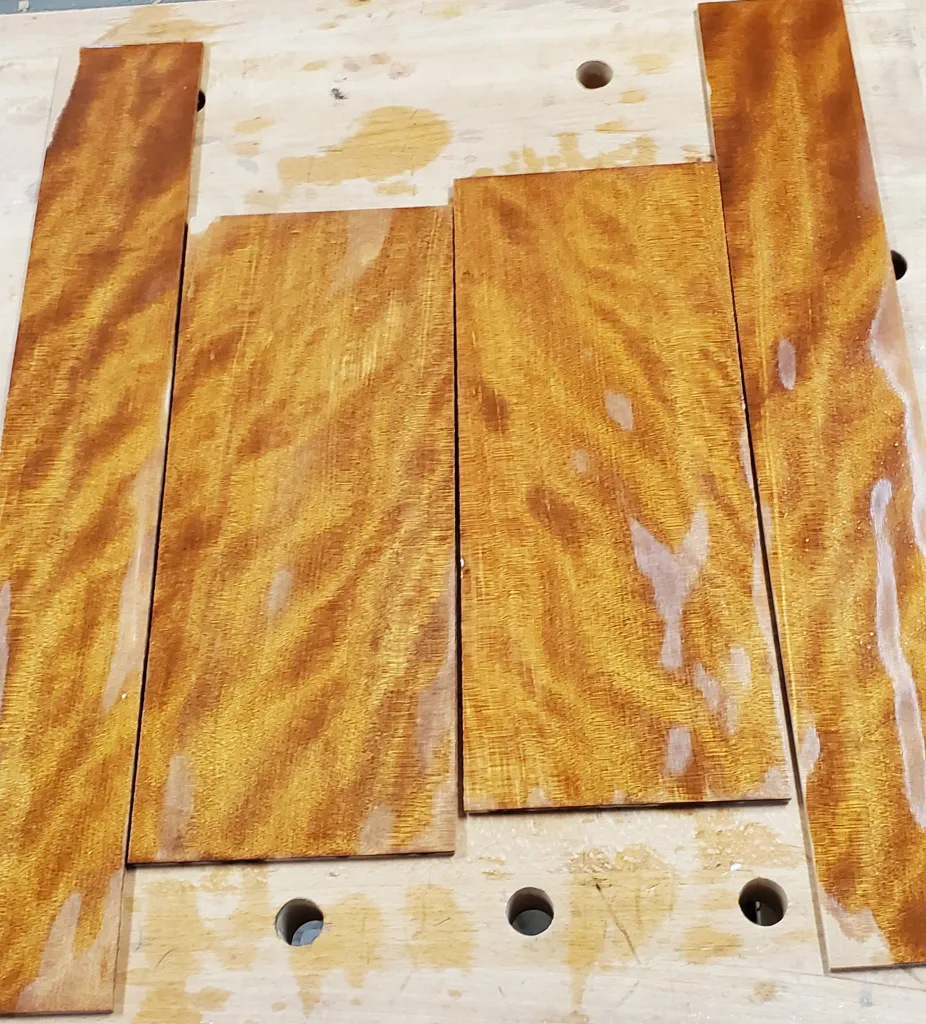
Prehistoric Kauri timber is from forests buried at the time of the last Ice Age, which were located on the Northern Island of New Zealand in the South Pacific. The wood comes with a Certificate of Authenticity that certifies that this wood was independently Radiocarbon Dated to verify age beyond any doubt. Comes with a certificate of authenticity.
Beautiful curl with an inner glow that will be absolutely stunning.
Tenor Ukulele +$250
(Diospyros malabarica)
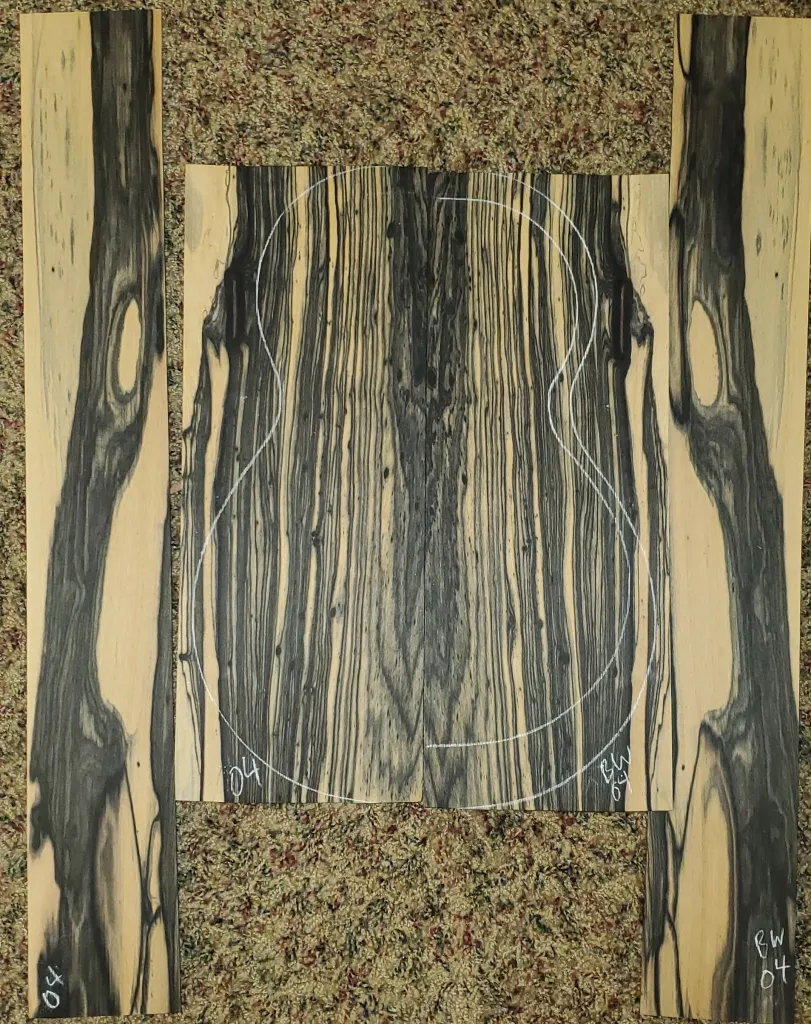
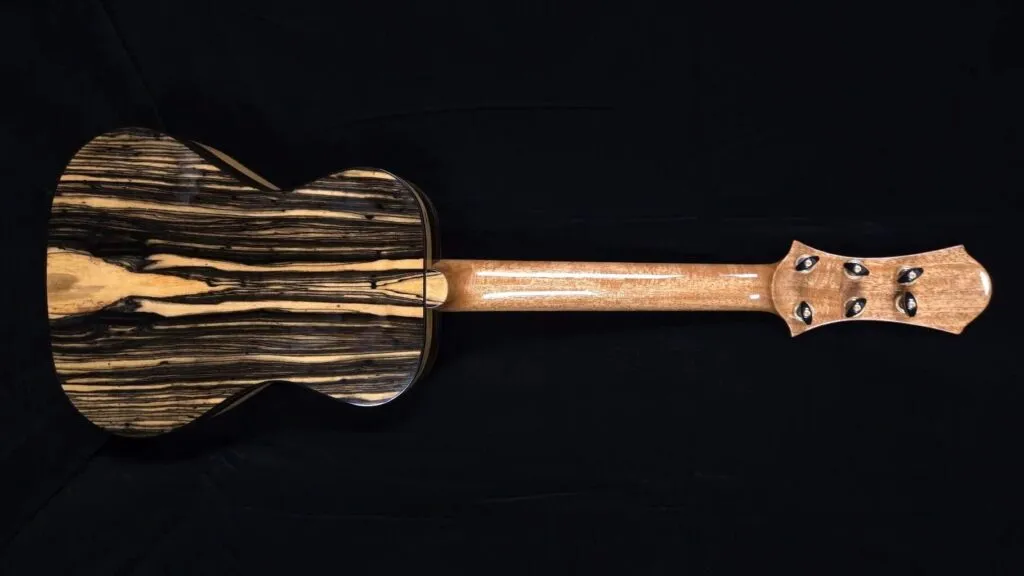
Black and White Ebony, also known as Pale Moon Ebony, comes from Laos and southeast Asia.
This beautiful set would make a stunning tenor ukulele. +$500
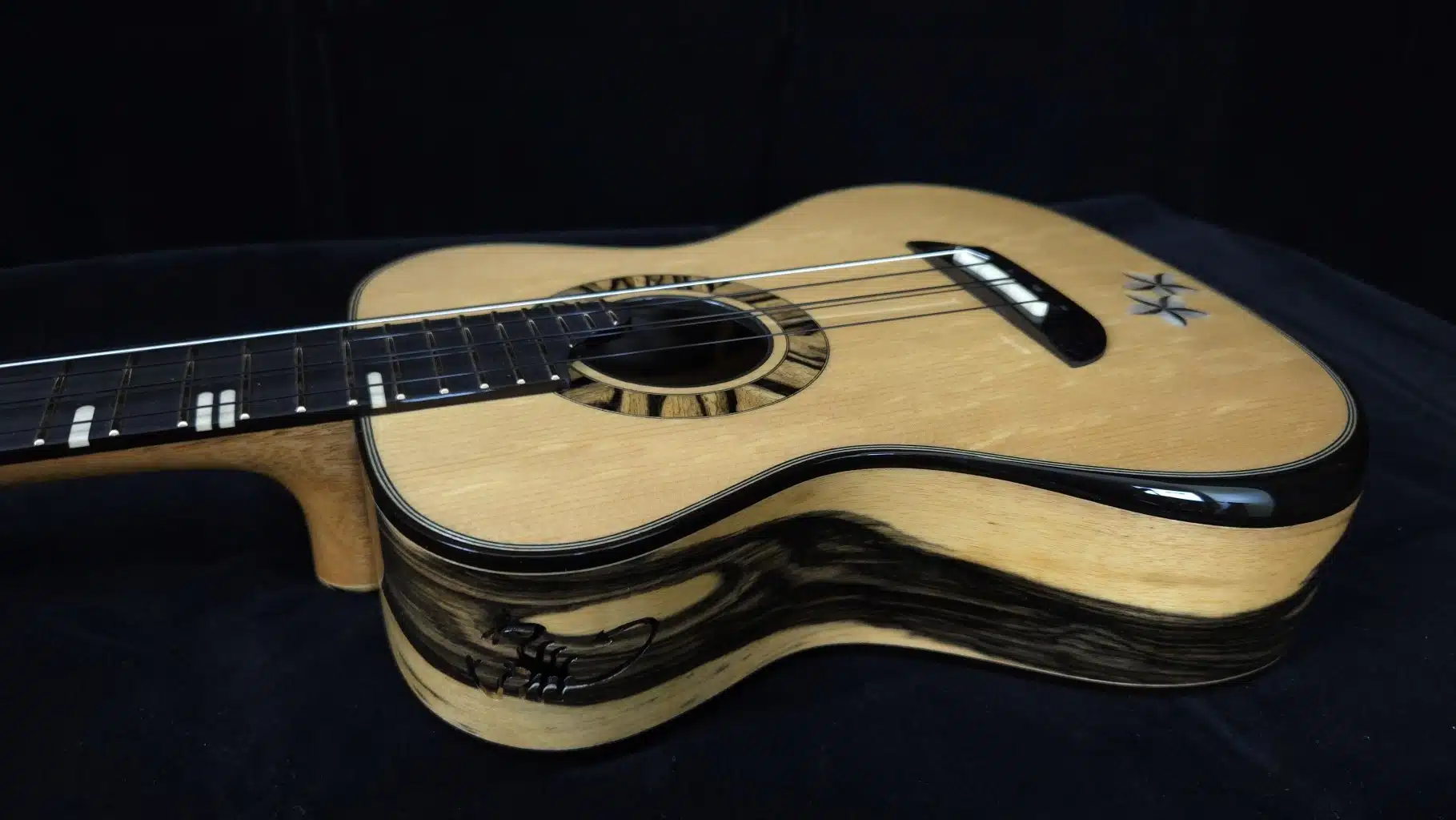
Here is the ukulele made with this set
(Terminalia superba)
Black Limba comes from Tropical West Africa. This light-colored wood tends to darken somewhat with age This beautiful wood has a warm tone.
Concert or Tenor ukulele. Available at no additional charge.
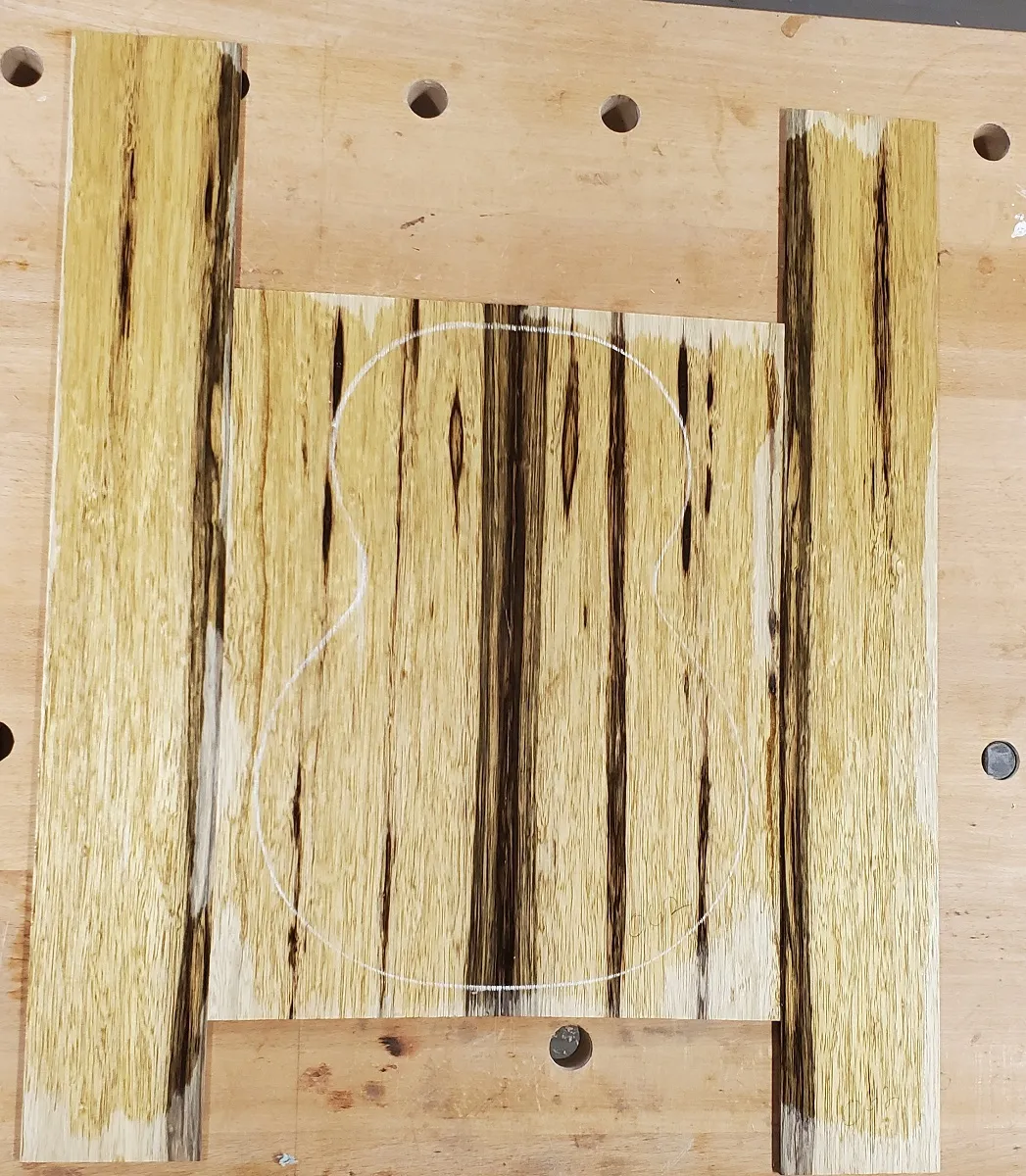
(Cordia Elaeagnoides)
A beautiful dense wood from Mexico. Has a yellowish brown body with dramatic dark brown to almost black stripes.
These sets are available at no additional charge.
Tenor set
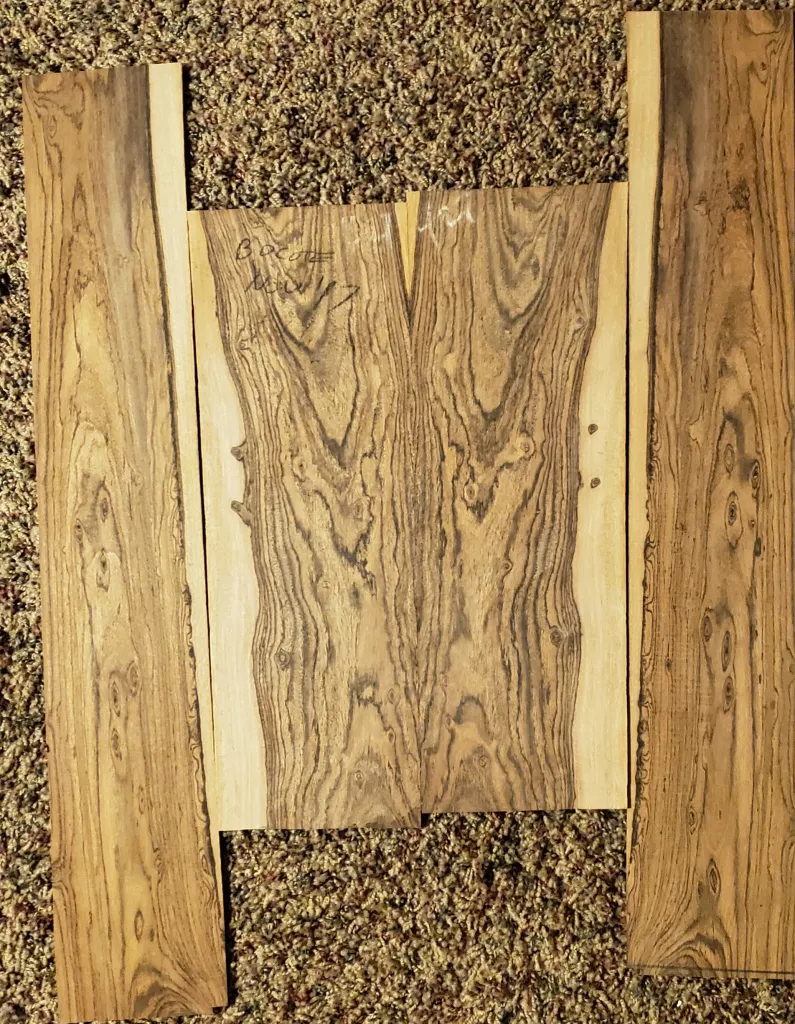
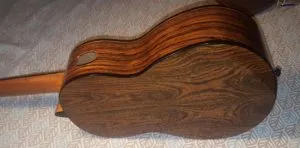
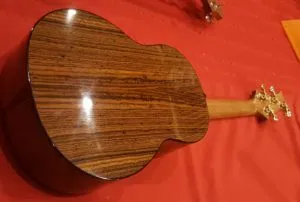
Bocote Billet. Both sides shown. Tenor or Baritone size.
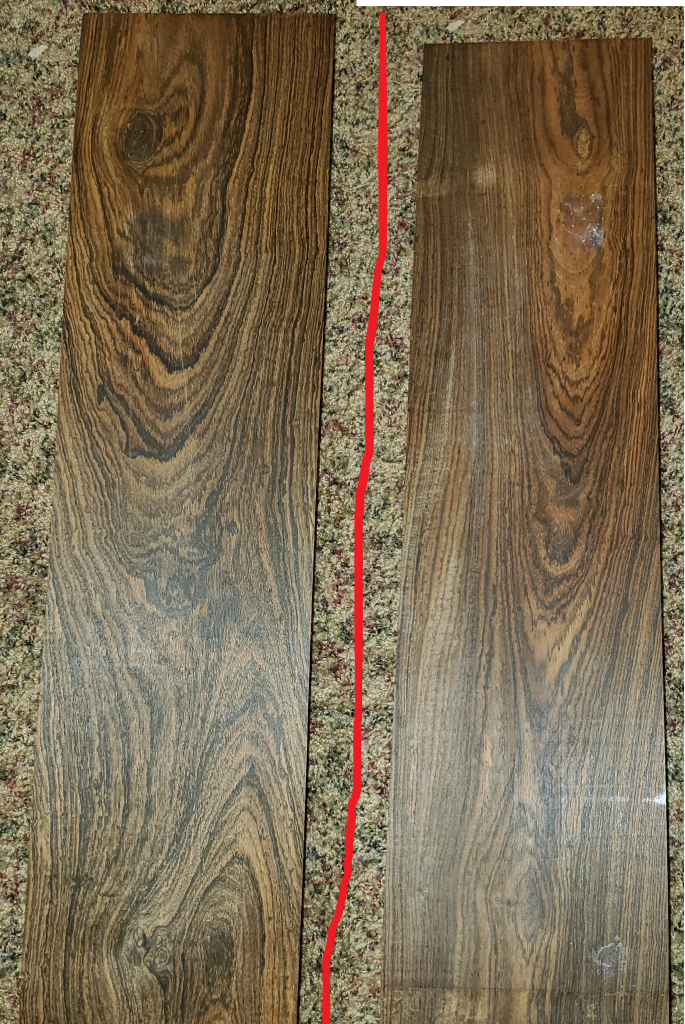
Here are 2 tenor ukuleles I made using Bocote
SOUND CLIP
Here the incomparable Kimo Hussey performs a short song on the ukulele above on the right.
Recorded with my cell phone, in an auditorium, unplugged and no microphones.
This is an example of the projection of a Scorpio Ukulele.
(Dalbergia decipularis)
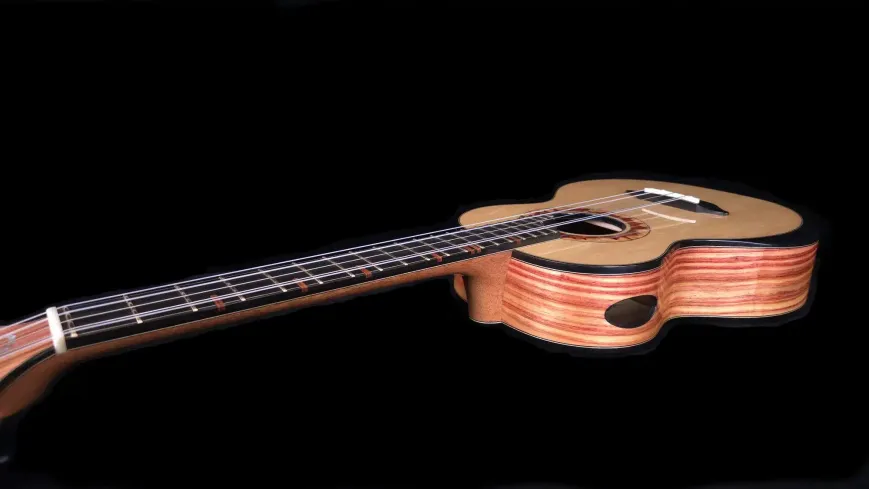
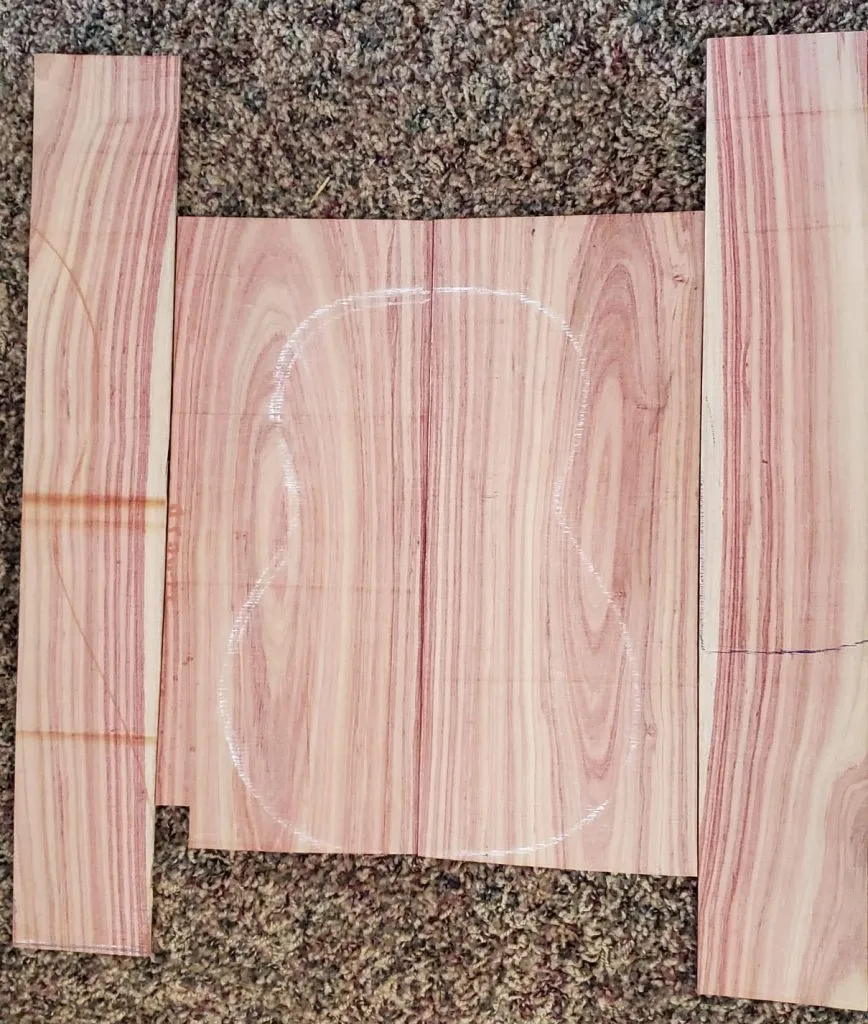
Brazilian Tulipwood is a very unique, pink colored wood. It is a member of the Rosewood family. It is extremely difficult to find Tulipwood in sizes large enough to make guitars or ukuleles. This piece has a wonderful tap tone and would make a stunning and fantastic sounding ukulele.
This set is more than 30 years old and is very stable.
Tenor Ukulele +$500
(Guibourtia spp.)
Bubinga has a beautiful grain and makes wonderful sounding instruments.
I have several large pieces of Bubinga for ukuleles or guitars of any size.
(the coin in the picture is a US quarter). These sets are available at no additional charge.
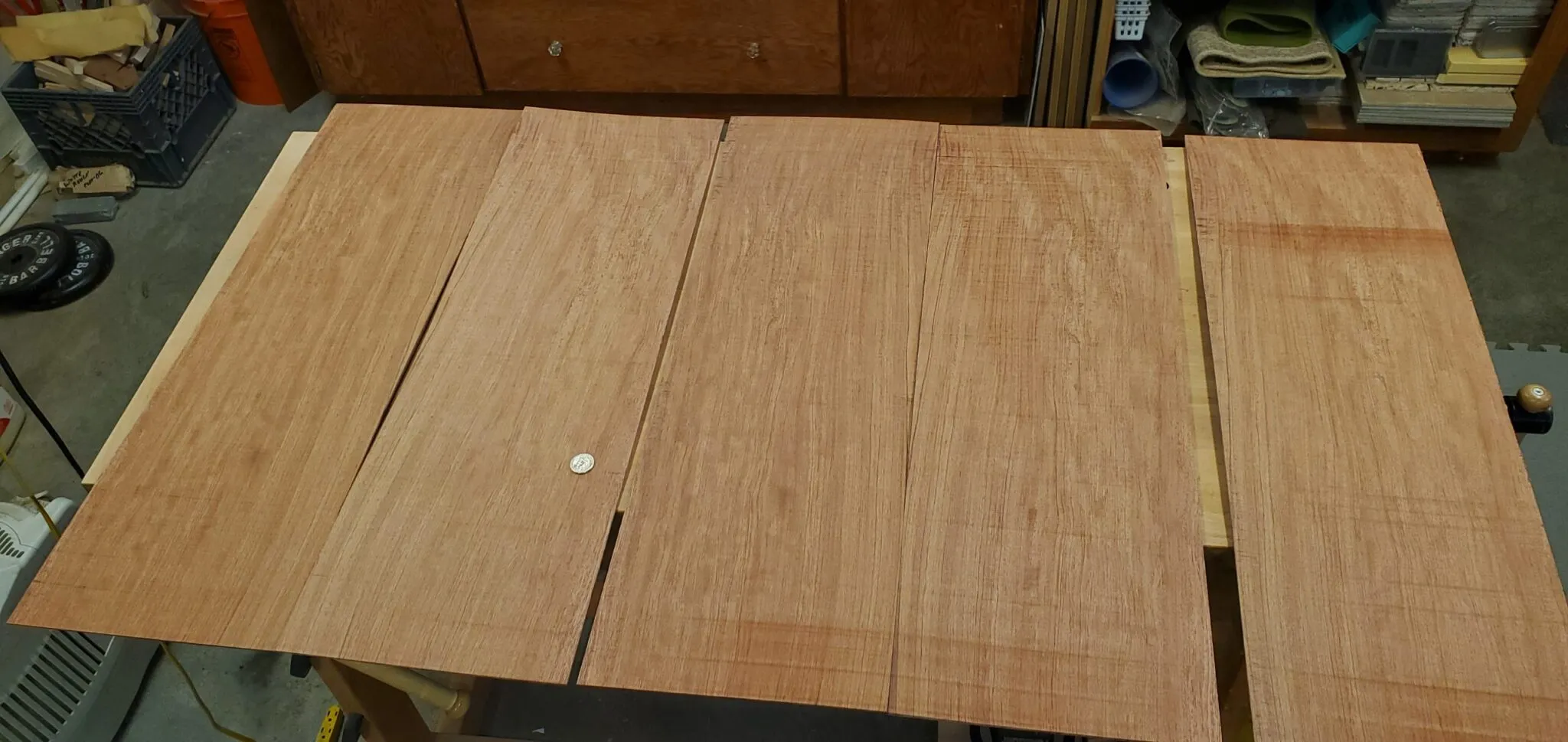
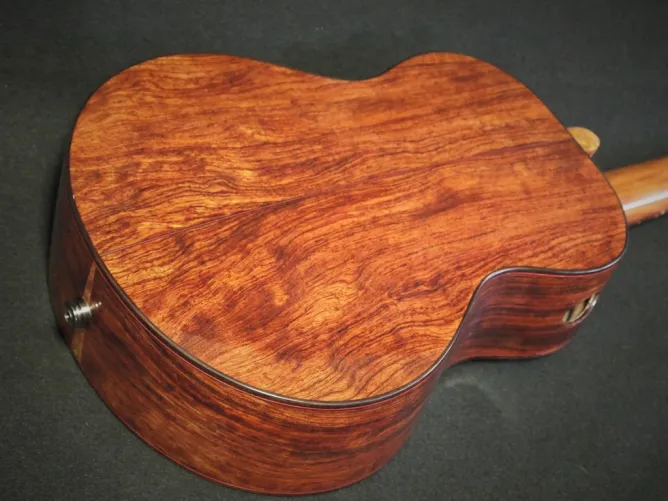
Here is an example of what a Bubinga ukulele would look like (from Kimo Ukuleles)
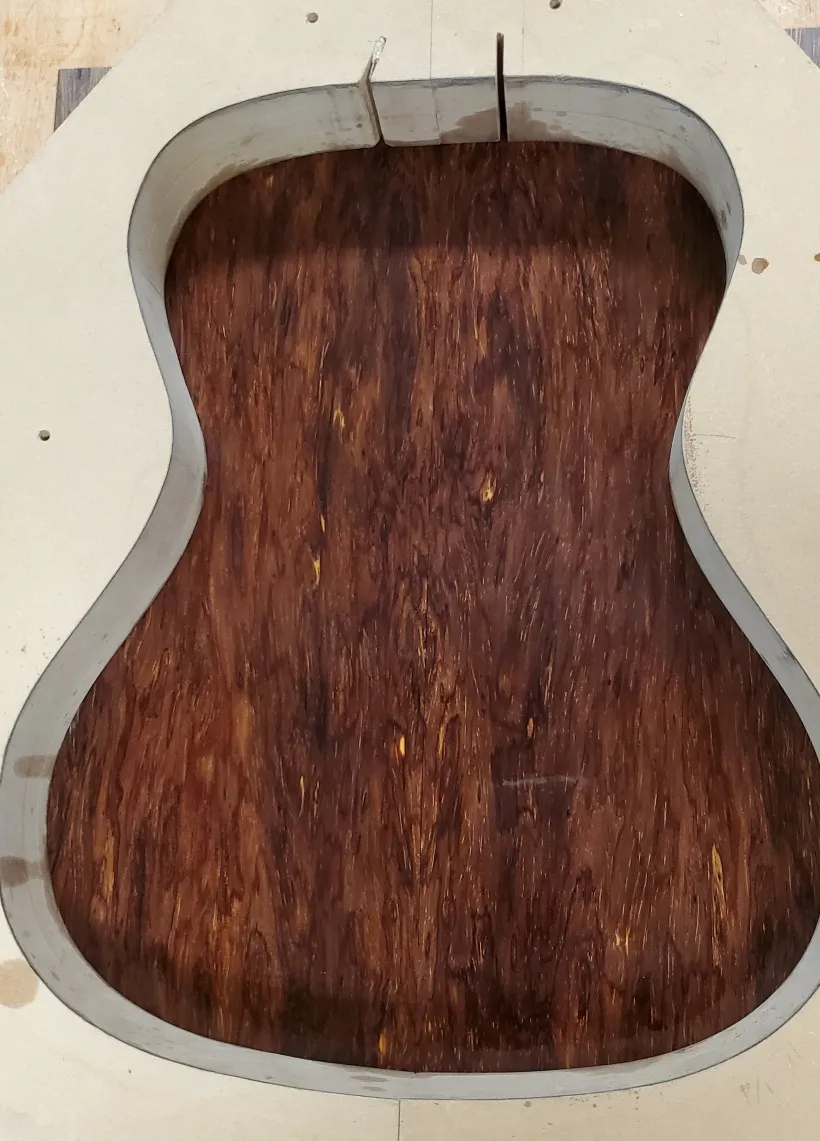
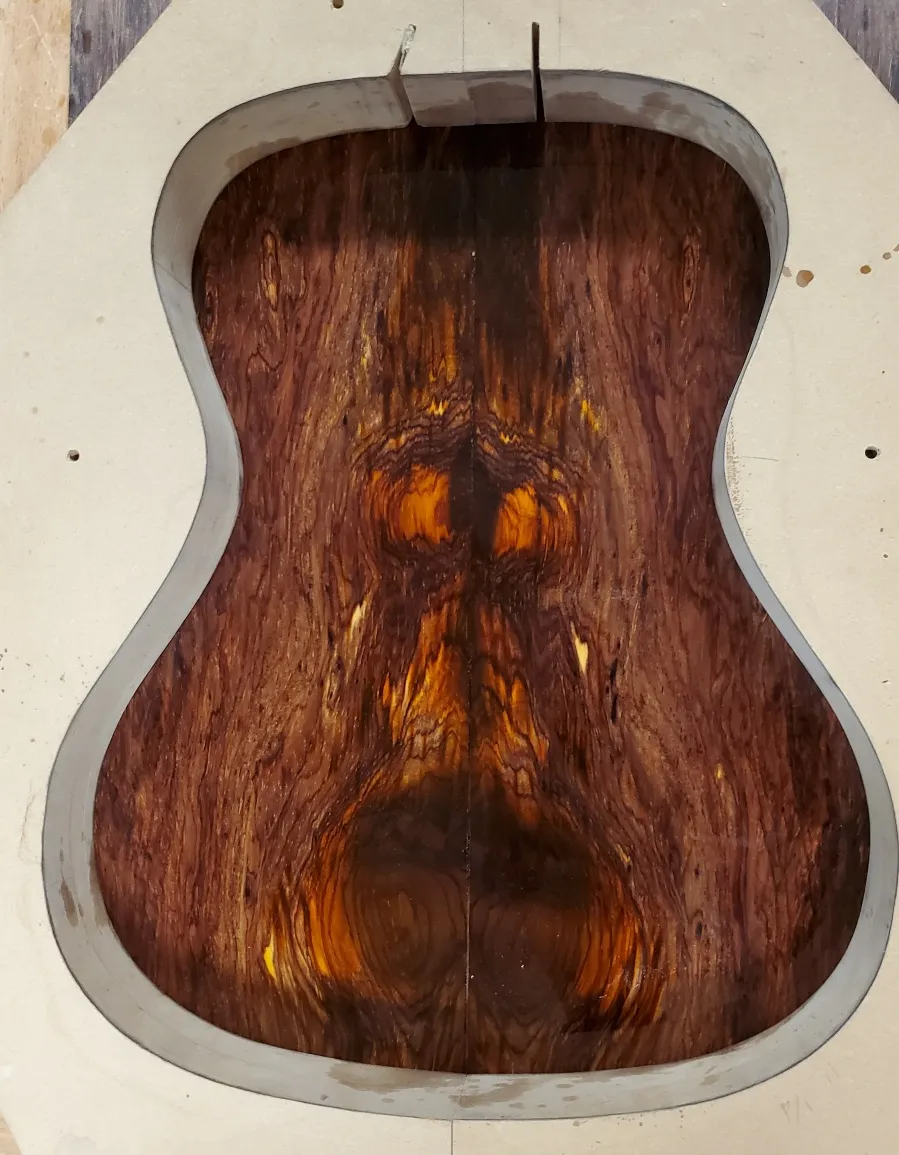
(Dalbergia retusa)
Cocobolo comes from Central America. Cocobolo is a true rosewood with a striking grain pattern and colors ranging from yellow, orange, red, and shades of brown with streaks of black or purple. This wood is also very dense like most Ebonys. This will make a stunning ukulele with a rich, bright sound.
Tenor Ukulele - Available at no extra charge
(Acacia koa)
Hawaiian Koa is the traditional ukulele wood. However, due to enormous demand from the small islands, Koa has become much more difficult to find, and more expensive as a result. A coat of shellac has been put on one of the back pieces (not the sides). There is a lot of curl that will glow after a full finish is applied.
This will make a stunningly beautiful tenor ukulele with a KOA TOP! +$300
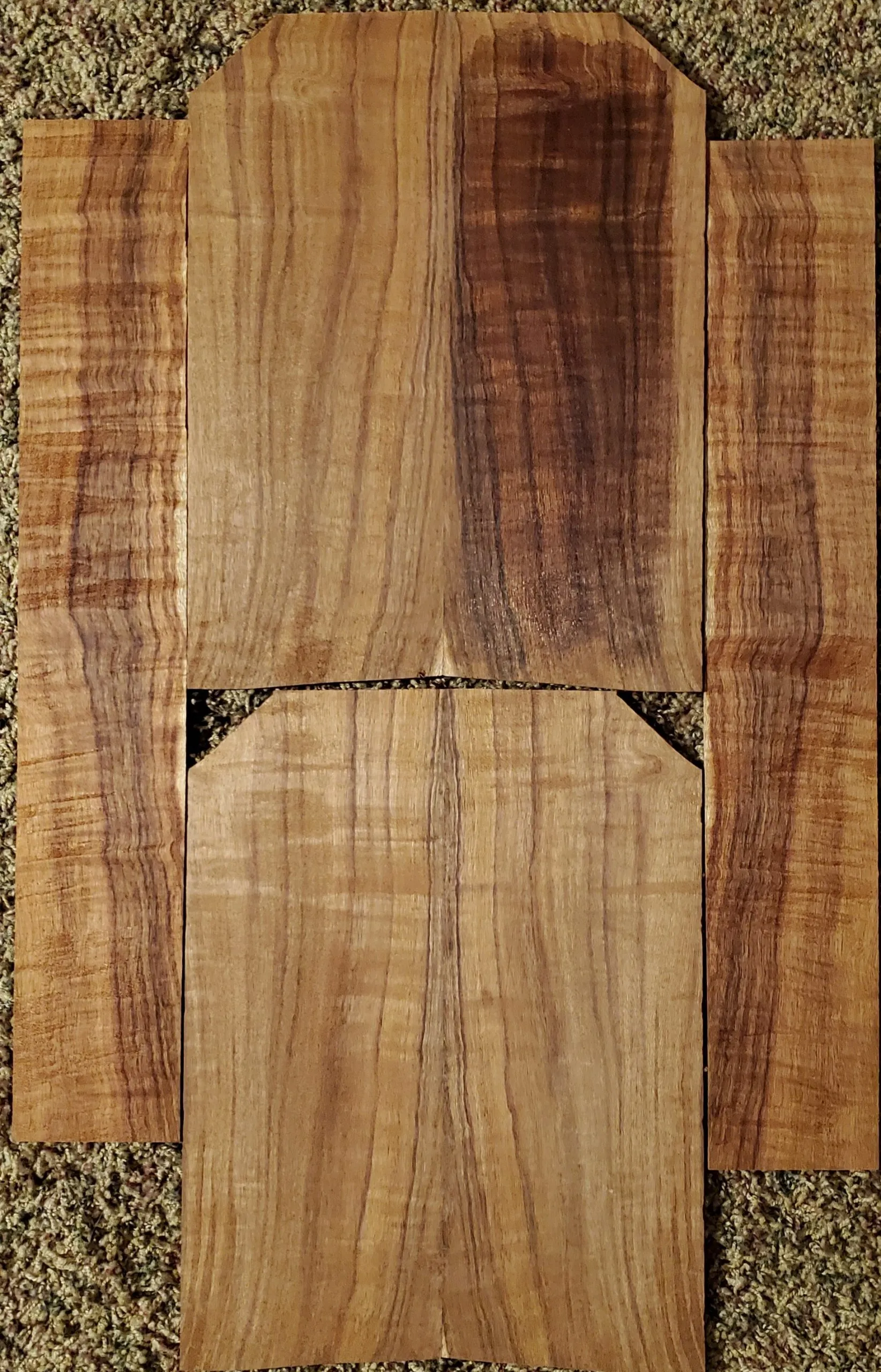
Below shows the back and top "wetted" to show color and grain better
(Acacia koa)
Hawaiian Koa is the traditional ukulele wood. However, due to enormous demand from the small islands, Koa has become much more difficult to find, and more expensive as a result.
This will make a stunning tenor ukulele.
+$200
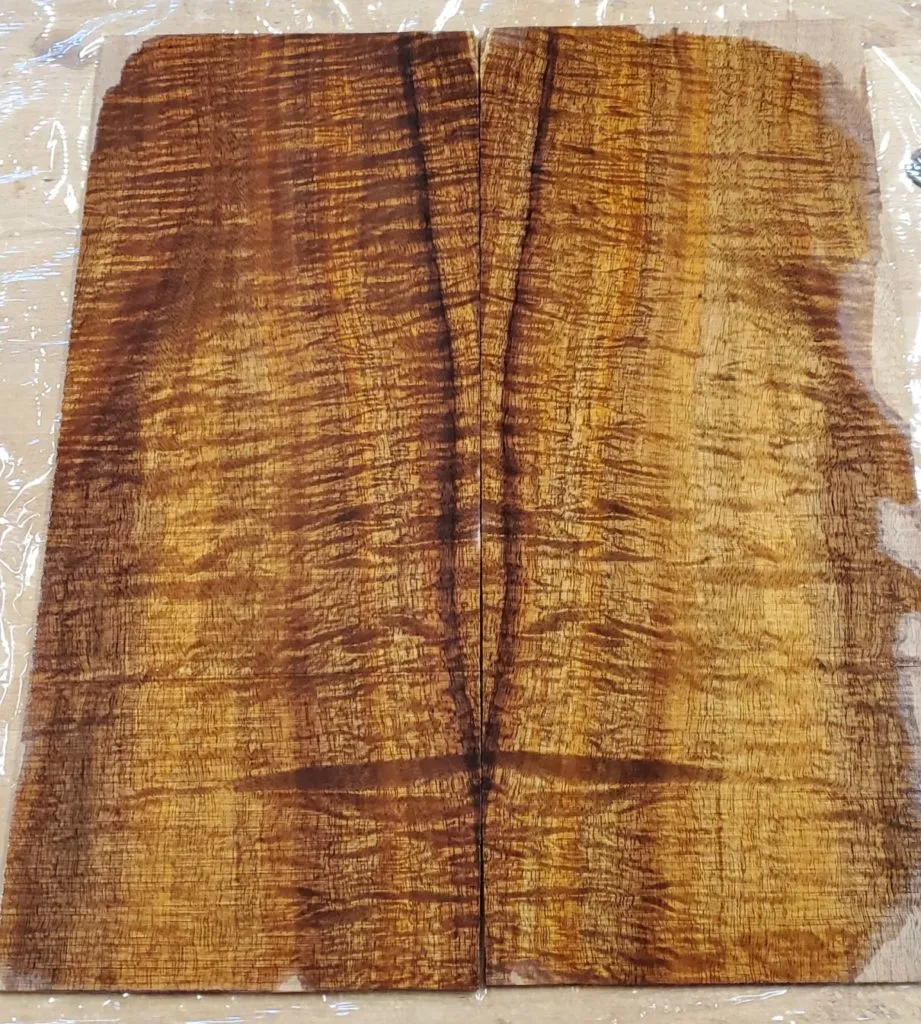
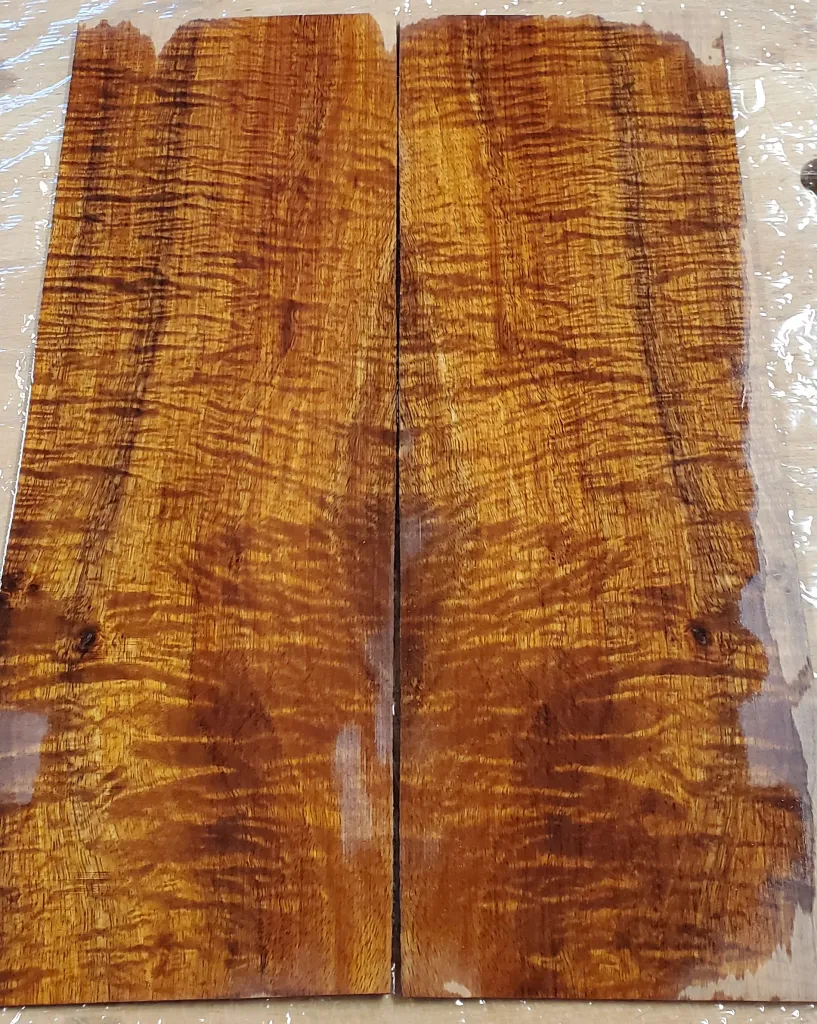
And here is another shot with the matching sides. This is the same wood shot at a slightly different angle. Notice the color change. This is how you will know a ukulele made with this wood will Sparkle!
(Acacia koa)
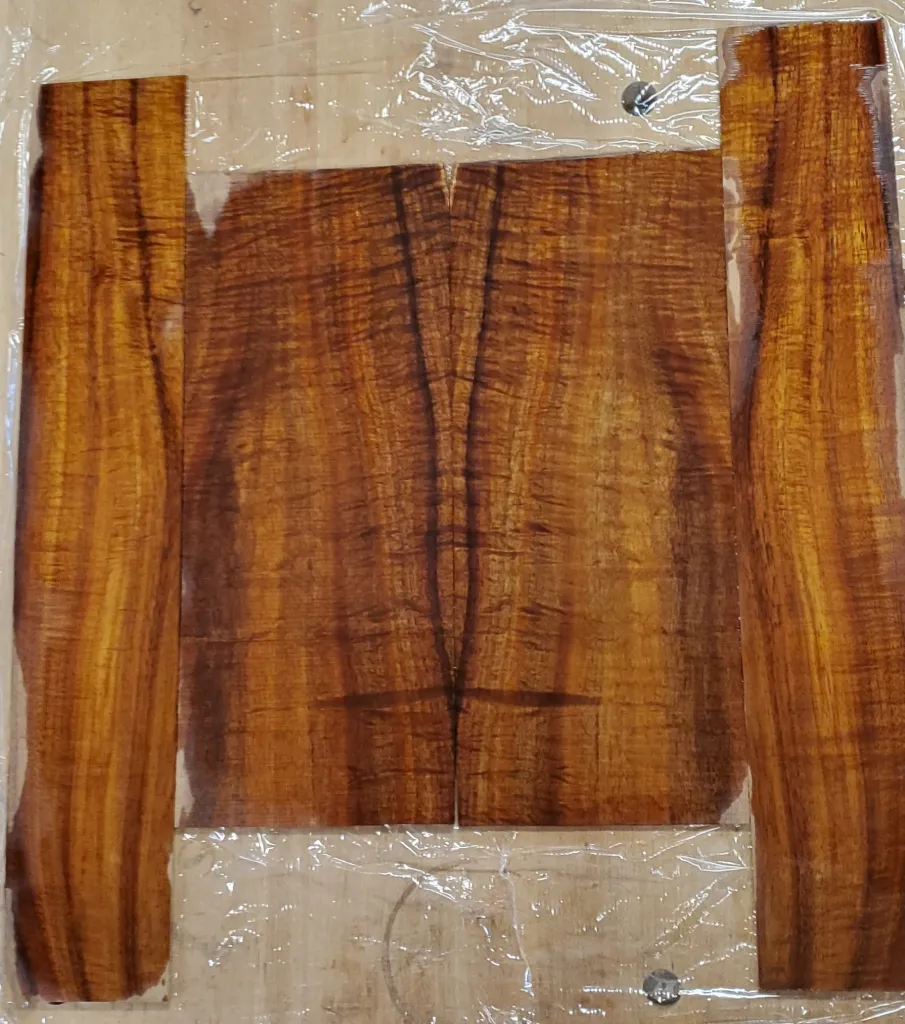
Hawaiian Koa is the traditional ukulele wood. However, due to enormous demand from the small islands, Koa has become much more difficult to find; and more expensive as a result.
This will make a stunning tenor ukulele.
+$250
And here is another shot with the matching sides. This is the same wood shot at a slightly different angle. Notice the color change. This is how you will know a ukulele made with this wood will Sparkle!
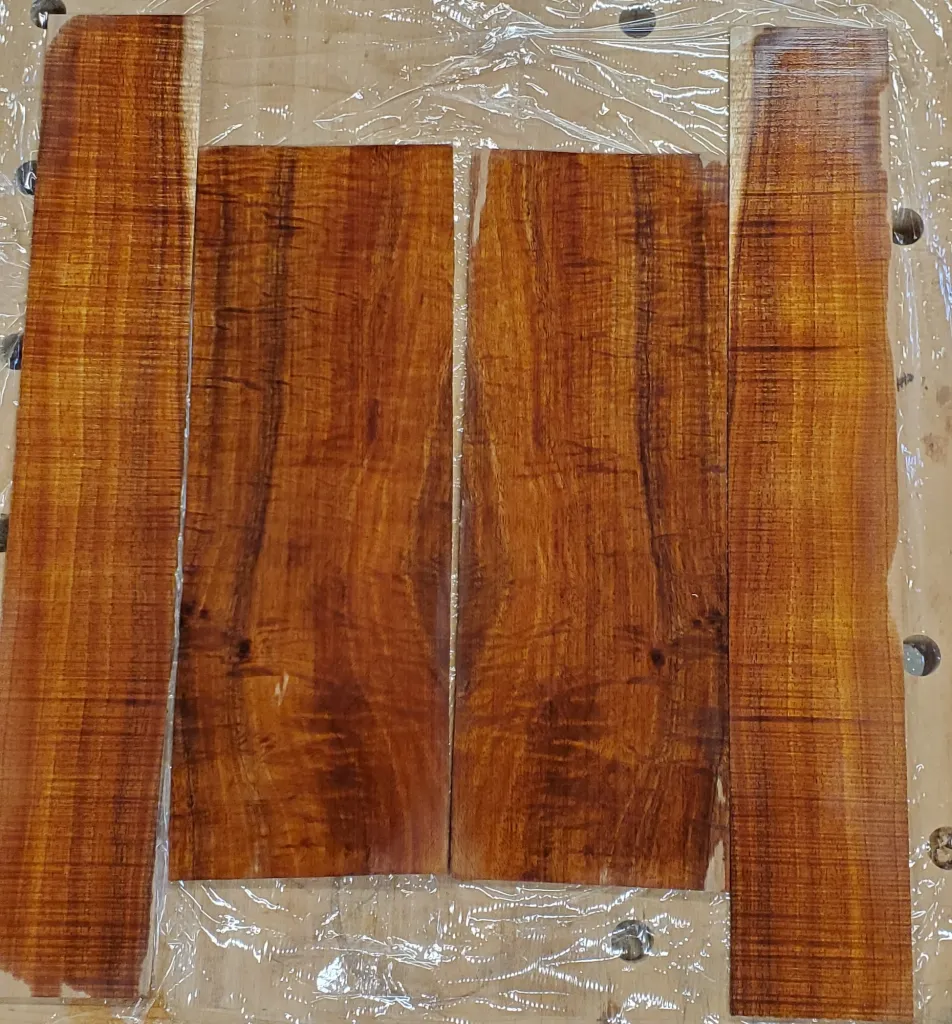
(Dalbergia latifolia)
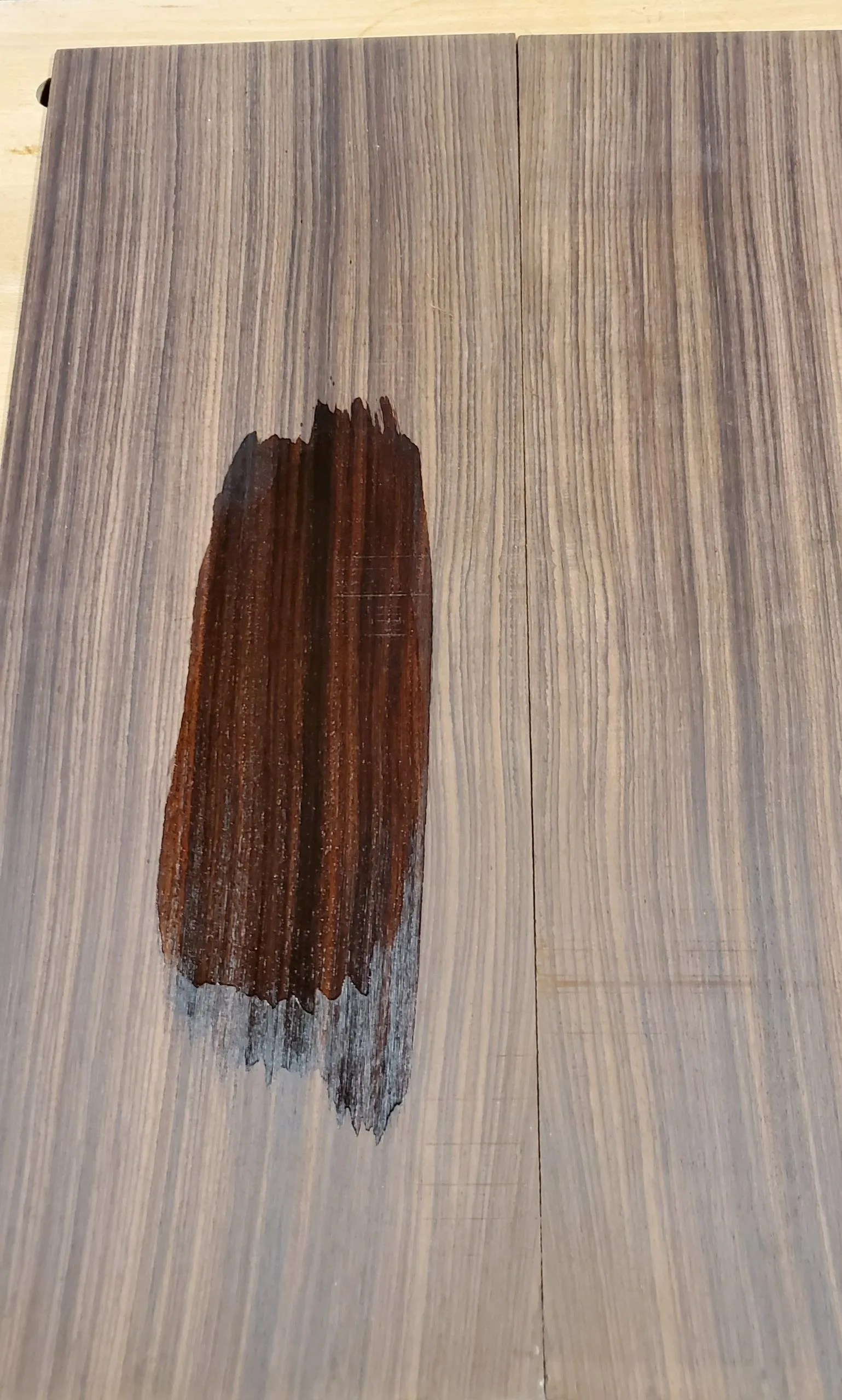
Ah Rosewood. The most commonly used wood for high end guitars and ukuleles and for good reason. The old Martin guitars were made out of rosewood. Rosewood imparts a warm and complex tone to any instrument.
A small amount of shellac has been added to show the rich color.
Tenor or Baritone ukulele - Available at no additional charge.
I have built several guitars and 2 ukuleles using this wood. It smells wonderful when being worked, hence the name.
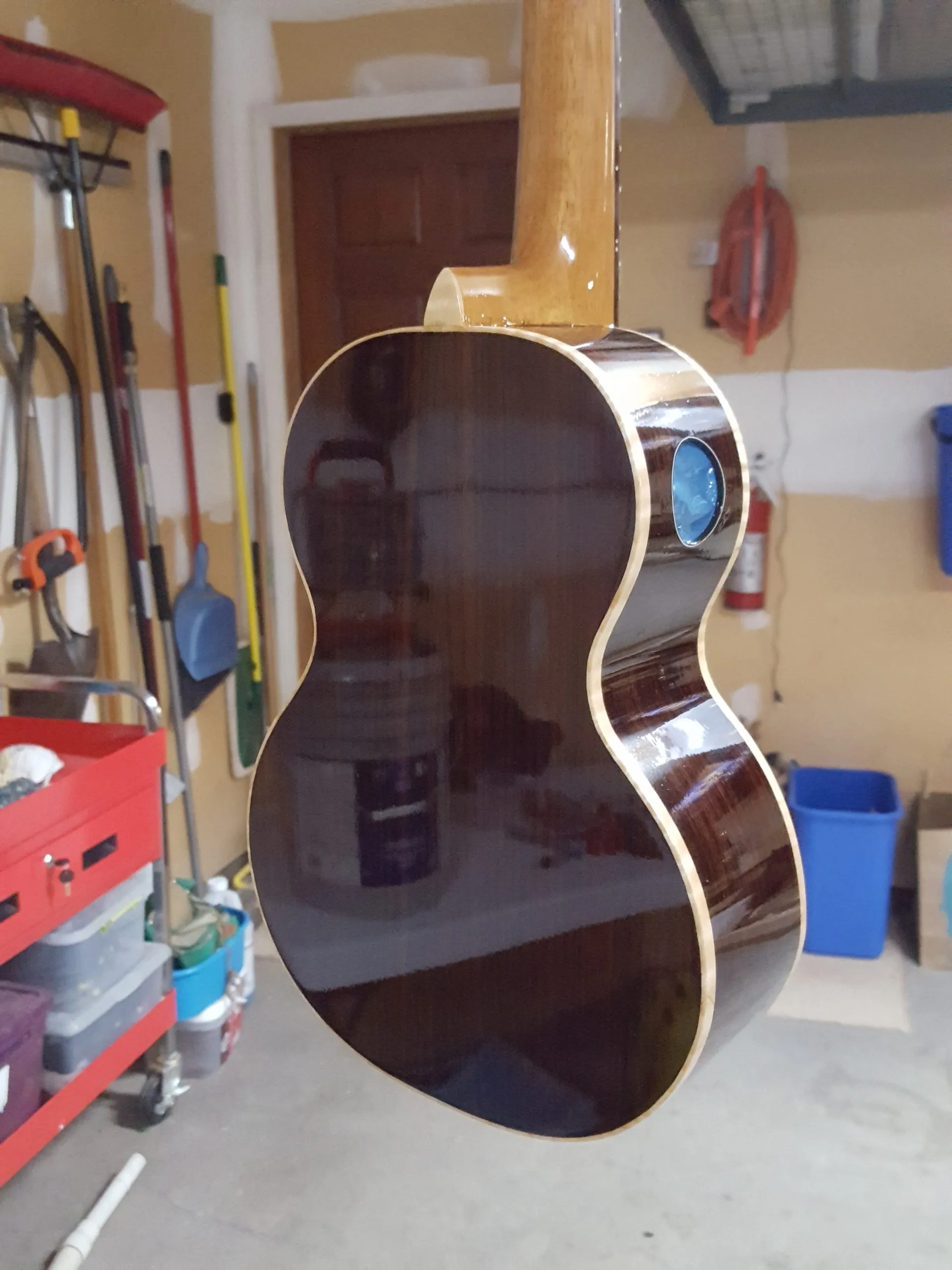
(Acacia koa)
Hawaiian Koa is the traditional ukulele wood. This set may not have fancy grain but it is genuine Koa. This Top+Back+Sides Tenor ukulele set will make a ukulele that will sound like you are on a Hawaiian beach, if you just close your eyes and listen.
Tenor Ukulele +$125
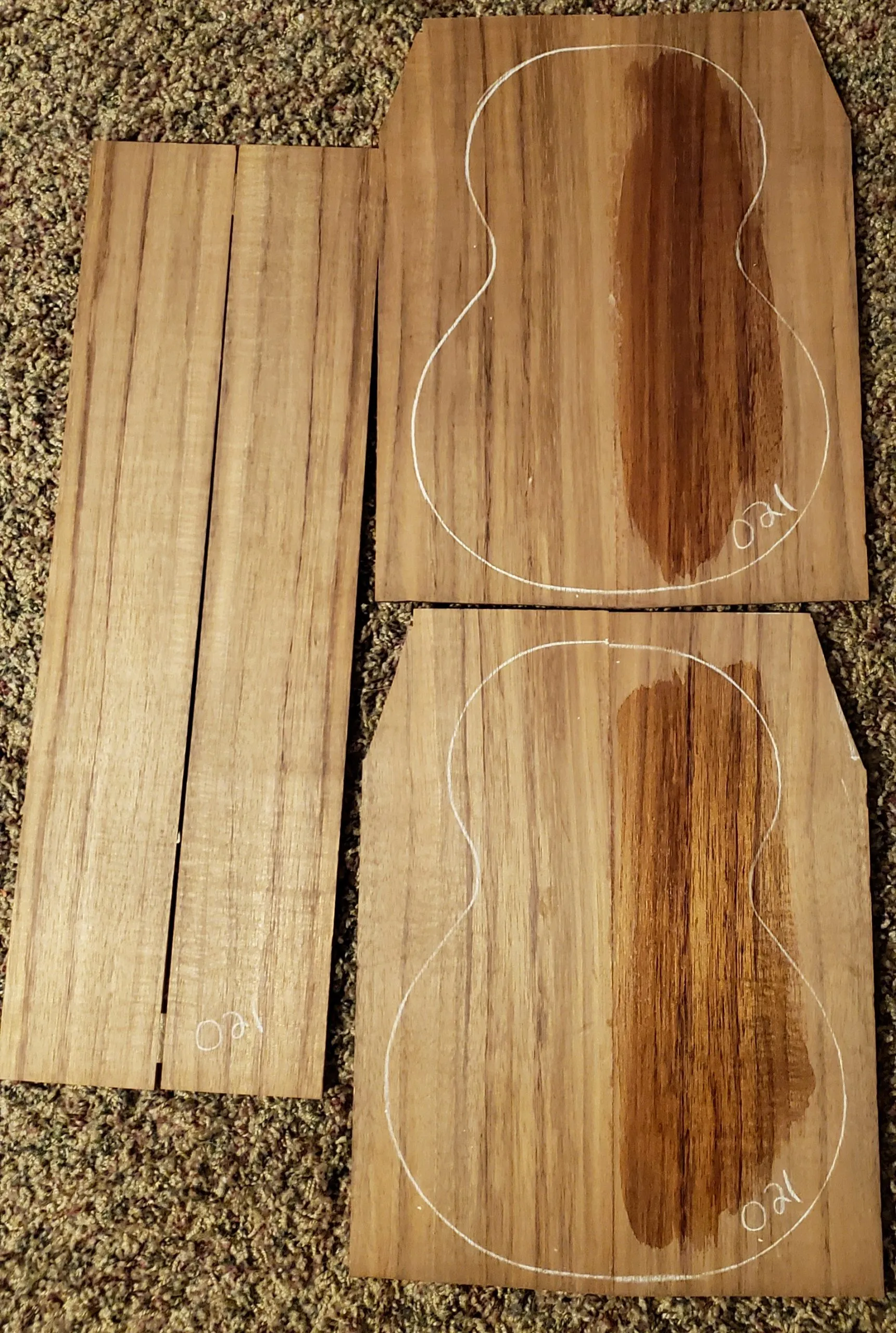
(Platymiscium spp.)
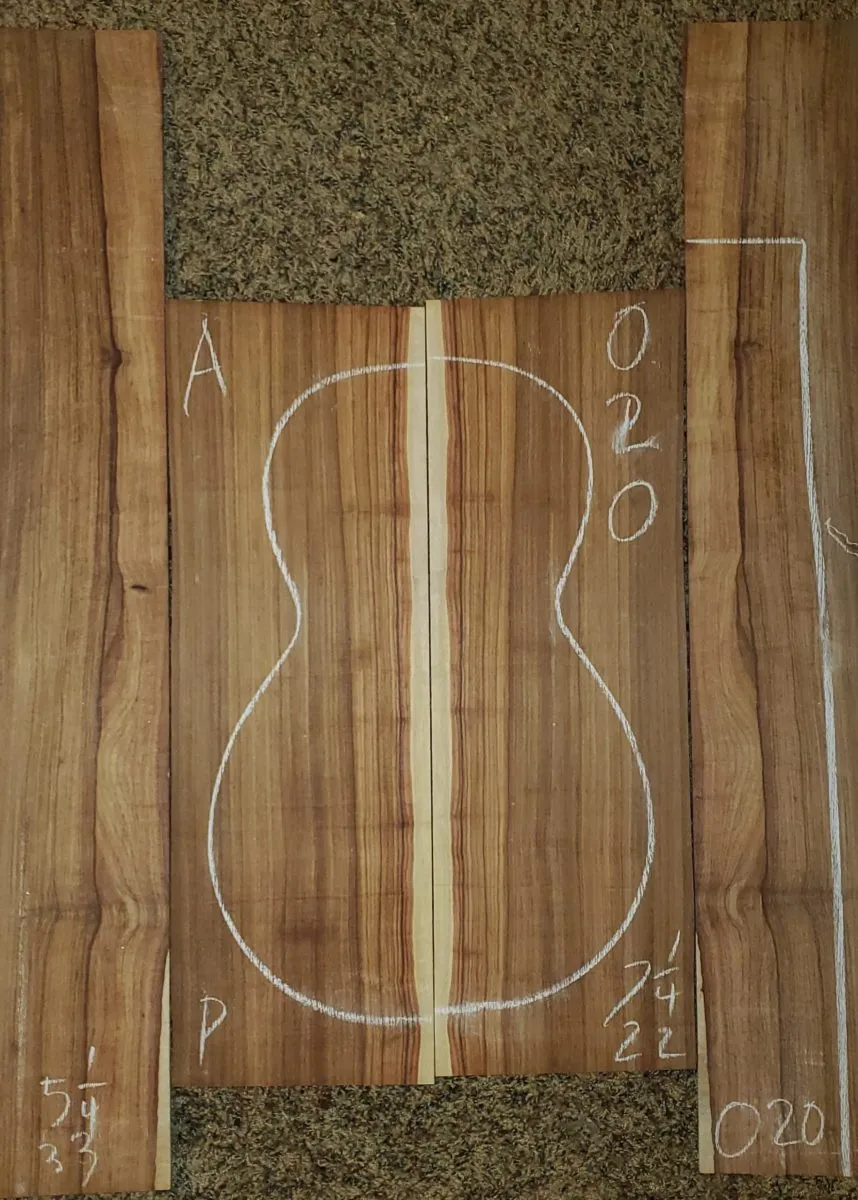
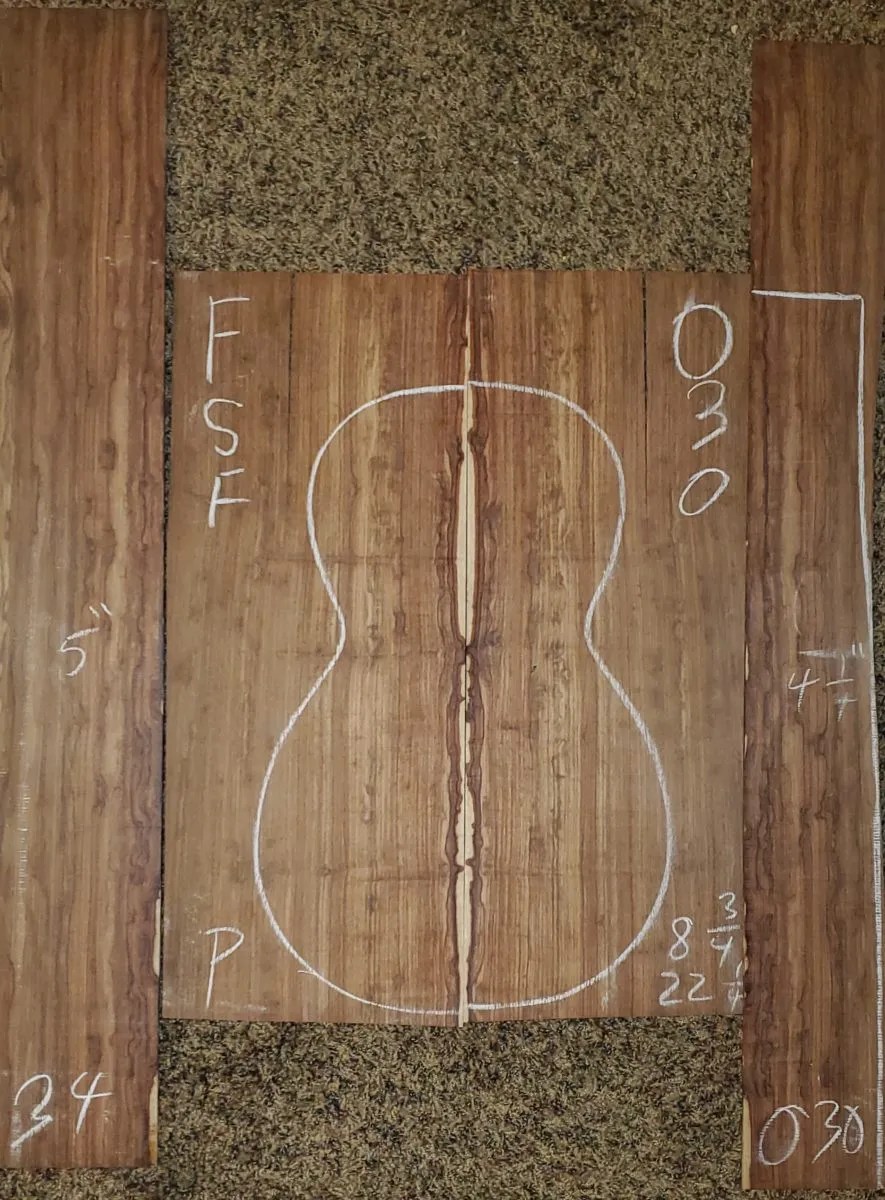
Macacauba (sometimes given the ambiguous name Granadillo) is a dense wood that comes from Central and South America. Heartwood color can be highly variable, ranging from a bright red to a darker reddish or purplish brown, frequently with darker stripes. When the wood is referred to as “Hormigo,” various suffixes are used to describe the heartwood color: “Hormigo Negro” for darker pieces or “Hormigo Rojo” for orangish red pieces.
2 sets are available, see below.
Set #20 - Size: Baritone Ukulele (or smaller) - Available at no additional charge
Set #30 - Size: Baritone Ukulele (or smaller) +$50.
(Macadamia integrifolia)
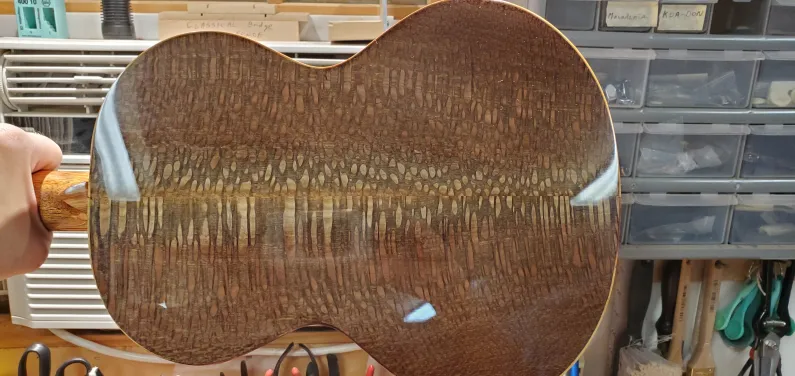
Macadamia Nut, native to eastern Australia (also cultivated in Hawaii and other tropical areas). Not normally seen as a wood. Grown primarily to produce the popular nuts. Here is a rare chance to have a truly unique ukulele or small guitar. The wood does not taste as good as the nuts so might as well make a ukulele out of it.
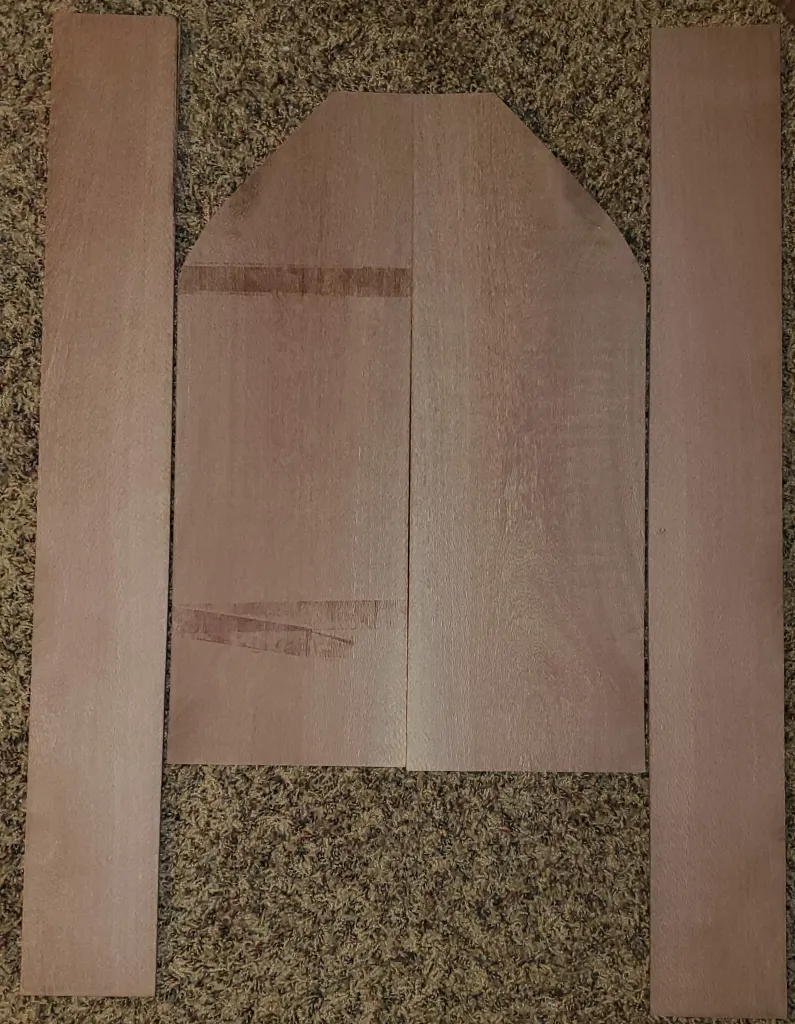
Here is a Baritone ukulele I made using this type of wood.
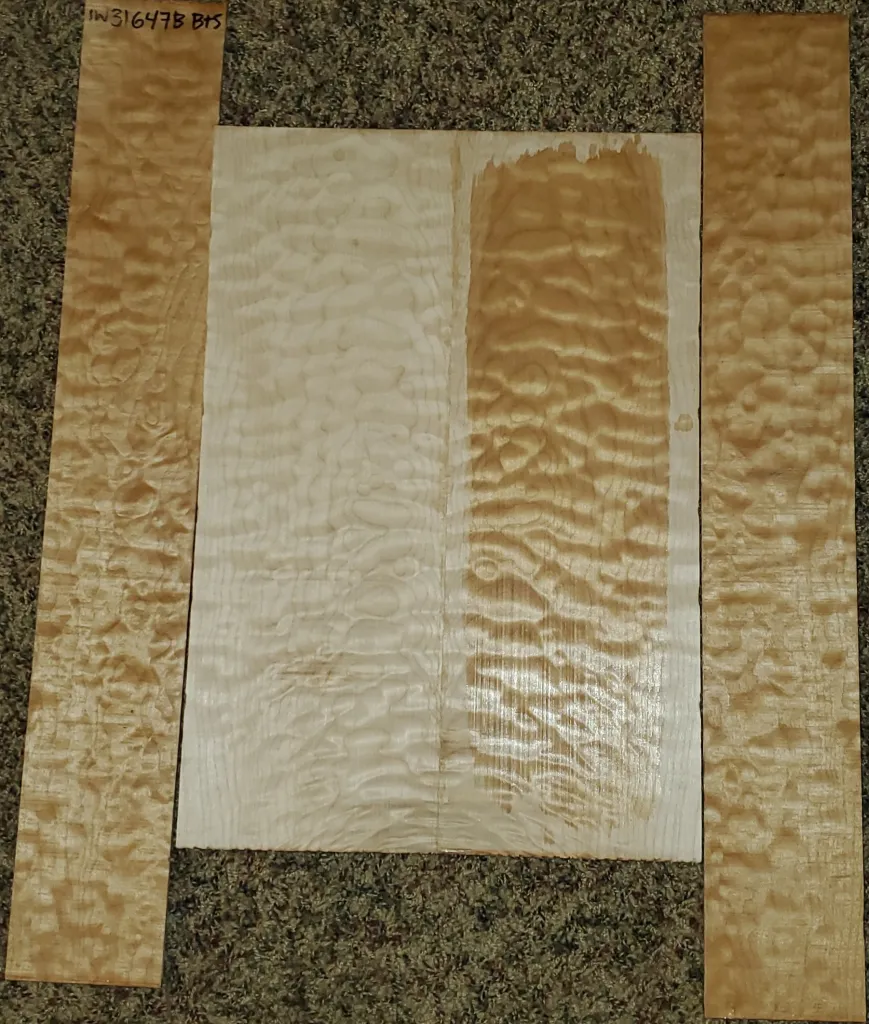
(Acer macrophyllum)
The piece of Quilted Maple has an explosive amount of curl. Under a high gloss finish this piece will look very 3 dimensional and have a wonderful radiance sometimes referred to as Chatoyance.
Tenor Ukulele size +$50
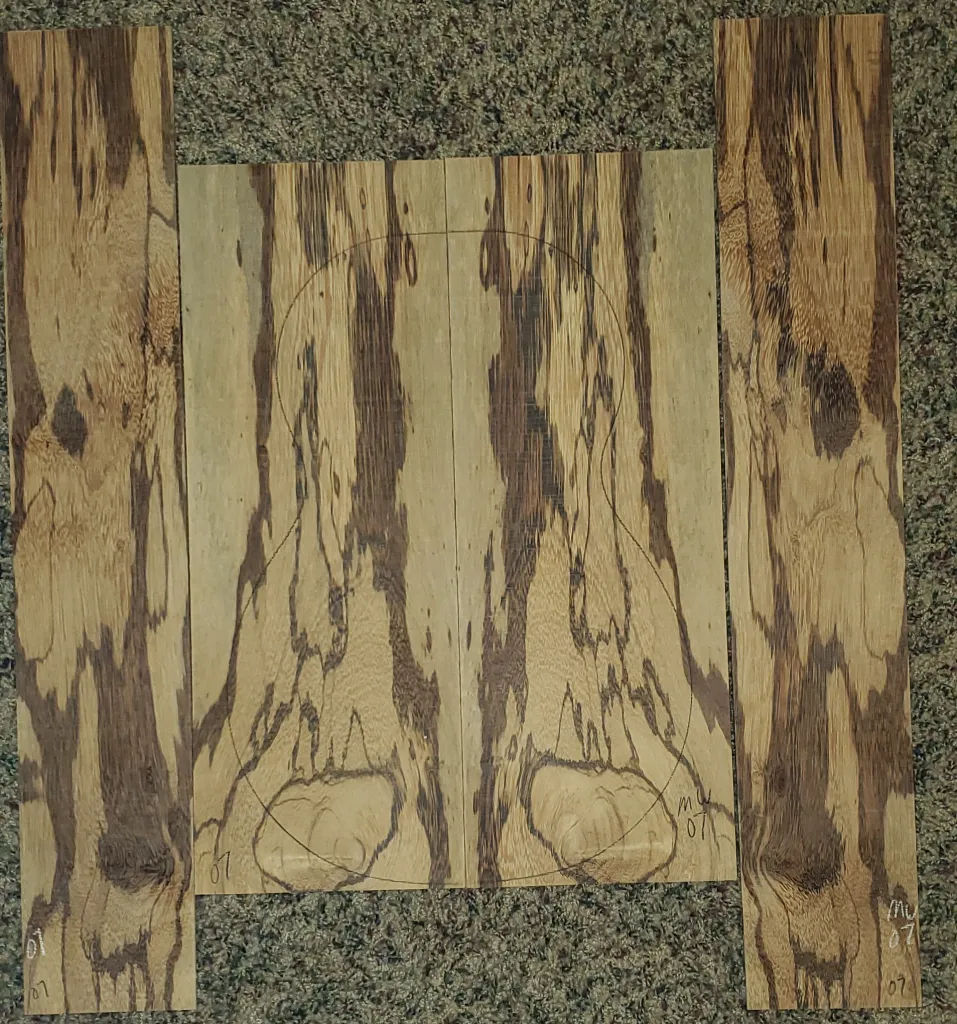
(Zygia racemosa)
Marblewood comes from Northeastern South America. It is a very dense wood which would help increase projection.
Tenor ukulele. +$100
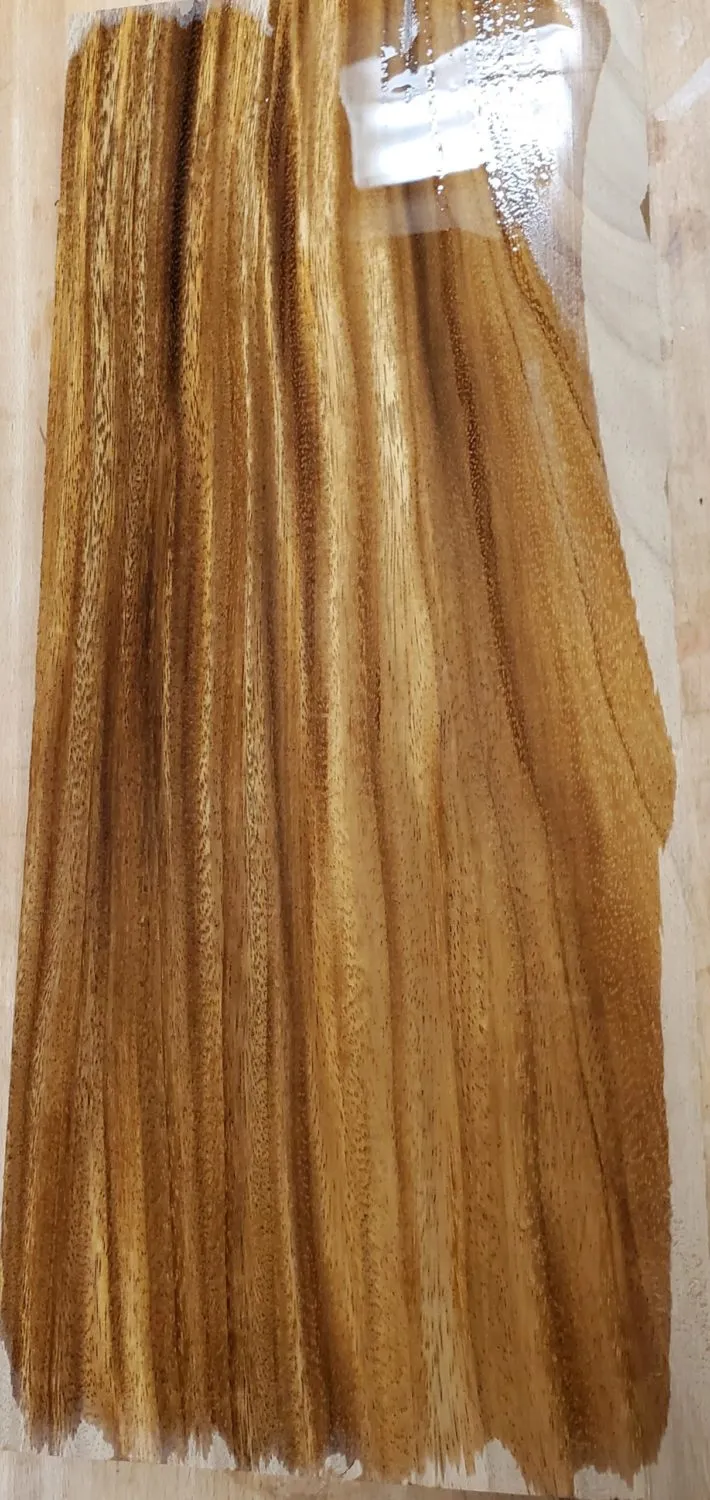
(Albizia saman)
Monkeypod is from Central and South America. It a beautiful wood that frequently has a high level of chatoyance (a glow like an inner light)
This piece has not yet been sliced on the bandsaw, but the wood has been aged and is ready to use.
Any sized ukulele - Available at no additional charge.
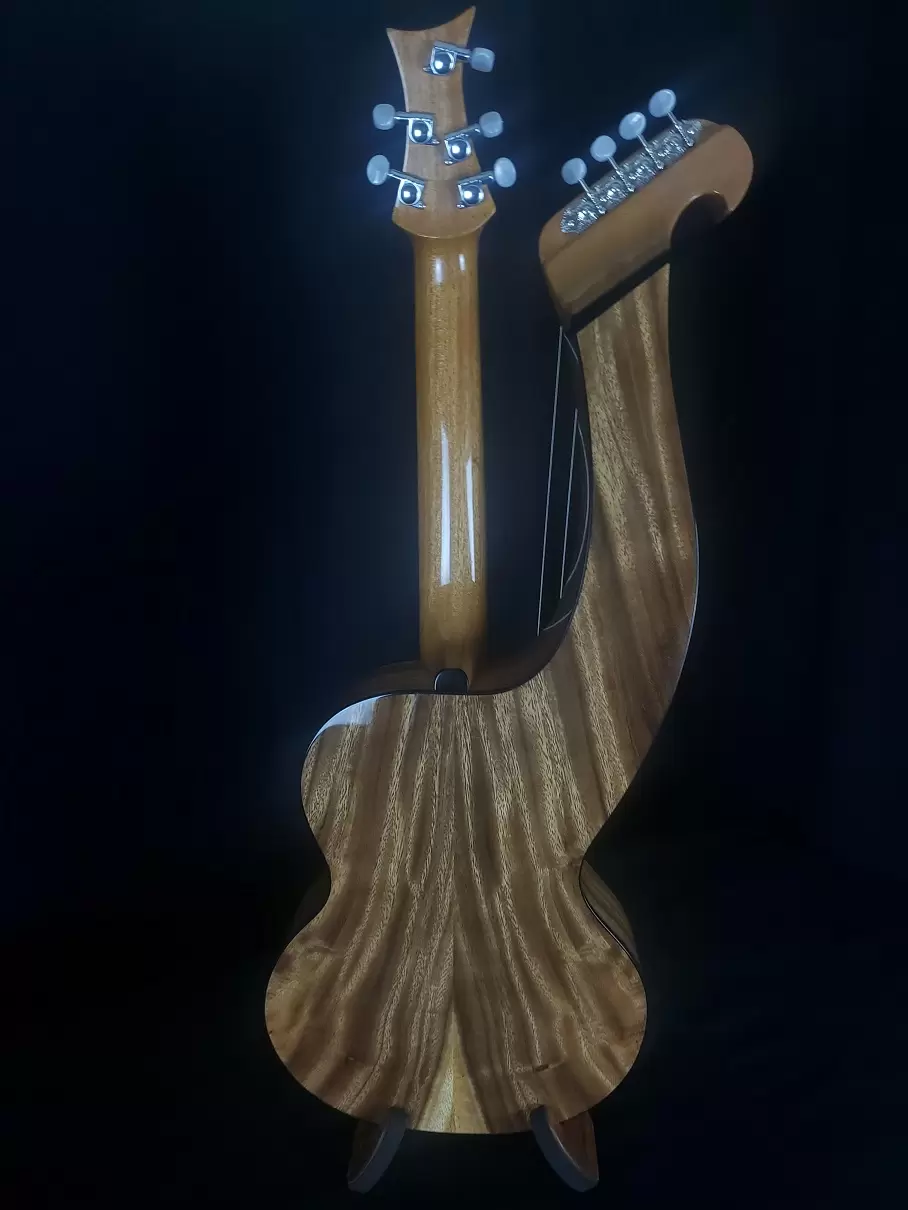
(Umbellularia californica)
Myrtle is from Oregon and California. These sets have a subtle curl that will look even better under a finish. This wood makes very nice ukuleles with a slightly warmer sound.
Set #1 - Any sized ukulele - Available at no additional charge.
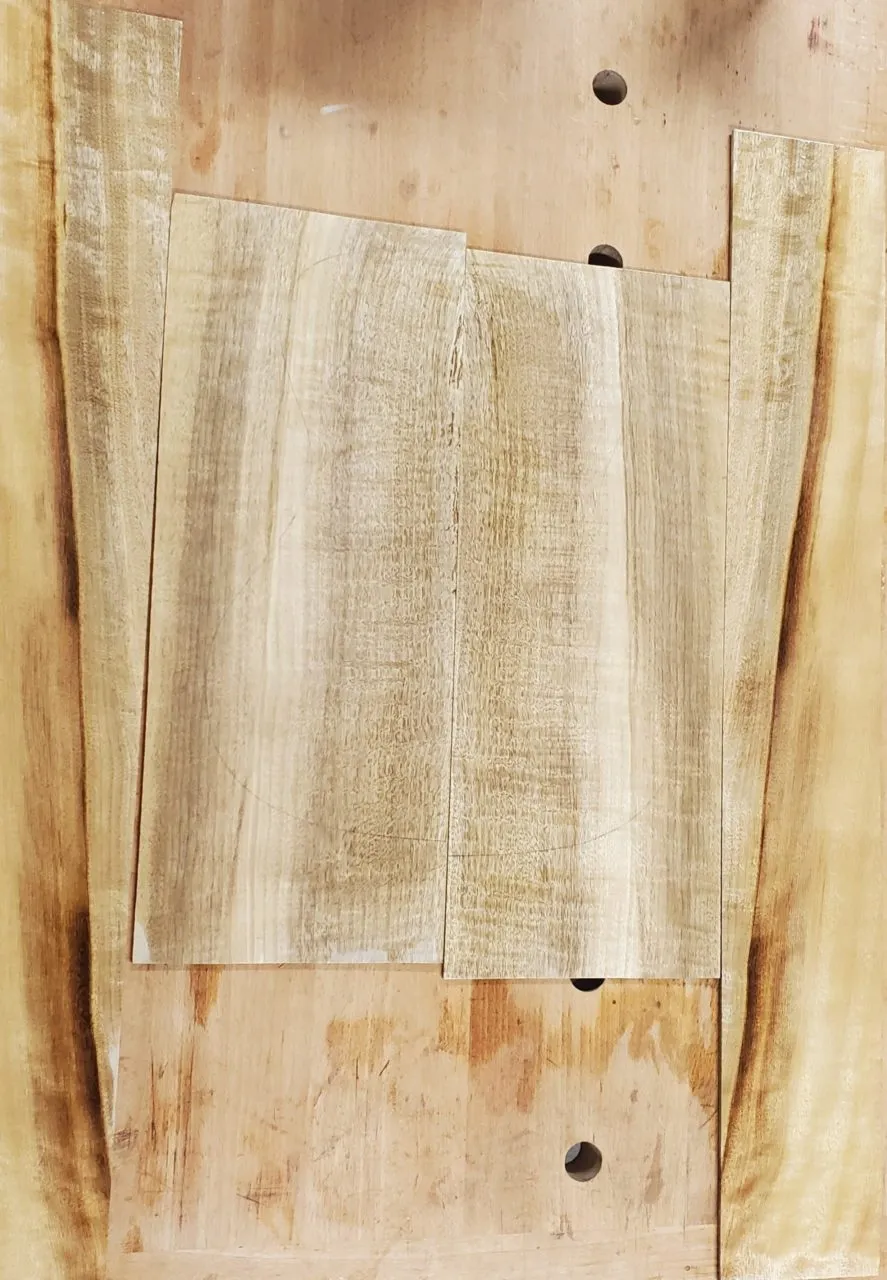
Set #2 - Any sized ukulele - Available at no additional charge.
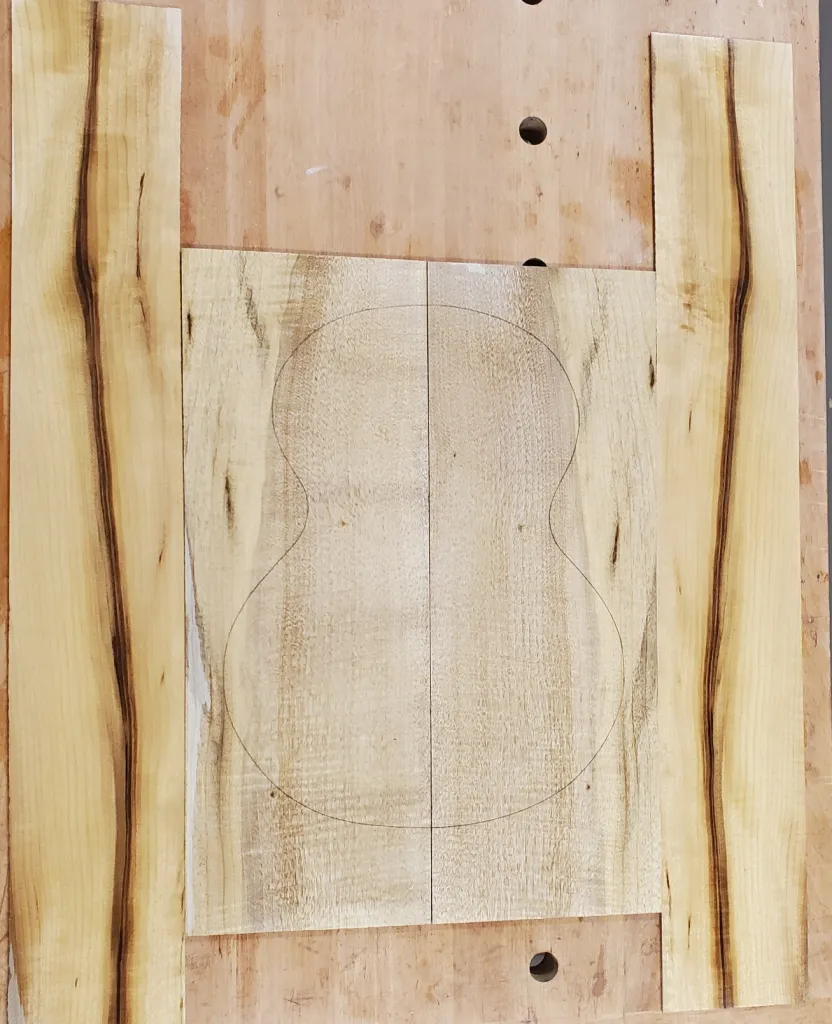
(Machaerium scleroxylon)
Pau Ferro (also called Bolivian Rosewood but is not a true rosewood from the Dalbergia genus) comes from Tropical South America.
Soprano ukulele +$50
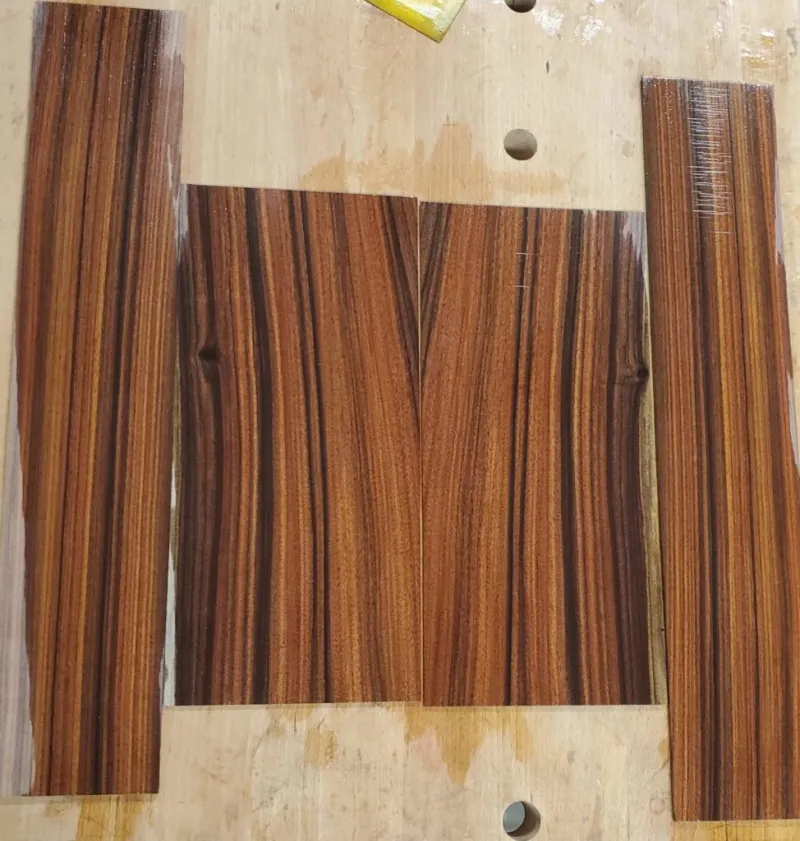
(Entandrophragma cylindricum)
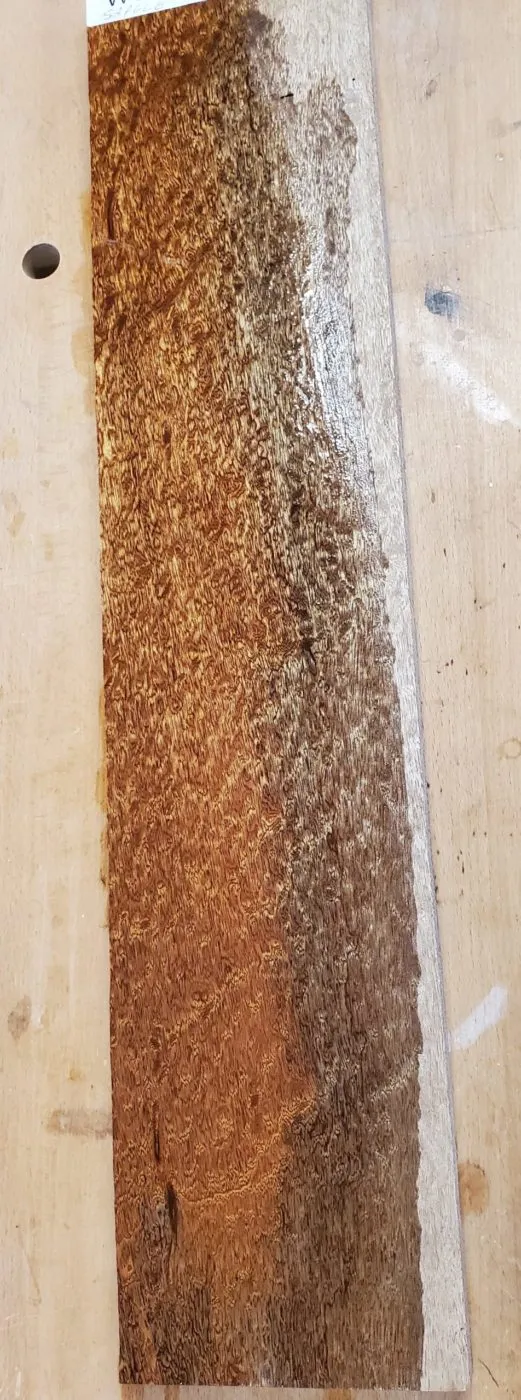
Sapele comes from Tropical Africa. "Pomelle" is a type of wood figure that resembles a puddle surface during a light rain: a dense pattern of small rings enveloping one another.
This billet can be cut into most any size of musical ukulele.
Any sized ukulele +$75
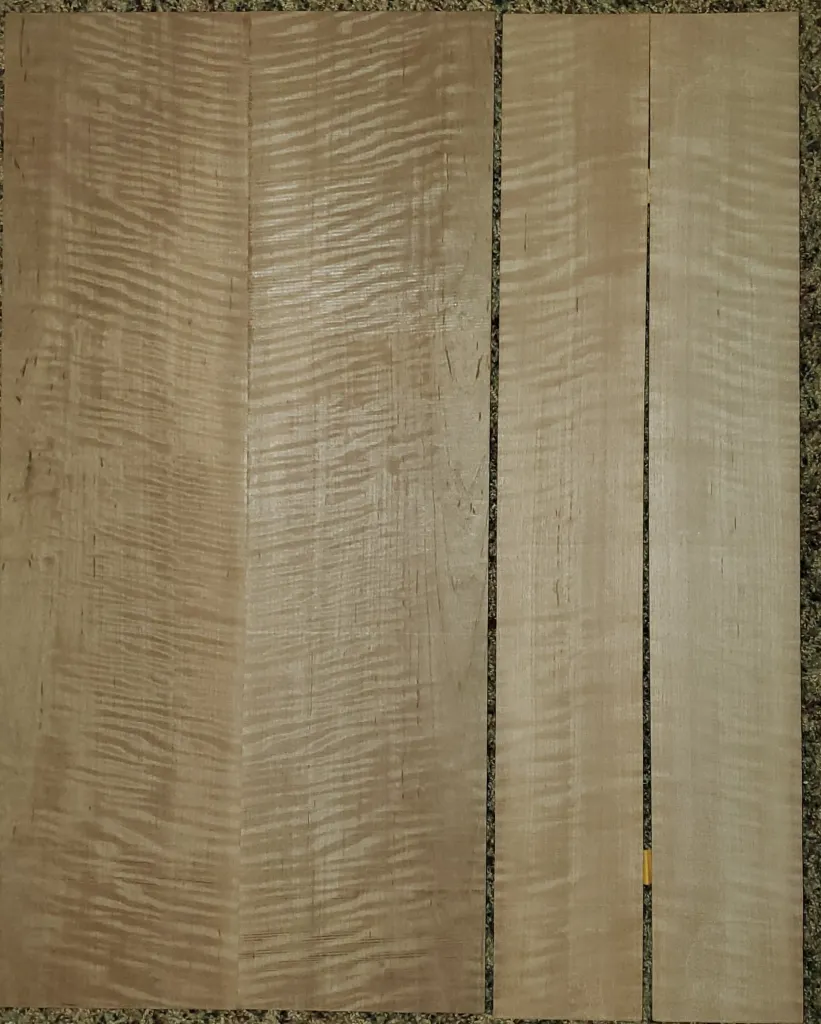
(Lagerstroemia spp)
Pyinma, also known as Asian Satinwood or Crepe Myrtle. The wood from Southeast Asia has a fairly uniform color and the curly grain is very pretty.
Any sized ukulele. - Available at no extra charge.
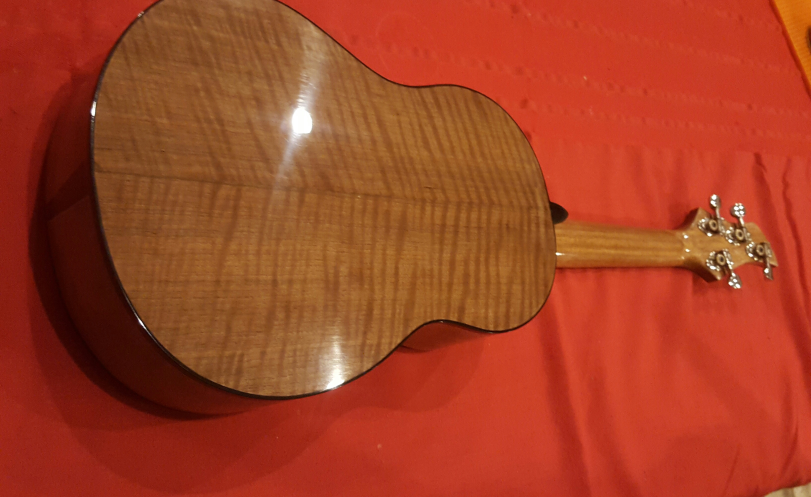
Here is a Pyinma tenor ukulele, one of the first ukuleles I ever made
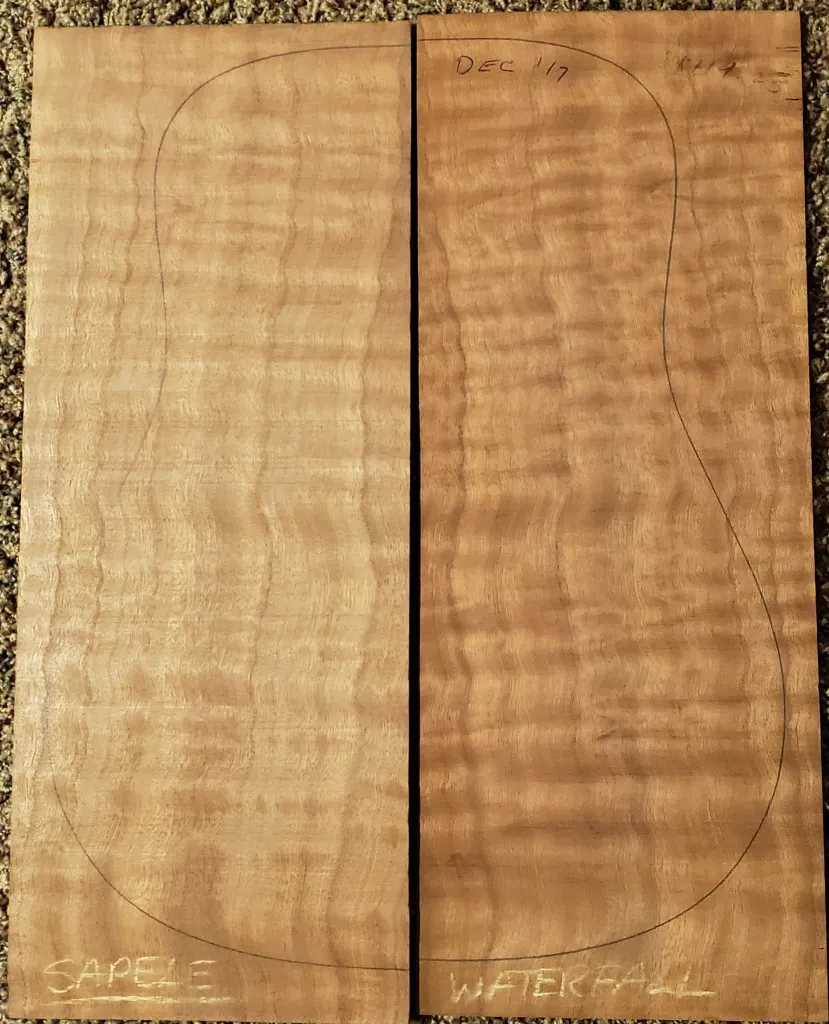
(Entandrophragma cylindricum)
Sapele is often confused with Mahogany, but it is more dense. This wood comes from Tropical Africa.
This was orginally intended to become a dreadnaught sized guitar but there are no sides. However there is plenty of wood here to make a Tenor ukulele
This would make a stunning ukulele. Any sized ukulele +$25
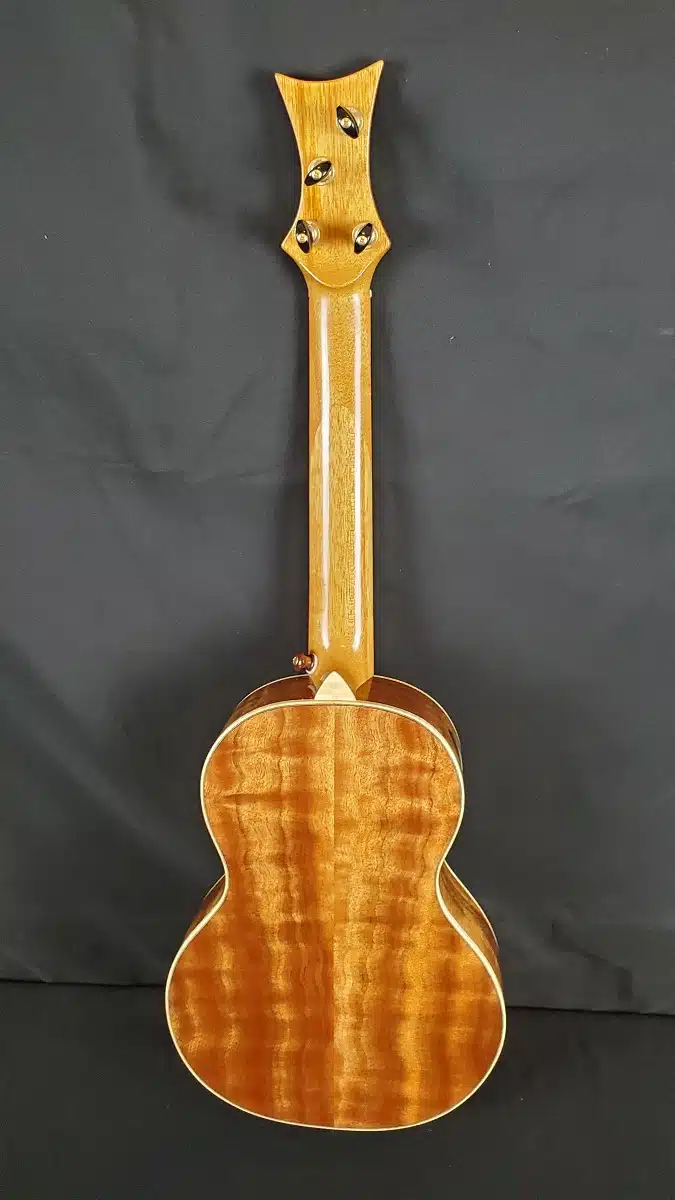
Here is a Tenor Ukulele I made from Waterfall Sapele
(Brosimum guianense)
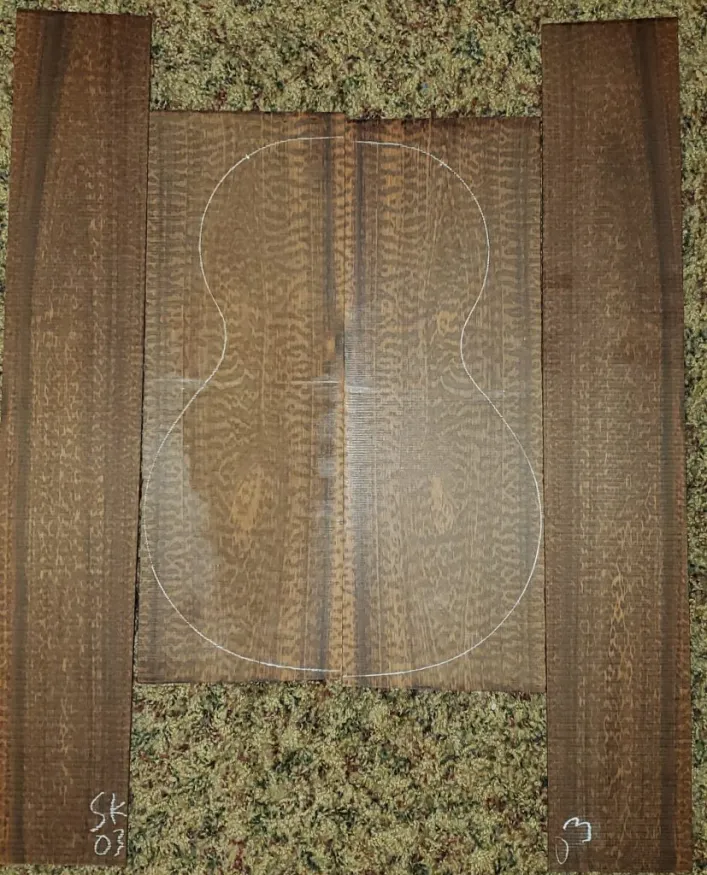
Snakewood is beautiful, very hard and in high demand. This wood comes from Coastal regions of northeast South America. When I say it is a HARD wood, I mean it. This wood is harder than Ebony. In fact there are less than a dozen woods in the world, more dense than Snakewood. Many violinist seek out bows made of snakewood.
A ukulele made out of Snakewood will likely have a very bright sound and projection like no other.
Tenor ukulele +$500
(Millettia laurentii)
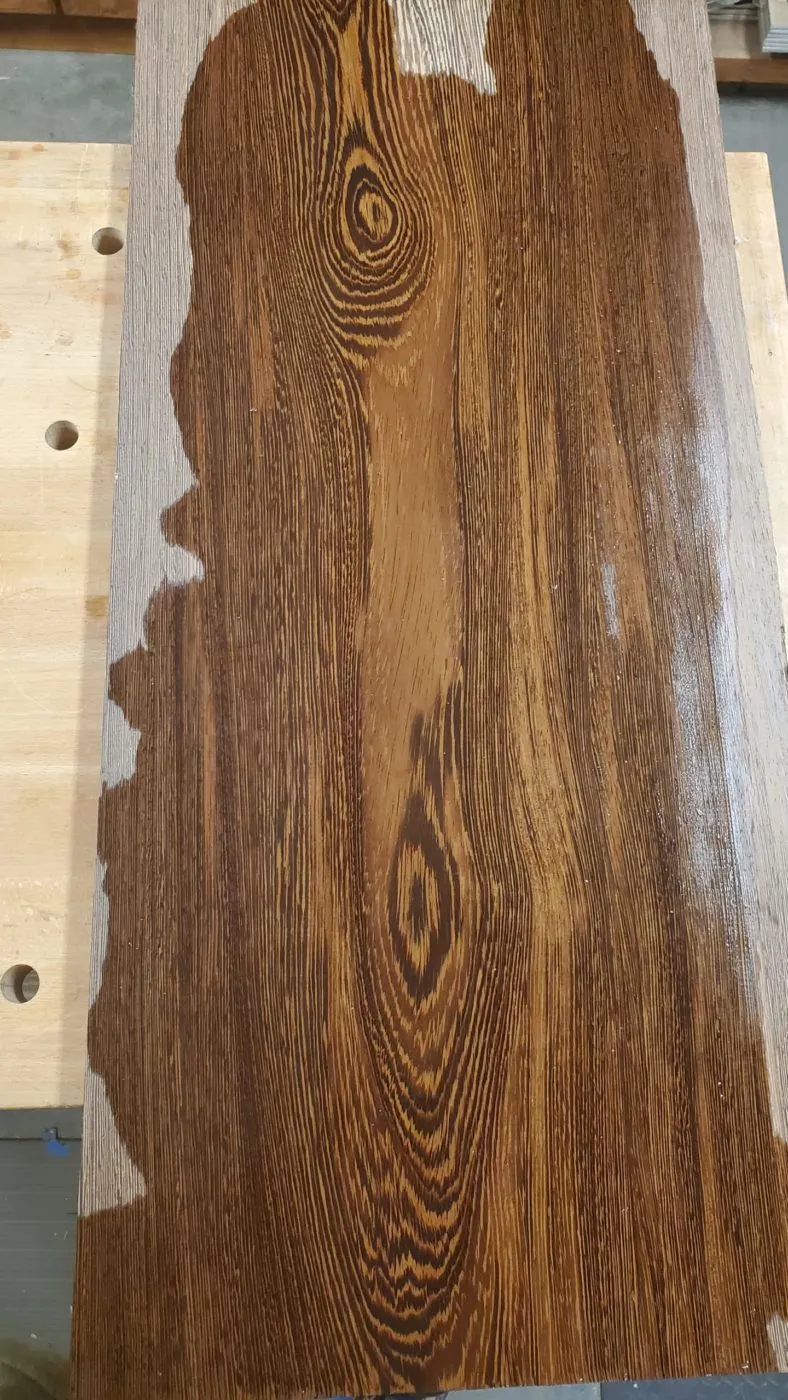
Wenge comes from Central Africa and is usually pronounced WHEN-gii or WHEN-ghay. This is a very dense wood and will result is a bright sounding instrument.
This large billet can be cut into most any size of musical instrument.
Any sized ukulele - Available at no additional charge
Electric Guitar Sets
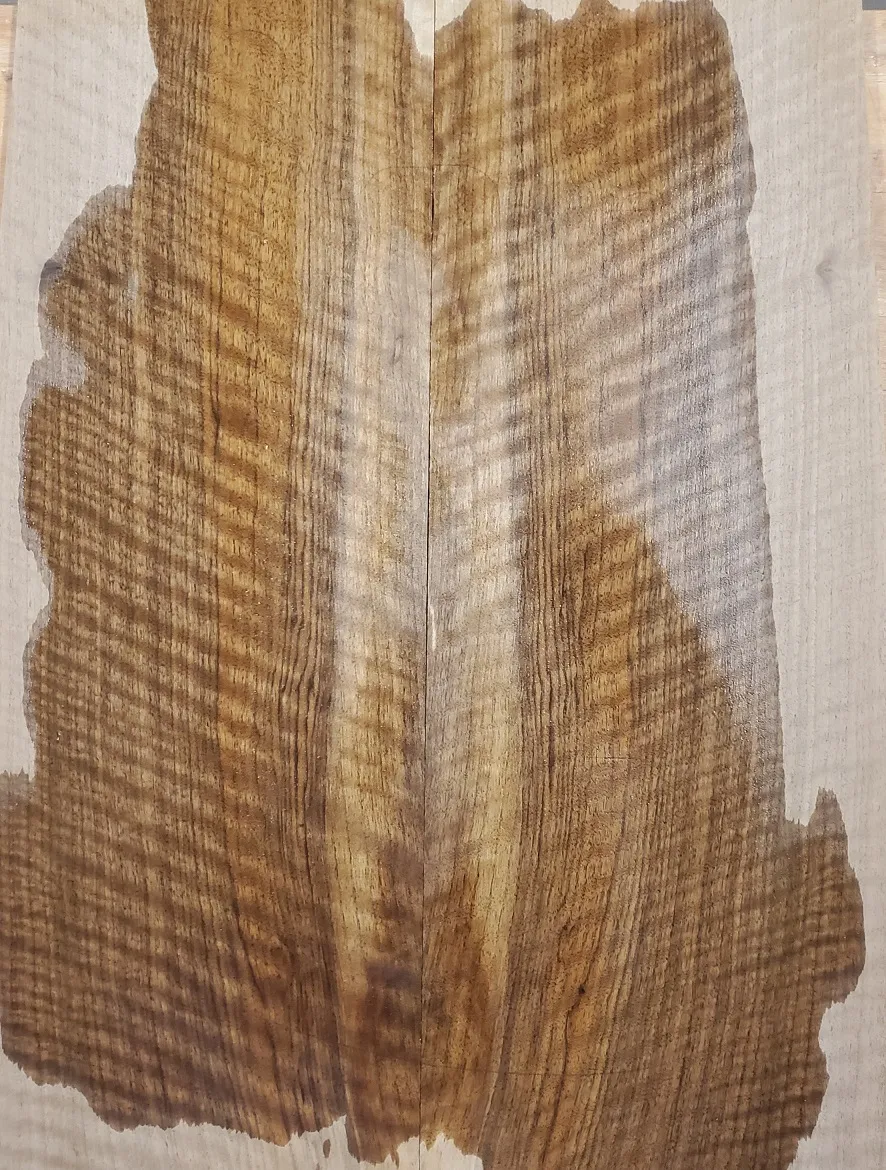
(Juglans x paradox)
Walnut is a beautiful wood with warm pleasing colors. The curl in this piece is incredible. Claro Walnut and Black Walnut are more commonly known. Bastogne Walnut is hybrid species.
Plant breeder Luther Burbank experimented with hybrid walnuts beginning in the 1890s, and cross pollinated the native Claro Walnut with English Walnut. The resulting hybrid was quite puzzling: the tree grew grew faster than either of the parent species, and also yielded harder and stronger lumber (though unfortunately it didn’t produce very many walnuts). Because of these anomalies, Burbank named the hybrid “Paradox.” The name Bastogne Walnut appears to be a marketing term, and is not commonly used outside of woodworking circles.
+$150 above base price
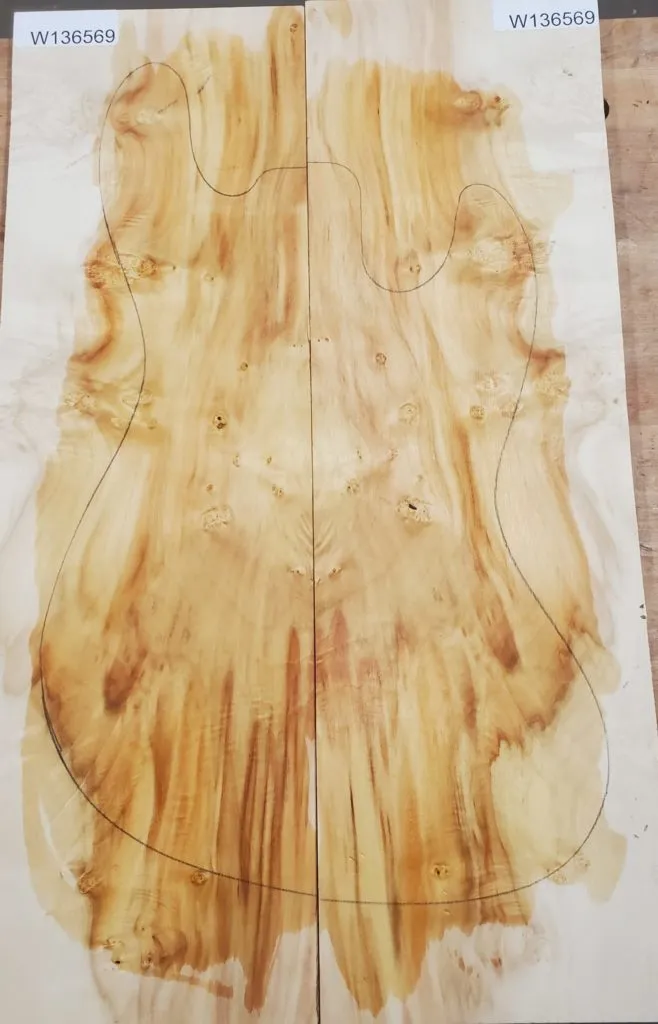
(Acer negundo)
Box Elder is technically considered a maple tree (Acer genus). This would make a very nice looking and very unique electric guitar.
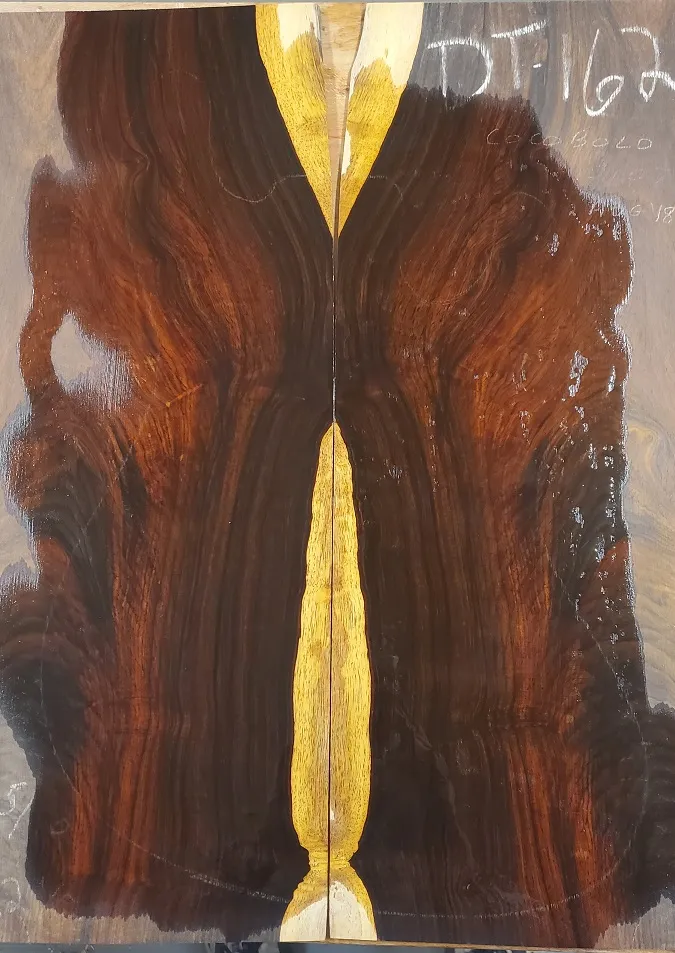
(Dalbergia retusa)
Cocobolo comes from Central America and is a true rosewood. This is a very dense wood which finishes beautifully. There are report of potential allergic reactions to this wood. While those reports are true, they only apply to woodworkers who cut and sand the wood. There is no issue for the end user (unless you are a woodworker who has already developed an allergy to this wood).
+$75 over base price
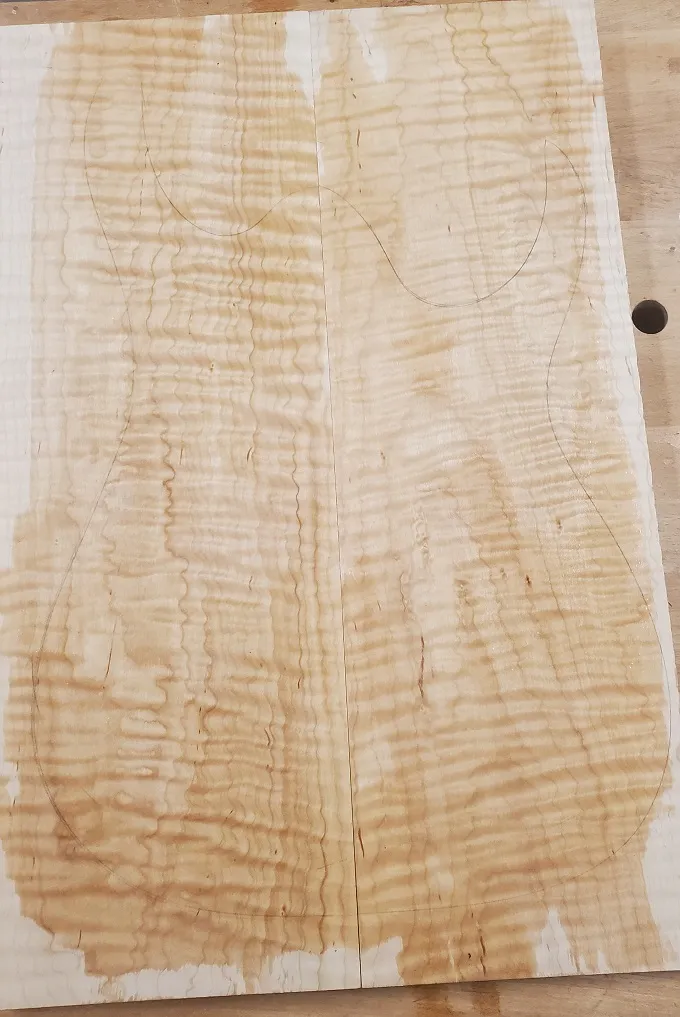
(Acer Spp.)
Curly Maple comes from many regions in the Northern Hemisphere around the world. Curl Maple (sometimes called Fiddle Back) can be dyed with contrasting colors for a very dramatic effect. The pictures below show the wood with its natural color.
Set #1
Set #2
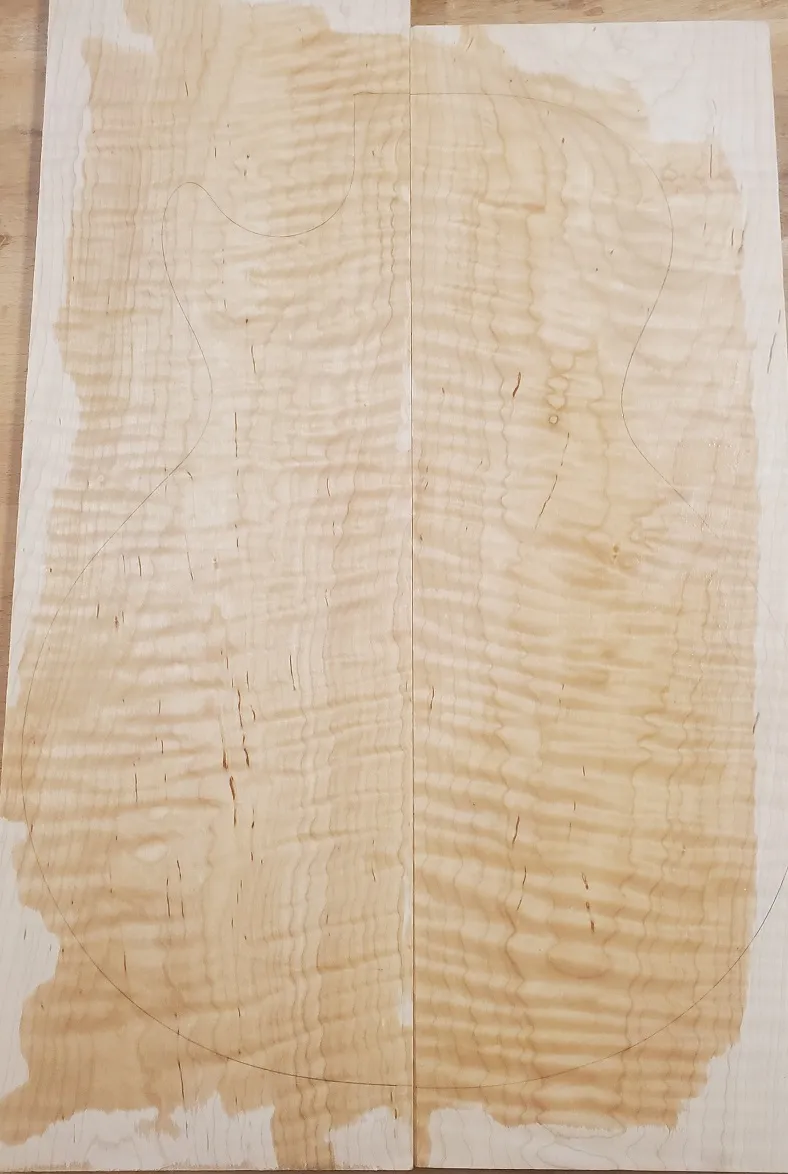
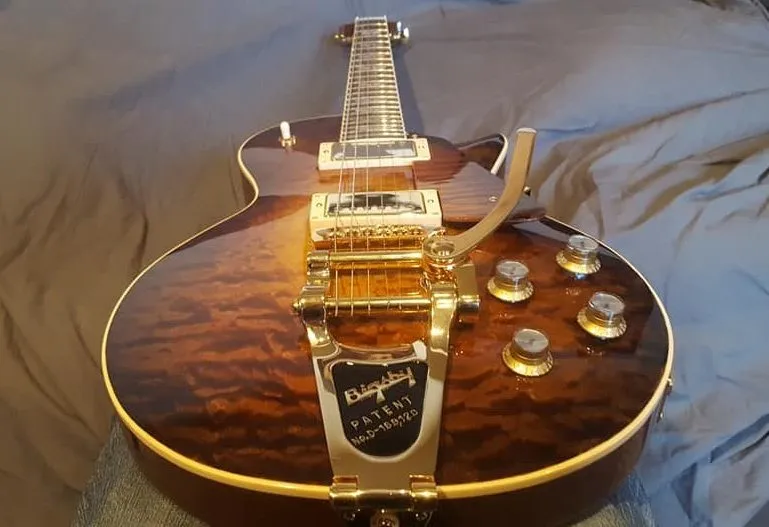
Here is an example of some "quilted" maple dyed with a sun-burt pattern.
Let's Connect!
Whether you're interested in a custom build, have a repair question, or just want to talk instruments—I'd love to hear from you.